Landing a spot in the S&P 500 is massive, but considering the business virtually collapsed back in 2022, the achievement is a plot twist that few saw coming.
The move essentially cements perhaps the most improbable rebounds in modern stock-market history.
Its traction is insane, propelling it into the same benchmark that houses giants like Nvidia, Amazon, and Tesla.
At the same time, Carvana’s business is firmly on the comeback trail, posting record profits and explosive unit expansion, setting the stage for another solid year.
For a little color, after the announcement, Carvana stock jumped nearly 10% after-hours.
That added to an already enormous 97% year-to-date gain and nearly 30% in the past month alone.
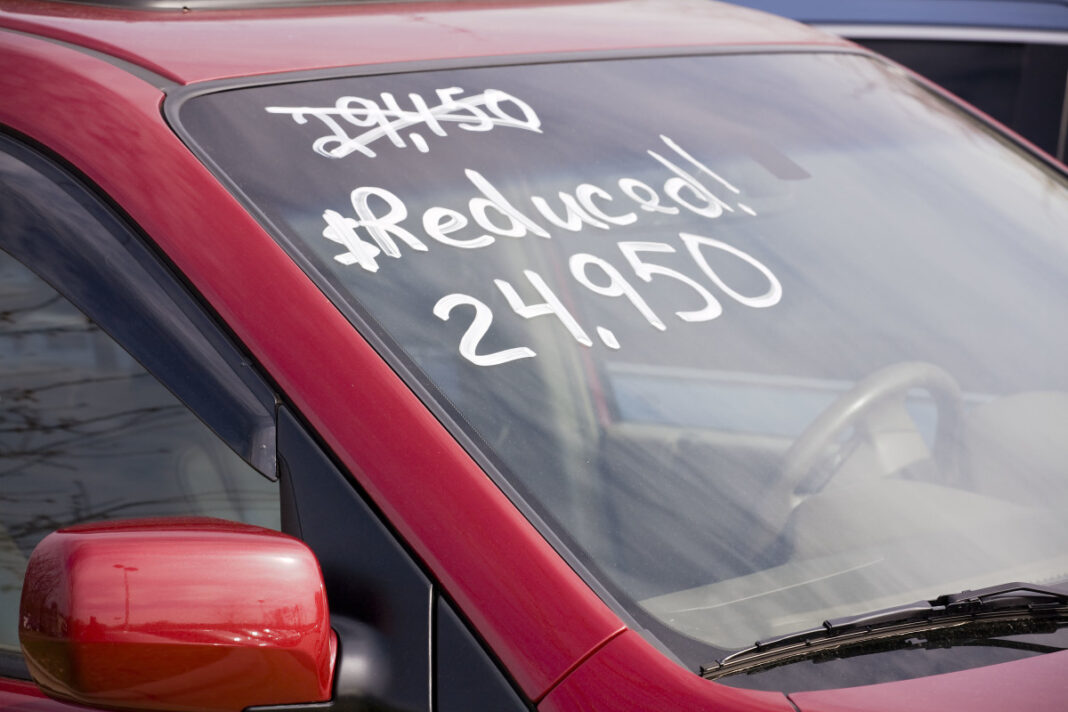
Carvana is set to join the S&P 500 after a surprise index reshuffle.Photo by SolStock on Getty Images
Carvana just made the cut for the S&P 500’s quarterly rebalancing and will join the historic index before the market opens on December 22.
A couple of other companies also made the list.
In making room, three big names are getting bumped down into smaller-cap indices.
It also shows that a company has hit real scale, the kind that makes smart money take notice. Though it isn’t a guarantee of future gains, it does make the stock tougher for Wall Street to ignore.
Though inclusion helps, the true comeback stories like Carvana are still driven by the underlying fundamentals and secular tailwinds.
Also, here’s a recap of last year’s additions and removals.
Apollo Global Management
Workday
Lennox International
Qorvo
Amentum Holdings
Catalent
It’s worth remembering, though, that the market’s finest used the S&P 500’s visibility to fuel decade-defining runs. A few standout examples include the following:
Nvidia (added in 2001, replacing Enron) Started as a relatively humble niche graphics-chip designer; today it’s the AI bellwether, with a market cap flirting with $4.5 trillion, and the S&P 500’s top return engines.
Amazon (added 2005) What started as a major eCommerce win evolved into a multi-trillion-dollar cloud, retail, and advertising empire, ultimately lifting the entire index in the process.
Netflix (added 2010) Joined the index while still shedding its DVD roots. A decade later, it has reshaped the entire global streaming landscape, outperforming every legacy media name in the index.
Tesla (announced 2020, added 2020) The EV giant became an “index effect” case study, with its shares jumping 14% on the announcement as funds scrambled to match the index.
Carvana’s inclusion makes sense once we zoom out and have a look at its jaw-dropping comeback.
It was far from a gentle recovery, though, turning into a whiplash-inducing U-turn from bankruptcy talk to record bottom-line numbers.
Put simply, Carvana is basically a fully online version of a used-car dealership.
Users can browse through a massive inventory on its site or app, inspect 360° photos, line up financing, trade in their old car, and have the new one delivered to their driveways, or pick it up from a glass “vending machine.”
You basically avoid all the dealership haggling, with greater transparency, and a 7-day return window.
Younger, tech-savvy buyers gravitate to that experience, and investors are in awe of the model, which blends e-commerce, autos, and fintech.
Few companies have been on a wilder five-year ride than Carvana.
From a pandemic superstar to near-bankruptcy, Carvana’s been arguably the market’s most dramatic comeback player. Here’s the arc that flipped its entire story:
2019-2021: Hypergrowth darling Sales skyrocketed for the company, as it evolved into being “the new way to buy a car,” and the stock quickly followed, surging 185% in 2019, 150%+ in 2020, and topping $370 by August 2021. Source: Investopedia
2022: From market darling to near-disaster Rising rates, collapsing used-car prices, and a heavy debt burden crushed the business. Shares tanked 98% to under $4, leaving Carvana with a sub-$500 million market cap.
2023: Debt triage sparks the first comeback leg Cost cuts, layoffs, and a major debt restructuring basically steadied the ship, with the stock soaring over 1,000% off the lows.
2024-2025: From “might survive” to “thriving” Revenue and profits set records, with its stock jumping hundreds of percent again. In Q3 2025, Carvana sold 155,941 cars (a 44% increase) while generating $5.65 billion in sales (up 55%), and posting $263 million in net income. With $2.1 billion in cash and lower leverage, it’s now a real turnaround.
The comeback’s still in motion, and Carvana’s smashing entry into the S&P 500 is poised to add new layers to its already illustrious growth story.