

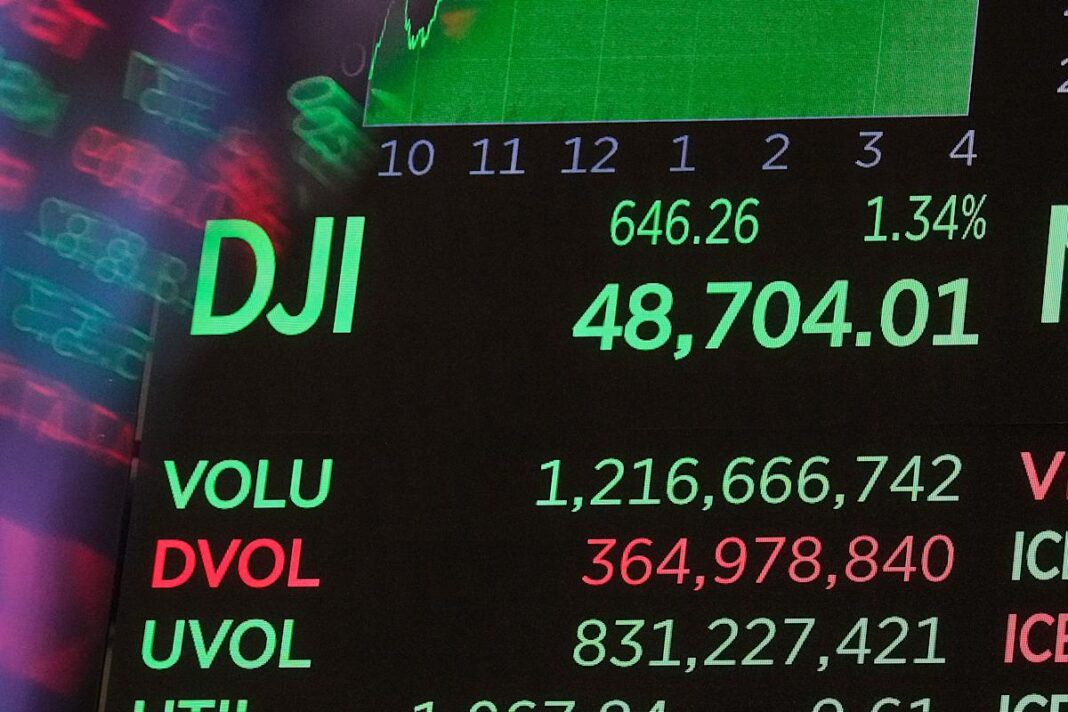

Wall Street is increasingly optimistic about the stock market heading into 2026 after the S&P 500 (^GSPC) and Dow (^DJI) hit record highs in the same week the Federal Reserve cut interest rates.
Adding to the momentum, highly anticipated comments from Chair Jerome Powell during the central bank’s press conference following its two-day policy meeting came across as less hawkish than expected.
“I actually thought he was kind of a chickenhawk in his statement. I didn’t see it as very hawkish at all,” David Waddell, CEO of Waddell & Associates, told Yahoo Finance.
Waddell noted that President Trump will seek to replace Powell, whose term ends in May, with someone who favors lower rates.
“Trump’s just going to replace him with a dove. So we’re gonna get a lot of monetary stimulus. We’re going to get a lot of fiscal stimulus,” added Waddell.
Read more: How the Fed rate decision affects your bank accounts, loans, credit cards, and investments
Meanwhile, the Fed’s upward revision of GDP to 2.3% for 2026 will likely mean more revenue, higher profit margins, and earnings growth.
Those expectations are fueling bullish price targets across Wall Street.
Veteran strategist Ed Yardeni also sees the index reaching 7,700, recently raising the probability of his “Roaring 2020s” scenario to 60% citing, among other reasons, tax benefits from the Big Beautiful Bill and the AI-driven tech boom.
Meanwhile, Oppenheimer set a 2026 target for the S&P 500 at 8,100, also viewing the shift in monetary and fiscal policy as a major driver for earnings.
“It’s got to be good for corporates and good to the consumers. It will be reflected in stocks,” Oppenheimer’s chief market strategist John Stoltzfus told Yahoo Finance last week.
UBS is similarly positive, with strategists setting a December 2026 target of 7,700, citing “resilient economic growth, Fed rate cuts, and a boom in AI investment spending.”
Goldman Sachs analysts forecast S&P 500 earnings growth of more than 12% in 2026, versus a Street consensus of 14%.
The index’s largest seven stocks, which include Nvidia (NVDA), Apple (AAPL), Microsoft (MSFT), Alphabet (GOOGL, GOOG), Amazon (AMZN), Broadcom (AVGO), and Meta (META), currently account for roughly a quarter of the index’s earnings.
But Goldman sees participation widening.
“We expect macro tailwinds from accelerating economic growth and a fading tariff drag on margins will support an acceleration in the earnings growth rate for the remaining 493 stocks,” wrote Goldman’s Ben Snider in a note on Thursday.


