

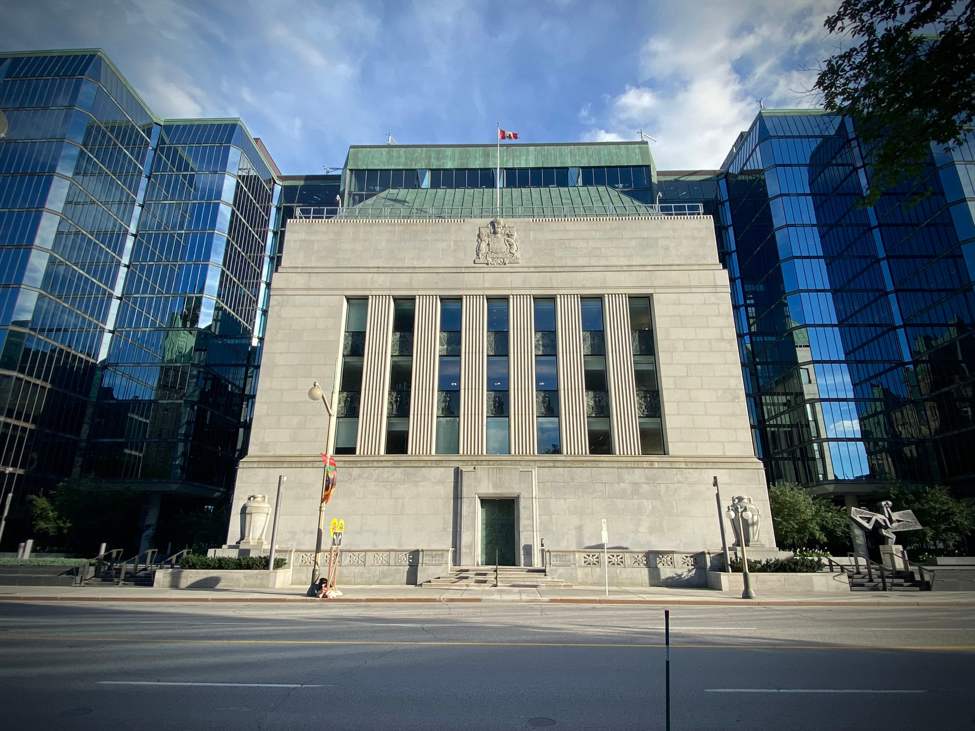

BOC Gov. Tiff Macklem is speaking at the Chamber of Commerce of Metropolitan Montréal. His full speech can be found HERE:
Below is a summary of his comments from the speech.
Economic outlook and policy backdrop
-
2025 was defined by rising protectionism, particularly from the US, which has disrupted global trade and undermined trust in Canada’s largest trading relationship.
-
Uncertainty remains elevated, especially from tariffs on steel, aluminum, autos, and lumber, weighing on business investment even as the economy shows overall resilience.
-
Inflation has been near the 2% target for more than a year, and the Bank expects it to remain close to target, despite higher trade-related costs.
-
Structural forces—including AI, climate change, geopolitical risk, and trade fragmentation—are making the global economy more vulnerable to shocks.
Monetary policy stance and forward guidance
-
Policy rate held at 2.25%, which Governing Council sees as about the right level to balance inflation control and economic support.
-
Inflation expectations remain well anchored, reinforcing confidence in the current policy stance.
-
The Bank remains highly responsive to changing conditions, emphasizing that policy will adjust if the outlook shifts.
-
Macklem reaffirmed strong commitment to the 2% inflation target, stating it will not be reconsidered in the 2026 framework renewal.
-
The upcoming 2026 monetary policy framework review will focus on how policy is conducted in a more shock-prone world, not whether inflation targeting remains appropriate.
Preserving trust and the value of money
-
Price stability is essential to public trust, and the pandemic-era inflation surge highlighted the costs of losing that trust.
-
Macklem emphasized that restoring inflation without triggering a recession validated the framework, despite the challenges.
-
While inflation has normalized, higher price levels remain, making it critical to keep inflation low and stable so incomes can catch up.
-
The Bank aims to improve transparency, including better communication around inflation, housing affordability, and policy trade-offs.
Stablecoins and digital money (separate focus)
-
Stablecoins represent a potentially useful innovation, unlike volatile cryptocurrencies such as Bitcoin, because they are designed to trade at par with sovereign currencies.
-
Canada plans to introduce a formal regulatory framework for stablecoins, with the Bank of Canada as regulator under proposed federal legislation.
-
Macklem stressed that stablecoins must meet strict conditions to qualify as “good money,” including:
-
1:1 peg to a central bank currency
-
Backing by high-quality liquid assets
-
Full transparency on redemption terms and fees
-
Strong operational resilience
-
-
The goal is to allow Canadians to benefit from innovation while minimizing risks to financial stability and trust.
Payments, innovation, and the future of money
-
The Bank is expanding its role as a supervisor of retail payments, covering nearly 1,600 payment service providers.
-
Real-Time Rail will allow instant, 24/7 payments, increase competition, and improve cross-border payment efficiency.
-
Consumer-driven banking (open banking) will give Canadians more control over financial data, promote competition, and spur innovation—while requiring strong safeguards against fraud and misuse.
-
Macklem framed the Bank as a “one-stop shop for money you can trust”, overseeing cash, payments, stablecoins, and financial infrastructure.
Bottom line for markets
-
The BoC is confident inflation is under control, sees the policy rate as appropriately restrictive, and remains ready to respond if conditions change.
-
Trust, stability, and innovation are the core themes heading into 2026, as the Bank prepares for a more volatile global environment.
-
Macklem underscored that the Bank intends to be both a source of stability and an engine of progress, safeguarding the value of money while adapting to change.
This article was written by Greg Michalowski at investinglive.com.
Source link


