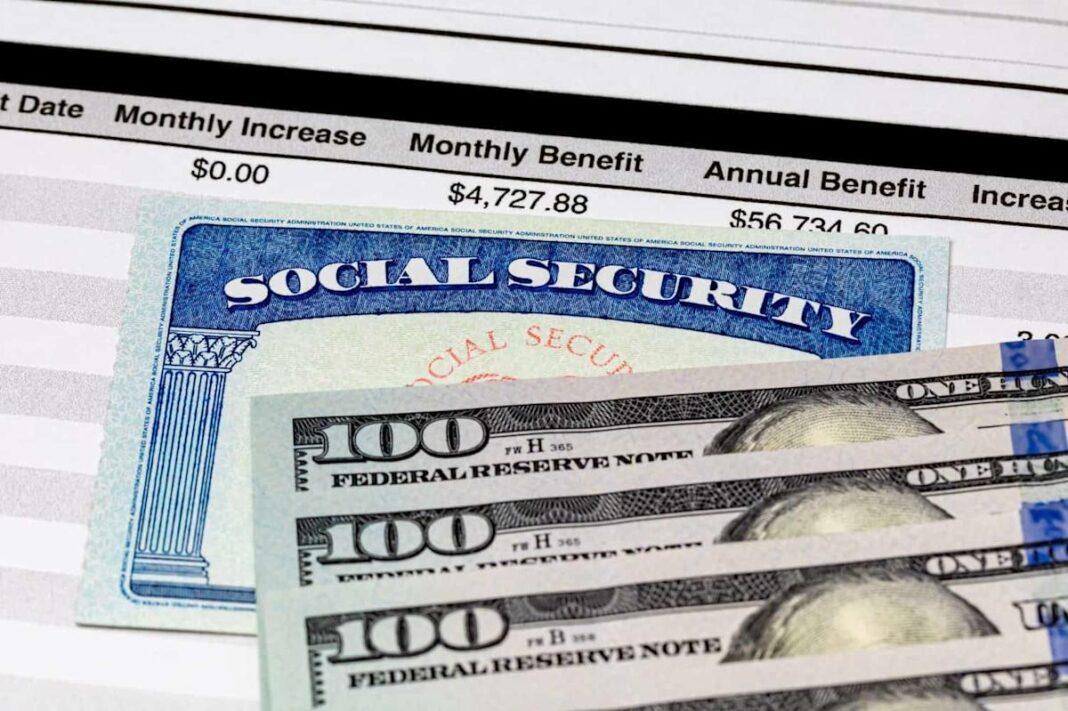
The Fed cut rates to 3.5%-3.75% in December 2025. This signals lower inflation expectations and a projected 2027 COLA between 2.3% and 2.6%.
Social Security benefits have lost 20% of their buying power since 2010 because COLAs consistently underestimate retiree inflation.
Lower rate cuts reduce savings account returns for retirees but also indicate relief from the post-pandemic price surge.
If you’re thinking about retiring or know someone who is, there are three quick questions causing many Americans to realize they can retire earlier than expected. take 5 minutes to learn more here
On December 10, 2025, the Federal Reserve announced a quarter-percentage-point rate cut, bringing the benchmark rate to the 3.5%-3.75% range. This was both the final rate cut and the final Fed meeting of 2025, so the Fed ended up delivering a total of three rate reductions over the course of this year. This means 2025 ends with the benchmark rate three-quarters of a percentage point lower than the 4.25% to 4.50% target rate we started the year with.
The rate cut is a small one, but with big implications for the economy as a whole, as it could impact the cost of borrowing, savings account and bond rates, and the stock market. The Fed’s decision is also an important economic indicator that provides insight into how the central bank board members view trends in the broader economy as a whole.
Social Security retirees need to pay attention to these interest rate decisions because the December rate cut — and future Federal Reserve decisions on interest rates in the coming year — could have a major impact on the Cost of Living Adjustments (COLAs) retirees are eligible for.
For many Social Security retirees, Social Security benefits are their most important income source. In fact, studies have shown that retirement benefits are the primary income source for many families. However, these benefits have been losing ground in recent years and are now worth around $0.80 on the dollar compared to what they were worth in 2010.
The reason that the buying power of benefits has fallen is that Social Security Cost of Living Adjustments (COLAs) have done a poor job in keeping pace with inflation. Cost of Living Adjustments (COLAs) are supposed to make sure that doesn’t happen, but the formula estimates inflation by looking at a consumer price index, CPI-W, that doesn’t accurately measure inflation impacting retirees. The issue is that it’s built around the spending habits of urban wage earners and clerical workers. Since retirees tend to spend more on things where price increases outpace overall inflation, the formula underestimates how much their benefits need to grow.
In 2026, retirees are on pace to get a 2.8% cost-of-living adjustment, based on changes to CPI-W year-over-year, and that may not be enough. And, the December rate cut by the Federal Reserve suggests that retirees are on track for a smaller raise the following year, with early estimates in the 2.3% to 2.6% range.
Estimates of a smaller COLA in 2027 are supported by the Federal Reserve’s decision to cut rates for the third time in a row, while the specific number range is based on the Federal Reserve’s data plot that forecasts Personal Consumption Expenditures inflation (PCE) at 2.4% for 2026 and 2.1% for 2027.
The Federal Reserve has a dual mandate to limit inflation and bolster employment, and the Fed typically keeps rates stable or even raises rates when concerns about inflation are predominant. Since the Fed decided to lower the benchmark rate, it is a clear sign that officials don’t believe stubbornly high inflation will persist into 2026. In fact, the New York Fed president John Williams has dismissed concerns about elevated pricing as a temporary blip caused by tariffs that is likely to resolve by the middle of next year.
With more modest inflation, the COLA won’t be as high as it has been in most of the post-pandemic era.
zimmytws / Shutterstock.com
The Fed’s rate cut is actually both good news and bad news for seniors. First, the fact that the COLA is likely to be lower is not a great thing for retirees whose raises are already not keeping up. Lower interest rates are also bad for seniors who may have a good chunk of their money in savings accounts or CDs because they want to maintain a conservative portfolio.
However, inflation is also bad news for seniors, so the fact that the Fed is clearly not as concerned about rising prices could be a positive sign for retirees that they aren’t going to keep experiencing the painful price increases that have caused so much financial stress for so many following the pandemic.
Of course, it will be a long time until we have the official data on the 2027 COLA. But, for now, retirees should be aware that the Fed’s moves likely mean a lower Cost of Living Adjustment in 2027 — and while a smaller raise is in theory bad news, it’s not necessarily a bad thing in the end.
You may think retirement is about picking the best stocks or ETFs, but you’d be wrong. Even great investments can be a liability in retirement. It’s a simple difference between accumulating vs distributing, and it makes all the difference.
The good news? After answering three quick questions many Americans are reworking their portfolios and finding they can retire earlier than expected. If you’re thinking about retiring or know someone who is, take 5 minutes to learn more here.
Canamera Energy Metals, a Canada-based exploration company, has completed approximately one-third of the planned holes in its inaugural Turvolandia rare earths...