


U.S. headline CPI eased from 3.0% to 2.7% year-on-year in November versus expectations of an uptick to 3.1%. However, analysts took the numbers with a grain of salt since the Bureau of Labor Statistics (BLS) did not collect any data from October due to the government shutdown.
Key Takeaways
- Headline CPI rose 2.7% year-over-year in November, down from 3.0% in September
- Core CPI (excluding food and energy) increased 2.6% annually, while the two-month change from September showed a 0.2% rise
- October data missing due to government appropriations lapse, creating a gap in month-over-month comparisons
- Shelter costs rose just 0.2% over the two-month period, contradicting private-sector data and raising data quality concerns
- Gasoline prices provided genuine disinflationary relief, falling to their lowest levels in over four years
Link to official BLS U.S. Consumer Price Index (Nov 2025)
The BLS reported that shelter costs increased just 0.2% between September and November, a figure that appeared inconsistent with private-sector rental data and fails basic reasonability tests according to market observers. After all, the absence of October collection and limited November gathering periods may have introduced significant distortions into seasonal adjustment factors and trend analysis.
Despite data quality concerns, certain elements of the November report appear more reliable. Gasoline prices continued their steady descent, with the national average falling below $3 per gallon to reach their lowest levels since early 2021.
Another one-off source of data distortion may have also come from a higher-than-usual proportion of price quotes for November likely came from the Black Friday discount period, as CPI data collection resumed on November 14 following the shutdown.
Market Reactions
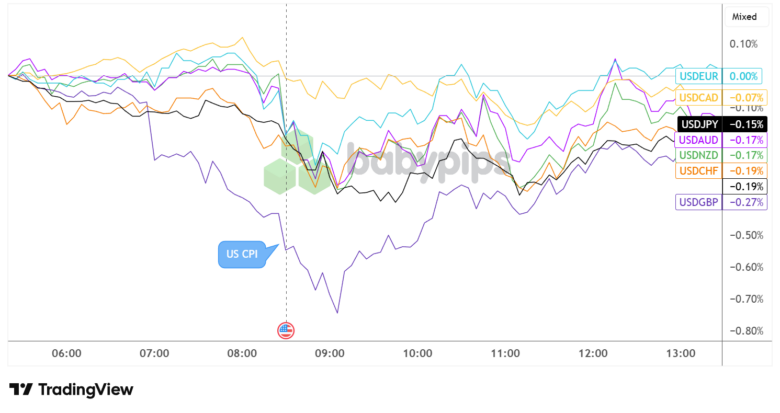
U.S. Dollar vs. Major Currencies: 5-min

Overlay of USD vs. Major Currencies Chart by TradingView
The dollar, which had been consolidating with a slight bearish tilt leading up to the U.S. CPI release, initially sold off within minutes of seeing the weaker headline figures.
However, the currency appeared to bottom out roughly an hour after the report was printed, as market analysts raised questions on the data’s reliability. The dollar soon trimmed losses against GBP (-0.27%) halfway into the U.S. session while erasing post-CPI declines against EUR (0.00%) and CAD (-0.07%).
The brief market response to the CPI results likely reflected traders’ skepticism, limiting any directional bets related to Fed policy expectations.


