

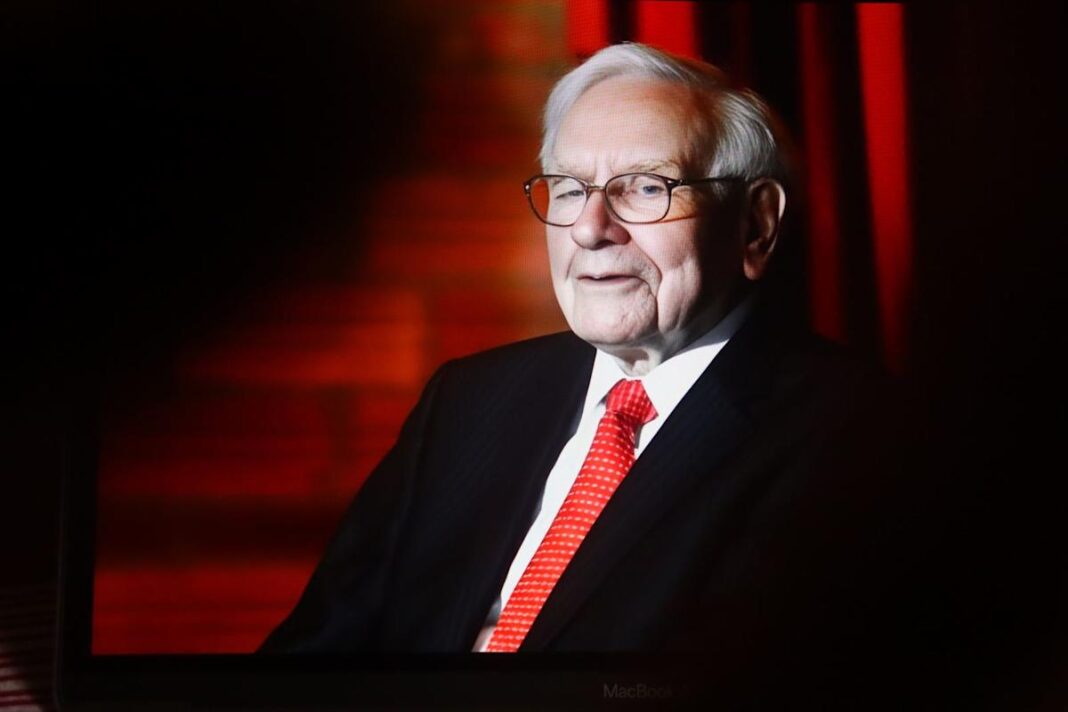

Warren Buffett has spent decades urging investors to separate a company’s underlying economics from the market’s shifting enthusiasm. In Berkshire Hathaway’s (BRK.B) (BRK.A) 1993 shareholder letter, the CEO revisited a theme that runs through much of his writing: in the short term, stock prices can depart sharply from the progress of the businesses they represent. That performance gap, he suggested, can persist long enough to tempt investors into confusing momentum with durability — even though it rarely becomes a permanent condition.
Buffett framed the issue through the experience of two of Berkshire’s major holdings at the time, writing: “Over time, of course, market price and intrinsic value will arrive at about the same destination. But in the short run the two often diverge in a major way, a phenomenon I’ve discussed in the past. Two years ago, Coca-Cola (KO) and Gillette, both large holdings of ours, enjoyed market price increases that dramatically outpaced their earnings gains. In the 1991 Annual Report, I said that the stocks of these companies could not continuously overperform their businesses.”
This observation was not aimed at predicting an imminent decline. Instead, it underscored a structural reality: over extended periods, the market’s return from owning a business tends to be anchored by what the business earns and reinvests, not by how excited investors become at any particular moment.
The historical context matters: Buffett wrote those lines after a period when widely admired consumer brands had experienced strong price appreciation, drawing attention and capital. His point was not that great companies are immune to overvaluation or that rising prices automatically imply wrongdoing. It was that a stock’s price can temporarily race ahead of its earnings power, and when it does, the future investment experience depends heavily on whether the business eventually “catches up” through sustained profitability and growth, or whether expectations embedded in the price prove too optimistic.
That principle remains relevant in modern markets, particularly during periods when new technologies capture investor imagination. Market commentary today frequently raises “bubble” concerns, especially when narrow segments rally sharply, and valuation discussions begin to rely more on narrative than on measurable cash generation. Smaller thematic surges, whether centered on emerging computing paradigms or on fast-moving developments in artificial intelligence, often share a familiar pattern: a real innovation attracts attention, prices climb rapidly, and the market begins projecting far into the future with increasing confidence.


