


Stay informed with free updates
Simply sign up to the Climate change myFT Digest — delivered directly to your inbox.
Brazil has committed to a two-month deadline for key ministries to set out plans for how to end a dependency on oil and gas, after the UN COP30 chief executive affirmed President Luiz Inácio Lula da Silva’s backing for a “roadmap” for a transition from fossil fuels.
A presidential dispatch this month ordered four government departments to prepare within 60 days draft guidelines for the development of a “roadmap for a just and planned energy transition, with a view to gradually reducing the country’s dependence on fossil fuels”.
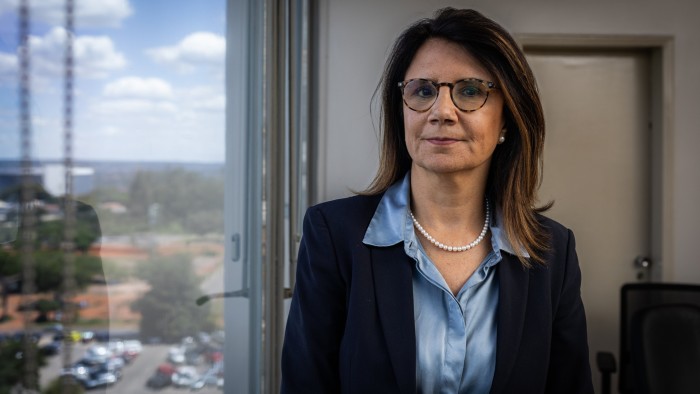
It applies to the departments of mines and energy, finance, environment and the chief of staff’s office. UN COP30 chief executive Ana Toni told the recent FT Global Boardroom conference that she believed Brazil could demonstrate to other economies how to wean themselves off fossil fuels.
The directive calls on the ministries to propose financing mechanisms for putting in place an energy transition policy, including the creation of a dedicated fund that will be backed by government oil and gas revenues.
Most of the South American nation’s domestic energy needs are met by renewable energy or biofuels, but it is a top-10 producer of crude oil, which is the country’s top source of export revenues.
“President Lula was extremely helpful in the way he put it. We need to end our dependency,” Toni said. “And that dependency is of companies, a dependency of countries, of municipalities.
“So what I hope the roadmap will do is to show . . . the criteria for us to start thinking about how to diminish those dependencies,” she added. “For the first time, people are able to imagine a scenario in which we are [either] much less — or not — dependent on fossil fuels in the economy.”
As crude output rises from the country’s deep-sea fields in the Atlantic, Brasília has a goal to become a top-five producer globally by the end of the decade, when production is forecast to peak.
The “roadmap” effort will involve elements of the Lula administration that are known for diverging positions on fossil fuels. Together with state-controlled oil company Petrobras, mines and energy minister Alexandre Silveira has pushed strongly for new hydrocarbon prospecting off Brazil’s coastline in order to replenish reserves.
This resulted in the controversial move, just weeks before Brazil hosted COP30 in the port city of Belém, to grant Petrobras a permit for test drilling in the sea hundreds of miles from the mouth of the Amazon river.
Silveira has argued there is no contradiction with Brazil’s aspirations to lead the world’s transition to green energy.
By contrast, the environment ministry, headed by life-long green campaigner Marina Silva, has advocated for more decisive action on fossil fuels. While avoiding open clashes with cabinet colleagues, Silva has previously called for a “ceiling” on oil exploration.
COP30 chief Toni said that Brazil would “need to plan” because its economy would suffer from the wind-down of revenues from fossil fuels. “So if we don’t plan, if we don’t use the resources that we have in a wise manner — countries that will not plan — they will be left behind.”
The roadmap proposal became a lightning rod at the UN climate summit in Brazil last month, after more than 80 countries backed it. It was, in effect, blocked by petrostates and developing nations, however, as the UN consensus approach required all of the 194 countries to agree.
But Brazil pledged to press ahead with its own plans, and hopes other nations will join. Toni cited the efforts of Norway, which has similarly made a domestic shift to clean energy and is reliant on oil and gas exports.
Suely Araújo, public policy co-ordinator at the non-profit Climate Observatory, agreed the roadmap initiative could help the country move away from fossil fuels, but that it needed to “go beyond the narrative sphere”. He noted that even the use of oil resources for the energy transition should have limits that needed to be debated.
“We must demand clear goals and a definition of the means of implementation,” added Araújo, a former head of the national environmental protection agency. “The roadmap must lead to a reduction in the production and consumption of fossil fuels, not the opposite.”
Climate Capital

Where climate change meets business, markets and politics. Explore the FT’s coverage here.
Are you curious about the FT’s environmental sustainability commitments? Find out more about our science-based targets here


