Moneywise and Yahoo Finance LLC may earn commission or revenue through links in the content below.
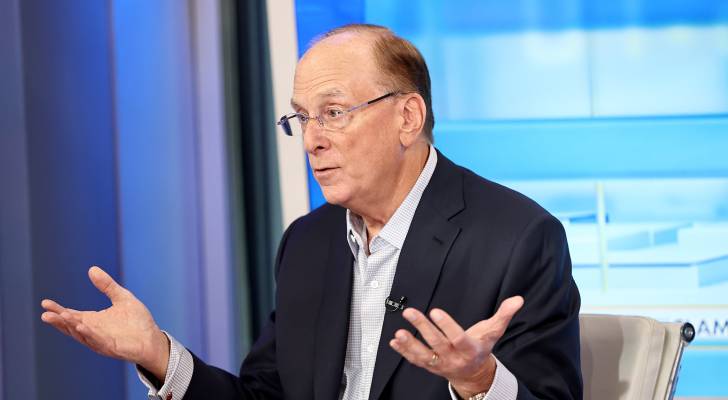
As far as sage billionaires go, BlackRock chairman and CEO Larry Fink belongs in the same bucket as Warren Buffett.
Fink’s firm hit a record $13.46 trillion in assets under management during the third quarter of 2025 — so when he shares economic wisdom, it usually pays to listen.
Back in June, when President Donald Trump’s tariff measures began to ramp up, he issued a stark warning (1).
“If the tariffs are instituted over the next five months, I think we’re going to see very elevated inflation,” Fink said at the Forbes Iconoclast Summit (2).
Imported goods are now 4% more expensive than they were prior to Trump imposing tariffs, according to Harvard University professor Alberto Cavallo. In an interview with Reuters, he said, “Most of the cost seems to be borne by U.S. firms,” adding that “we have seen a gradual pass-through to consumer prices and there’s a clear upward pressure (3).”
Given Fink’s inflation warnings seem to be coming true, here’s what you can do to protect and grow your money during Trump’s tariff inflation era.
One-third of Americans don’t have any retirement savings at all, according to survey data from Blockrock, cited in Larry Fink’s 2025 Annual Chairman’s Letter to Investors (4).
Social Security plays a significant role in retirement income for many American retirees, with the National Institute on Retirement Security reporting that 40% of retirees depend solely on these benefits for their income (5).
As of September 2025, the average monthly benefit for retired workers is $2,009.50, according to the Social Security Administration (6).
“Social Security is a fantastic foundation for retirement,” Fink said in an interview with Bloomberg last March. “But if that’s all you have when you retire, you’re going to be living below the poverty line. It’s supplemental, but it’s not meant to be the totality of what you have in retirement (7).”
Planning for retirement isn’t easy, and it’s natural to have lots of questions about how much you should save per month and how to ensure you have a healthy income after you leave your career behind.
If you want expert advice on planning your retirement, seeking a financial advisor is a smart first step. In 2014, a Vanguard study found that those who worked with an advisor experienced an additional 3% portfolio growth compared to those who didn’t.
Finding a financial advisor who suits your specific needs and financial goals is simple with Vanguard.
With a minimum portfolio size of $50,000, this service is best for clients who already have a nest egg built and would like to try to grow their wealth with a variety of different investments. All you have to do is set up a consultation with a Vanguard advisor, and they will help you set a tailored plan and stick to it.
The fact is, Social Security likely won’t come close to covering your needs in retirement. In order to live the retirement you want, you’ll need to save up a separate source of funds to supplement your benefits. One way to achieve that is by consistently contributing to a retirement account.
With rising market volatility, those near retirement may be worried about putting their hard-earned dollars into stocks. This is where alternative assets can offer inflation-hedging benefits to protect your retirement fund.
A traditional hedge against inflation is gold. Unlike fiat currencies, precious metals can’t be printed in unlimited quantities by central banks. And because its value isn’t tied to any one currency or economy, gold could provide protection during periods of economic uncertainty. This unique characteristic has earned it the reputation of being a “safe haven” asset.
Gold lived up to its reputation in 2025, soaring by more than 60% — now sitting around $4,200 per ounce (8).
Opening a gold IRA with the help of Goldco allows you to invest in gold and other precious metals in physical forms while also providing the significant tax advantages of an IRA.
With a minimum purchase of $10,000, Goldco offers will match up to 10% of qualified purchases in free silver.
Many Americans consider buying investment properties for income in retirement, although the current market — plus the work associated with finding and managing tenants — can make buying property less appealing.
Tapping into the home equity market can be another way to benefit from real estate, without the headaches of being a landlord.
With home values surging and homeowners shying away from new debt, investors have a different way in.
Homeshares gives accredited investors access to this overlooked segment: the billions in locked-in equity sitting in owner-occupied homes.
The result is exposure to a large, under-tapped market across top U.S. cities, without the headaches of being a landlord or the risk of being overleveraged.
HEAs come with built-in protection: they usually cover 25 to 35% of a home’s value in a lien secured position, which helps shield your investment if the market dips. And unlike traditional real estate, HEAs are also typically resilient to interest rate shifts, offering attractive, risk-adjusted returns even during economic uncertainty.
Backed by world-class investors like Jeff Bezos, Arrived makes it easy to fit these properties into your investment portfolio regardless of your income level.
Their flexible investment amounts and simplified process allow accredited and non-accredited investors to take advantage of this inflation-hedging asset class without any extra work on your part.
Another avenue is commercial real estate. For years, direct access to the $22.5 trillion commercial real estate sector has been limited to a select group of elite investors — until now.
First National Realty Partners (FNRP) allows accredited investors to diversify their portfolio through grocery-anchored commercial properties, without taking on the responsibilities of being a landlord.
With a minimum investment of $50,000, investors can own a share of properties leased by national brands like Whole Foods, Kroger and Walmart, which provide essential goods to their communities. Thanks to Triple Net (NNN) leases, accredited investors are able to invest in these properties without worrying about tenant costs cutting into their potential returns.
Simply answer a few questions — including how much you would like to invest — to start browsing their full list of available properties.
While it might be tempting to stow your money away in savings during periods of economic instability rather than invest it in opportunities that carry risk, Fink says people are saving too much.
In a 2023 shareholder letter, he noted that stashing cash rather than investing it is part of the “silent crisis” facing retirees (9).
“If they are keeping their money in the bank rather than investing in the market,” Fink wrote, “they won’t generate the returns necessary to retire with dignity.”
While tariff inflation continues to affect the economy, being vigilent with where you put your money is important — but take a step back to make sure you’re not missing out on opportunities.
When it comes to retirement planning, everyone’s got an opinion. Financial advisors push complicated portfolios, bloggers swear by extreme savings and...