[ccpw id="5"]

Home.forex news reportJapan’s Finance Minister Says 2026 Is the 'First Year of Digitalization' —...

Japan’s Finance Minister Says 2026 Is the ‘First Year of Digitalization’ — Stocks, Crypto, and Digital Assets in Focus

-


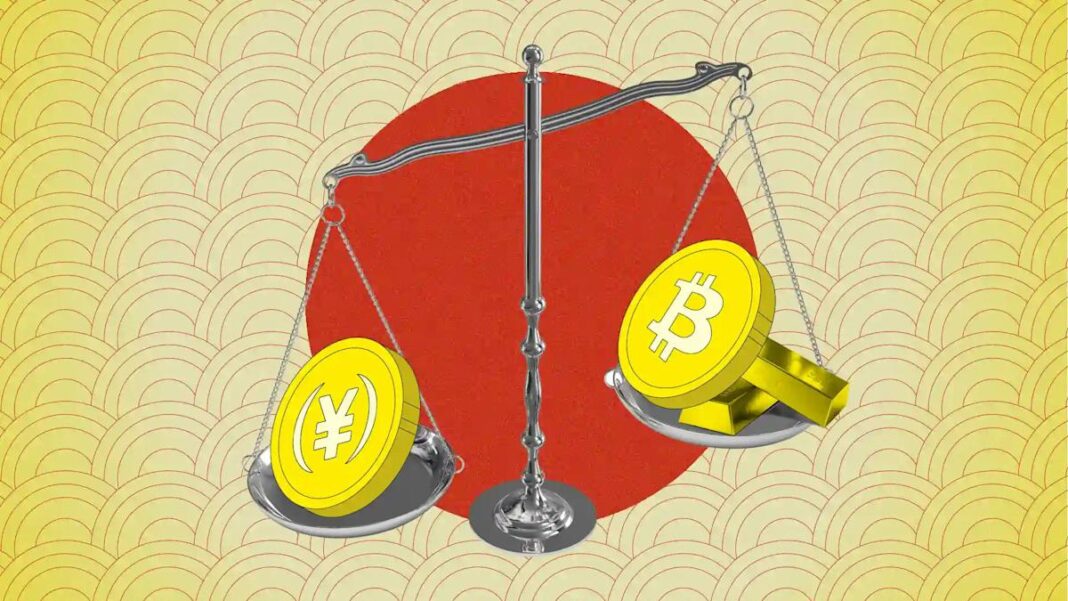
Japan's Finance Minister puts crypto at the center of 2026's Digital plan. | Credit: CCN.
Japan’s Finance Minister puts crypto at the center of 2026’s Digital plan. | Credit: CCN.

Key Takeaways

  • Japan’s Finance Minister declared 2026 as “Digital Year One.”

  • Digital assets, such as crypto, will align with traditional assets, including stocks, through tax cuts and regulations. 

  • Reforms aim to boost investments, ETFs, and shift savings into growth sectors. 

Japan’s Finance Minister, Satsuki Katayama, said 2026 will mark “Digital Year One,” signaling a push to accelerate digital transformation across the country’s financial system.

The initiative aims to bring digital assets, including cryptocurrencies, further into the financial mainstream, placing them alongside traditional investments such as stocks and bonds.

Japan was among the first countries to introduce regulations for cryptocurrency trading, but over time, it fell behind as the global crypto market evolved.

What began as a progressive approach gradually became more cautious, with regulators being slow to approve or integrate new crypto products.

That stance now appears to be changing.

The government that took office in October has made digital assets a priority for 2026, signaling a renewed push to modernize Japan’s financial system.

Finance Minister Satsuki Katayama, who assumed office on Oct. 21, 2025, became Japan’s first female finance minister.

Katayama has repeatedly emphasized the importance of fintech innovation, responsible fiscal policy, and encouraging households to shift their savings into productive investments as the country works to overcome deflation.

Speaking at the Tokyo Stock Exchange’s New Year opening ceremony, Katayama highlighted the role digital assets could play in portfolio diversification, pointing to the growing popularity of exchange-traded funds (ETFs) in the United States.

She also pledged full government support for exchanges seeking to provide the public with secure access to digital assets.

Katayama’s remarks align with ongoing regulatory reforms led by Japan’s Financial Services Agency (FSA), which plans to reclassify digital assets under the Financial Instruments and Exchange Act (FIEA) by 2026.

Officials expect the changes to enhance transparency, foster institutional participation, and promote broader economic growth through digital finance.

Together, these moves signal Japan’s ambition to position itself as a digital finance hub.

By placing digital assets alongside traditional investments such as stocks, the reforms could attract foreign capital, boost market liquidity, and help shift Japan away from its long-standing reliance on conservative savings.

Katayama expressed strong support for integrating digital assets with stock exchanges and traditional institutions, including allowing banks and asset managers to treat cryptocurrencies similarly to stocks and bonds. 

She emphasized the need for regulatory frameworks to control risks and unlock wealth.

Prominent asset managers, such as Nomura and SBI, are preparing crypto-inclusive investment trusts, pending approval from the FSA to amend the Investment Trust Act. 

This could enable stocks and digital assets to coexist in diversified portfolios, with Japan’s first Bitcoin ETF potentially launching in 2026.

Public firms, such as Metaplanet, are incorporating Bitcoin into their treasuries, blending traditional stock strategies with digital holdings to hedge against yen volatility.

Reforms may enable banks to trade digital assets, such as stocks, with regulations in place to ensure stability. This could digitize stock trading further, through tokenized securities on blockchain platforms.

These changes aim to revitalize the Tokyo Stock Exchange by attracting institutional investors and fostering hybrid products that combine stocks with digital elements.

Japan’s crypto market, already one of the world’s largest, is expected to see renewed growth, with retail investors increasingly active.

The government also plans to implement a flat 20% tax in 2026 from its current tax rate of 55%. The flat 20% tax rate will simplify reporting and boost retail and institutional participation, addressing the decline in domestic crypto trading.

The post Japan’s Finance Minister Says 2026 Is the ‘First Year of Digitalization’ — Stocks, Crypto, and Digital Assets in Focus appeared first on ccn.com.


Source link

LEAVE A REPLY

Please enter your comment!
Please enter your name here

LATEST POSTS

Dutch Regulator Backs One Trading’s First 24/7 Equity Perpetuals Market

The Amsterdam-based One Trading has received an extension to its license, enabling it to offer 24/7 perpetual futures on equities, in what the company described as...

Gold Forecast: Easing Below $4,450 as Dollar Recovers Ahead of NFP

The gold forecast remains tilted to the downside, aiming to test $4,400 as the dollar recovers ahead of the US NFP. The upbeat US...

ATFX Officially Partners with Argentine Football Association as Regional Sponsor

Exness Broker Review 2025: Regulation, Platforms & Trading Conditions Explained | Finance Magnates ...

Navitas Semiconductor (NVTS) Soars 12.6% on Bargain-Hunting

We recently published 10 Stocks With Eye-Popping Double-Digit Gains; 4 Hit All-Time Highs. Navitas Semiconductor Corp. (NASDAQ:NVTS) was one of the...

Follow us

0FansLike
0FollowersFollow
0SubscribersSubscribe

Most Popular

spot_img