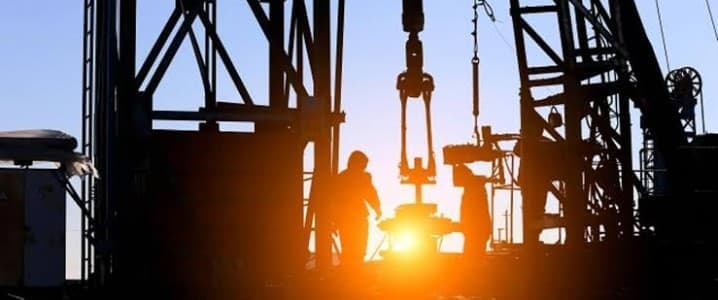
Iraq’s Oil Ministry has confirmed that it is expediting the development of the Gharraf and Nassiriyah gas projects, with full operations expected to begin by early 2027, and production capacity reaching 200 million standard cubic feet per day (mmscf/d). This fast?tracking is being presented as a long?overdue step toward energy self?sufficiency, but the real stakes lie far beyond the technicalities of associated?gas capture. For the West, reducing Iraq’s dependence on Iranian gas is a strategic imperative aimed at weakening Tehran’s grip over Baghdad; for China and Russia, preserving that dependency helps maintain the integrity of the Iran-anchored ‘Shia Crescent of Power’ that underpins their broader regional ambitions. With both blocs quietly pulling in opposite directions, will Iraq’s latest push develop a genuine momentum, or will it turn out to be just another carefully choreographed illusion of progress?
The longstanding problem for the West in their attempt to establish an enduring presence in Iraq has been the even longer-standing influence of neighbouring Iran through its political, economic, religious, and military proxies, as fully analysed in my latest book on the new global oil market order. The clearest expression of this has been Baghdad’s continued reliance on Tehran for around 40% of its power supply — delivered through gas and electricity imports — a dependency that has produced three major consequences. First, the constant threat of immediate and prolonged power cuts, layered on top of those already endured, has muted political dissent against the Iran-aligned status quo. Second, it removed any urgency for Baghdad to exploit its own vast volumes of associated gas for financial gain, whether through exports or as feedstock for high-value petrochemicals projects such as the long-stalled Nebras initiative. And third, it discouraged top-tier Western firms from committing capital to the large-scale developments such as the Common Seawater Supply Project that could lift Iraq’s oil output to levels capable of elevating it to the position of the world’s second-largest oil producer after the U.S.
Related: OPEC+ Reaffirms Output Pause as Eight Producers Cite Market Stability
For years, rectifying this situation was not the primary focus of the West in Iraq, as it was instead focused on maintaining its military influence in the country following its removal of Saddam Hussein in 2003. Even after the U.S.’s ‘End of Combat Mission’ in Iraq in December 2021, Washington and its allies were content to keep granting waivers to Baghdad to keep importing Iranian energy, although its patience became increasingly strained during the first presidency of Donald Trump, also detailed in my latest book. However, in his second term, all this changed, with April seeing the introduction of the ‘No Iranian Energy Act’ to U.S. lawmakers. As highlighted by Chairman of the Republican Study Committee, Congressman August Pfluger, this legislation is part of President Donald Trump’s maximum pressure campaign against Iran’s leaders. “[These] are the world’s most dangerous state sponsors of terrorism, [and] the Iranian regime is not just a threat, its leaders are a genocidal death cult,” he said. The proposed Act will definitively sanction the importation of Iranian natural gas to Iraq. An adjunct piece of legislation – the ‘Iran Waiver Rescissions Act’ — would permanently freeze Iranian-sanctioned assets everywhere, including Iraq, and prohibit any standing or future U.S. President from using any waiver authority to lift the sanctions.
The key to rapidly increasing Iraq’s own gas supply for power generation or petrochemicals feedstock — and therefore reducing its dependence on Iran — lies in cutting the vast volumes of gas flared during oil production. Until very recently, Iraq was the world’s second?largest gas flarer after Russia, burning more than 17 billion cubic metres (Bcm) a year despite joining the United Nations and World Bank’s ‘Zero Routine Flaring’ initiative in 2017, which commits signatories to end routine flaring by 2030. Strip out this waste and Iraq’s gas potential looks formidable: official estimates put southern reserves at around 3.5 trillion cubic metres (Tcm) — roughly 1.5% of global totals — placing the country 12th among the world’s reserve?holders. Around three-quarters of this is associated gas, and the figures were not updated when Iraq revised its proven oil reserves upward in 2010. The International Energy Agency, however, estimates ultimately recoverable resources at closer to 8 Tcm, with roughly 30% thought to be non-associated. In the north, Kurdistan’s Ministry of Natural Resources assesses proven reserves at 0.7 Tcm and unproven resources at up to 5.6 Tcm — around 3% of global deposits. These numbers are broadly credible: the U.S. Geological Survey believes that undiscovered resources in the Zagros fold belt alone — much of which lies within the Kurdistan region — amount to roughly 1.5 Tcm.
In a neat turn of synchronicity, one of the earliest attempts to close the gap between gas being flared and gas being captured for productive use centred on the very same areas now back in focus: Gharraf and Nassiriyah. In 2018, Iraq’s Oil Ministry reached a broad agreement with U.S. oil?field services giant Baker Hughes to capture around 200 mmscf/d of associated gas from Gharraf, neighbouring Nassiriyah, and several fields north of Basra. Baker Hughes will be the key collaborator here too, along with the state-owned South Gas Company, and the China Petroleum Engineering & Construction Corporation also having a presence in the project. The original agreement between Iraq’s Oil Ministry and Baker Hughes was intended to run in parallel with rising oil output from the fields themselves — with Gharraf, for example, slated to lift production from roughly 90,000 barrels per day (bpd) to its targeted plateau of 230,000 bpd under the joint stewardship of Japex, Petronas, and Iraq’s North Oil Company. According to the Oil Ministry, the first phase of the Baker Hughes plan involved deploying an advanced modular gas?processing system at the Integrated Natural Gas Complex in Nassiriyah to dehydrate and compress flare gas, generating more than 100 mmscf/d. The second phase would expand the Nassiriyah facility into a full natural gas liquids (NGL) plant capable of recovering 200 mmscf/d of dry gas, LPG, and condensate. All of this output was earmarked for domestic power generation, with Baker Hughes estimating that capturing the flared gas from these two fields alone could supply around 400 megawatts to the Iraqi grid. At the time, deputy oil minister Karim Hattab said the project would take 30 months to complete – so it should have been finished around four years ago.
The fact that it was not highlights that, despite this latest push, Iraq finally breaking out of its long-running cycle of dependency on Iran is far from guaranteed. Baghdad has had access to the technical solutions and the required reserves for years, and the logic for capturing rather than burning its gas has been obvious for much of that time. What might catalyse a major shift now is the sheer weight of the geopolitical pressure from the West bearing down on Baghdad. With Washington moving to eliminate the waivers that once allowed Iraq to rely on Iranian imports, the cost of inaction is no longer measured in lost revenue or stalled projects but in the risk of ever-tighter sanctions that could destabilise the entire economy. As a senior source close to Iraq’s Oil Ministry exclusively told OilPrice.com last week, the choice here — as with most oil and gas decisions in the Middle East — has far more to do with geopolitics than with energy. “If [current Prime Minister, Mohammed Shia’] al-Sudani is finally chosen again [following the recent elections] as the leader, then it’s very likely Iraq will move in this direction [to greater gas capture and reduced reliance on Iran], but if a leader emerges from the large pro-Iran faction then it just won’t happen.”
By Simon Watkins for Oilprice.com
More Top Reads From Oilprice.com
Oilprice Intelligence brings you the signals before they become front-page news. This is the same expert analysis read by veteran traders and political advisors. Get it free, twice a week, and you’ll always know why the market is moving before everyone else.
You get the geopolitical intelligence, the hidden inventory data, and the market whispers that move billions – and we’ll send you $389 in premium energy intelligence, on us, just for subscribing. Join 400,000+ readers today. Get access immediately by clicking here.