

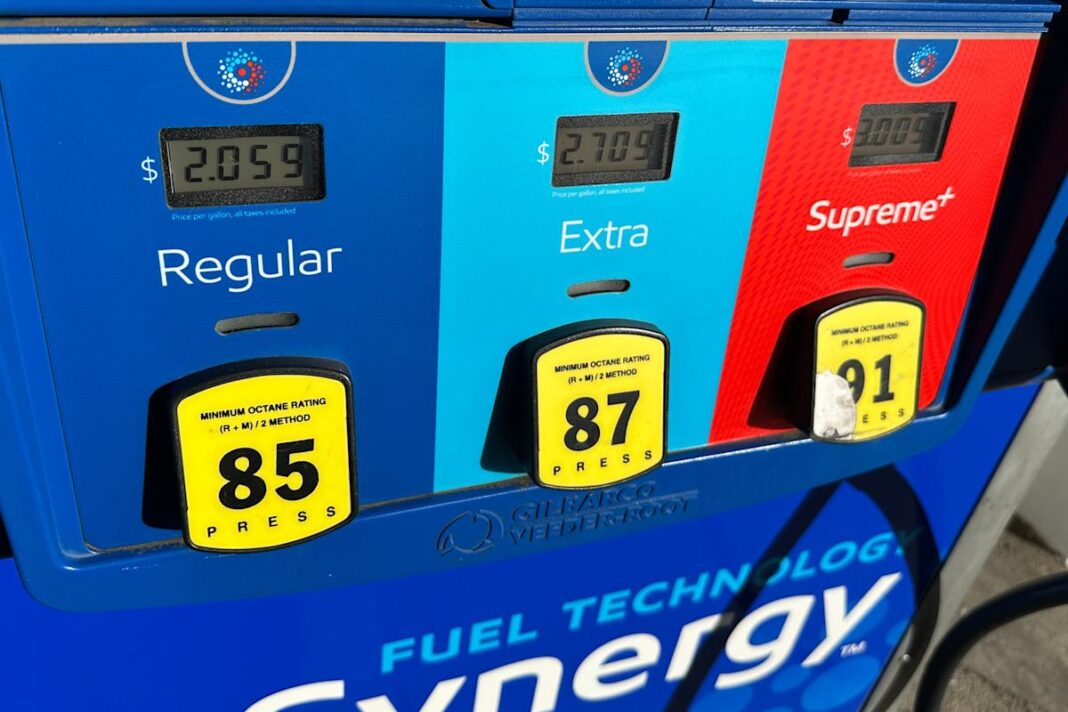

Gasoline prices fell for a sixth straight week to their lowest level in nearly five years as seasonal factors and cheaper oil weighed on the market while traders monitored developments following the US capture of Venezuelan leader Nicolás Maduro.
The national average on Monday stood at $2.81 per gallon, according to AAA data, about $0.25 lower than a year ago and the lowest level since March 2021. Only about nine states have averages above $3 per gallon, while California, burdened with taxes and higher fees, has seen its average decline to $4.25 per gallon.
The declines come amid growing questions over Venezuela’s vast energy reserves after the United States captured Maduro and his wife over the weekend. President Trump stated that the US would temporarily “run” the South American country until a proper transition took place and said American oil companies would spend billions on Venezuela’s oil sector.

“Some Americans believe gasoline prices could be impacted in a significant way, but I’m here to throw a bit of cold water on that,” said Patrick De Haan, head of petroleum analysis at GasBuddy.
De Haan expects gas prices to bottom out in the weeks ahead before beginning their seasonal climb closer to March.
It’s unclear how quickly oil could flow out of the country, given that production has been hampered and waned over the years.
“Even under the most optimistic outcomes, it could take years of positive developments for additional supply to meaningfully move the needle, and the impact on US gasoline prices may ultimately be limited,” he said.
JPMorgan analysts predict that while production in Venezuela could temporarily fall due to operational disruptions, recovery and output increases could follow in subsequent months.
“Looking ahead, we continue to maintain our view that a regime change in Venezuela would immediately represent one of the largest upside risks to the global oil supply outlook for 2026–2027 and beyond,” wrote JPMorgan’s Natasha Kaneva and her team on Sunday.
Combined oil reserves from Venezuela, nearby Guyana, and the US could give America control over roughly 30% of global oil reserves if consolidated under its influence, potentially keeping oil prices within historically lower ranges, said the analysts.
Last year, US benchmark West Texas Intermediate crude (CL=F) and Brent (BZ=F) crude futures fell nearly 20% and 18%, respectively, amid rising supply, marking their steepest annual declines since 2020.
On Monday, Brent jumped more than 1.5%, while WTI also rose.


