

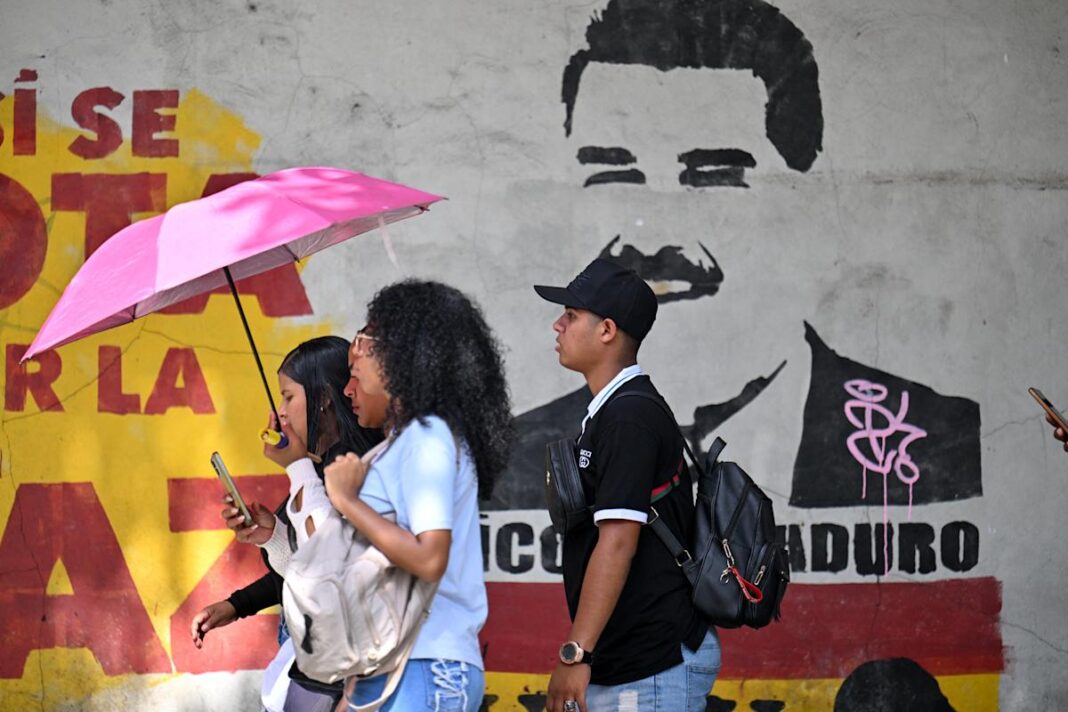

Early Monday morning, Ed Yardeni, president of Yardeni Research, wrote in a note to clients that he was adding Venezuela “to our list of unsettling developments” that could factor into a volatile start to 2026.
By late morning, Yardeni — like others — had watched the stock market largely brush off the weekend developments that saw the US capture and arrest Venezuela’s Nicolás Maduro.
“The positive response in stocks is fascinating,” Yardeni wrote. “It suggests the markets are not particularly concerned. The market seems to be focusing on the positive consequences — peace through strength. Maybe that’s what markets are rooting for.”
Wall Street is still assessing the fallout from the US incursion into Venezuela. But at least to start, investors are looking past it to focus on the themes that have dominated markets throughout 2025 — and even earlier — with the AI trade returning to rally mode and focus looming on the Federal Reserve and corporate earnings.
Asked how the current climate would impact his holdings, Gabelli Funds portfolio manager John Belton holdings said not much.
“I think that’s why the market is so, quote unquote, shrugging it off — this situation — at least as given what we know today,” he told Yahoo Finance. “Not a big impact on company fundamentals … not a big part of the global economy. I think that it’s pretty straightforward.”
Ben Emons, founder and CIO of FedWatch Advisors, suggested investors may even be treating the moment as a “risk-on” event.
“2026 kicks off as a geopolitical year, which could act as a risk-on catalyst in subsequent periods,” Emons wrote in a note to clients. “It reminds me of 2016, when regime shifts like Brexit and Trump’s first election triggered significant rallies in commodities, emerging markets, and domestic equities.”
Read more: Find the best credit cards for buying gas in 2026
Not everyone is convinced the market reaction will remain calm. Peter Tchir of Academy Securities said the larger risk may come from China, the biggest buyer of Venezuelan oil.
Venezuela holds the world’s largest proven oil reserves, but decades of mismanagement, underinvestment, and US sanctions have reduced its output to less than 1% of global supply.
“So far, the administration has only talked about reparations and getting oil rights back to US companies. Expect those actions to be fought, in the courts as China has to protect their own interests or face not just economic losses, but loss of face as well,” Tchir wrote to clients.


