The Tesla autonomy debate has always been part engineering argument, part social‑media war, so when a clip that changed the tone surfaced on X, I was not surprised.
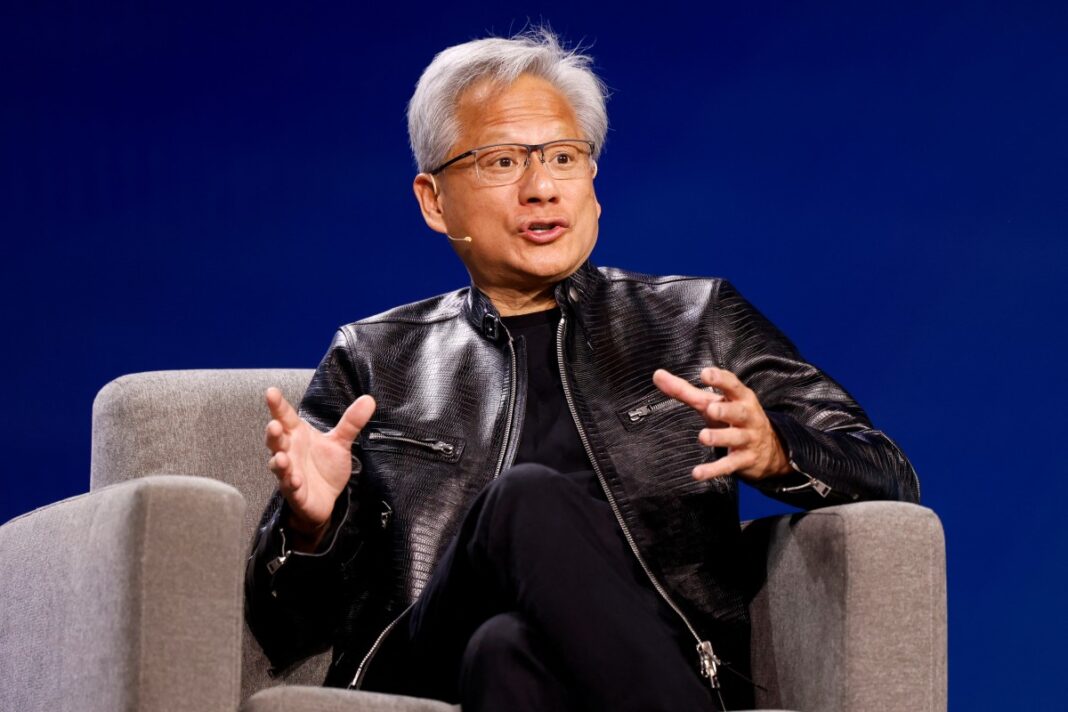
Nvidia CEO Jensen Huang said he thinks “the Tesla stack is the most advanced autonomous vehicle stack in the world” and that he is “fairly certain they were already using end‑to‑end AI,” as cited at CES 2026 in his Bloomberg interview.
Sawyer Merritt, a widely followed Tesla investor, posted the clip with the quote on X (formerly Twitter) and credited Bloomberg’s Ed Ludlow for the interview.
That one sentence did what years of Tesla blog posts and earnings‑call sound bites have struggled to do. It took the core of Musk’s autonomy pitch and put it in the mouth of the most important AI hardware supplier on the planet.
Merritt’s post captured Huang’s full thought, including his point that whether Tesla’s AI performed explicit “reasoning” was “somewhat secondary” to the fact that it was already end‑to‑end. This is exactly how Tesla has described its Full Self‑Driving stack since its 2023 rewrite.
I have been writing about Tesla long enough to know how quickly a quote like that becomes canon.
Within hours, other accounts were slicing the clip, adding captions such as “Nvidia CEO admits Tesla’s FSD lead is phenomenal,” and treating the phrase “most advanced stack in the world” as the final word in arguments about whether Tesla is behind Waymo or other robotaxi projects.
StockSavvyShay summarized the mood neatly, posting on X that Huang had praised Tesla’s autonomy stack and said the company was “doing a great job.”
The second wave of posts that caught my eye came from Wolf Financial, which often acts as an amplifier for market‑moving clips. “$NVDA CEO Jensen Huang was just asked about the difference between Nvidia’s Alpamayo and $TSLA FSD. Here is his full answer,” Wolf wrote, linking to the longer segment where Huang describes Nvidia’s platform.
In that exchange, Huang breaks autonomy into four layers: data centers and networking, AI infrastructure, the driving stack itself, and the car hardware that runs it. Wolf and other commenters seized on the part where Huang acknowledges that Tesla tackled a “real problem end to end” and built a full stack on top of Nvidia chips, something he called “extraordinary,” given Tesla’s relatively small team.
Those details surfaced again in YouTube breakdowns with titles such as “Nvidia CEO reveals Tesla’s biggest threat yet,” which argued that Alpamayo validates Tesla’s camera‑first, neural‑net‑heavy approach, even as it opens the door for competitors.
Tesla’s is the most advanced autonomous vehicle stack in the world.
Herbert Ong, an investor who has tracked Tesla and Nvidia for years, translated that into a simple investor thesis. Nvidia is “starting at the platform level” and “staying at the platform level,” while Tesla is building “the full AI stack” into its own cars, Ong said in a recent discussion of the CES announcements on his YouTube channel.
Ong’s point, echoed in his X posts, is that Tesla and Nvidia are solving the same autonomy problem with the same end‑to‑end AI philosophy, but from different positions in the value chain.
More Nvidia:
As someone who spends most days parsing corporate jargon and analyst notes, I saw that as an important nuance. Huang’s praise does not mean Nvidia will not compete with Tesla in autonomy. It means that when Nvidia builds a rival platform, it is effectively choosing Tesla’s way of doing autonomy as the model, rather than rejecting it.
That is exactly why Tesla bulls on X talked about the interview as “settling” the debate over whether Tesla picked the right technical path.
Nvidia’s Alpamayo is described as an “open suite of AI models, simulation tools, and real‑world AI datasets” for building safe, explainable self‑driving systems, according to a report from 24/7 Wall St.
The platform is designed to be used by multiple automakers, which means it directly targets the market Tesla wants to dominate with its own Full Self‑Driving software.
Nvidia told investors it will operate and maintain the Alpamayo stack “for as long as we shall live,” positioning it as a long‑term platform play rather than a one‑off chip launch.
That context matters for investors trying to square Huang’s praise for Tesla with Nvidia’s competitive ambitions. Alpamayo is the clearest sign yet that Nvidia wants a share of the self‑driving economics Tesla has been promising since it first demoed FSD.
Musk did not let Huang have the last word. Musk said Nvidia’s AI model for self‑driving cars “could become a competitive pressure on Tesla in five or six years,” according to Yahoo Finance. The news outlet mirrored the 12‑second video on TikTok and Instagram with the caption “Take notes.”
Tesla‑focused outlets added important context around that line. Musk said it will take “several years” for FSD to go from “sort of works” to “much safer than a human,” then “several years after that” for legacy manufacturers to design the right cameras and AI computers into their cars.
Only then, he said, will Nvidia‑powered systems become direct competition, according to TeslaNorth. “So this is maybe a competitive pressure on Tesla in 5 or 6 years, but probably longer,” Musk added.
I read that as Musk trying to have it both ways.
On one hand, he acknowledges that Nvidia is building something real enough to worry about. On the other, he reminds investors that Tesla has spent years optimizing its own in‑house hardware, including its Dojo training system and FSD inference chips, and rolling them out across a global fleet that already ships with the cameras and compute he thinks autonomy requires.
If you spend any time in Tesla investor circles, you know this debate is not really about who can demo the flashiest self‑driving clip. It is about who owns the “full stack” that will matter when autonomy finally scales.
On that score, Tesla bulls argue that Huang just made their case for them.
Tesla already buys Nvidia chips for its training clusters and could keep doing so, even as it brings more workloads onto Dojo, as YouTube analyst channels have noted. That makes Nvidia the upstream enabler of an autonomy stack that Huang now publicly calls “most advanced.”
Meanwhile, Tesla owns the fleet, the vertically integrated vehicle hardware, and the software revenue. In a 2025 discussion, Ong summed it up as Tesla building “across their entire business” while Nvidia “stays focused at the platform level,” which he argued leaves Tesla better positioned to capture end‑user economics.
From my vantage point as a markets reporter, that is why the X reaction to Huang’s quote felt different from the usual Tesla cheerleading. This was not just fans saying Musk was right. It was the AI market’s key supplier effectively telling the rest of the auto industry that Tesla’s end‑to‑end, AI‑first architecture is the benchmark.
Huang even said Tesla’s stack was “hard to criticize” and that he “wouldn’t criticize it,” according to a follow‑up clip Merritt shared.
That does not answer every question about safety, regulation, or timelines, but it does narrow the engineering argument in a way that favors Tesla’s current approach.