


Unlock the White House Watch newsletter for free
Your guide to what Trump’s second term means for Washington, business and the world
This winter, an essay by an Australian investor called Craig Tindale, with the ugly title “The Return of Matter: Western Democracies’ material impairment”, has caused a frisson in some financial circles — and in the White House.
The essence of Tindale’s argument is that western elites have been so burdened by cognitive biases — of the sort described by the Swiss intelligence service — that they have obsessively focused on service-sector activities, while ignoring industrial processes.
“For the past three decades, western economies have operated under the tacit neoclassical assumption that control over intellectual property, financial instruments, and software code constitutes the apex of value creation,” he argues.
“[Elites thought that] the physical processes of industrialism . . . could be outsourced to low-cost jurisdictions without strategic peril,” he adds. That enabled China to jump in and dominate global manufacturing supply chains with barely any outcry.
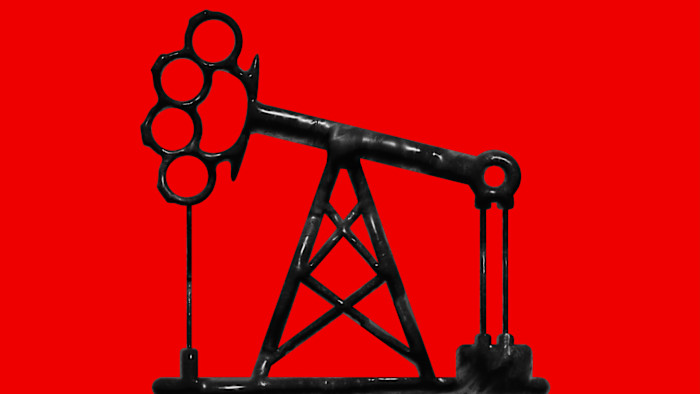
It is a thesis worth examining now, given US President Donald Trump’s decapitation of the Venezuelan government. One way to frame these dramatic events is that the Trump administration is reverting to an ugly form of “retro imperialism” based on a sphere of influence mantra — and naked plunder.
However, another reading is that Trump’s team have embraced Tindale’s insistence that physical matter matters, and are fighting for industrial dominance. Hence Trump’s desire to control Venezuela’s fossil fuels indefinitely, while undermining Chinese access to them.
“The future will be determined by the ability to protect commerce and territory and resources that are core to national security,” Trump explained last week. “These are the iron laws that have always determined global power, and we are going to keep it that way.”
Will it work? The answer is “yes” and “no” — depending on your intellectual and temporal frame. On paper, Venezuela has the world’s biggest oil reserves, almost a fifth of all potential supply. However, they cannot be unlocked without more than $100bn of investment, since its infrastructure has collapsed and the crude oil is so heavy and sulphur laden that it needs expensive processing to be sold in western markets.
Trump says US oil companies will make that investment. But Philip Verleger, an energy economist, tells me they “do not have the money”. So the US oil sector is now demanding White House guarantees before it acts.
Maybe Trump will deliver. If he does, “combined oil reserves from Venezuela, Guyana and the US could give the US about 30 per cent of global oil reserves if consolidated under its influence”, as JPMorgan Chase notes. This would change global oil dynamics.
But there is a bitter irony here. Although Tindale is correct to decry the anti-manufacturing tunnel vision of neoliberals, Trump’s team have cognitive biases too. Most notably, they seem determined to ignore the fact that fossil fuels are not the only energy source.
This is ridiculous. To see why, just look at China: even as it has expanded industrial production and (lamentably) coal mining in recent years, it has also invested in renewable energy on a stunning scale. That is partly to fight climate change — which is a laudable goal.
But Beijing has also done this because some renewable energy, like solar, is dirt cheap, and diversification creates more resilience. So while it will certainly hurt China to lose access to cheap Venezuelan crude, it can partly use other energy sources. It is also gaining soft power by exporting products such as ultra-cheap solar panels to countries around the world. And by investing in renewables, China is expanding its electrification infrastructure in a way that could create a big advantage in the AI race.
“China now produces 2.5 times as much electricity as the US and is pulling further ahead,” notes Ian Bremmer of the Eurasia Group, who points out that places such as Saudi Arabia and India are (quite sensibly) aping this strategy. But Trump is not. Instead his White House is doubling down on fossil fuels, and undermining American renewable energy, including by removing past subsidies.
This is a moral crime, given the potential impact on climate change. It is also economic self-sabotage: not only is Washington ceding soft power to Beijing, but the attacks on renewables could also hamper American efforts to build the power infrastructure needed for AI. Venezuelan oil alone cannot do the trick.
“The fastest, cheapest path to new [electricity] capacity at scale — solar plus batteries, deployable in 18 months — is precisely what the United States is now hobbling,” notes Bremmer. “Washington is asking the world to buy 20th-century infrastructure, while Beijing offers 21st-century infrastructure.”
To put it more bluntly, Trump’s team has now won the short-term battle with China to control Venezuelan oil. But they are at risk of losing the bigger strategic global war around the energy needed for AI. Investors — and Trump supporters — should pay attention, and weep at these dangerously retro instincts.


