


-
Investors are concerned about the quality of the data used by artificial intelligence (AI) companies and their data security measures.
-
Valuation risk is another potential issue, especially with some AI stocks trading at high P/E ratios.
-
Don’t let expensive valuations deter you from investing — many AI companies have strong businesses, delivering record revenue.
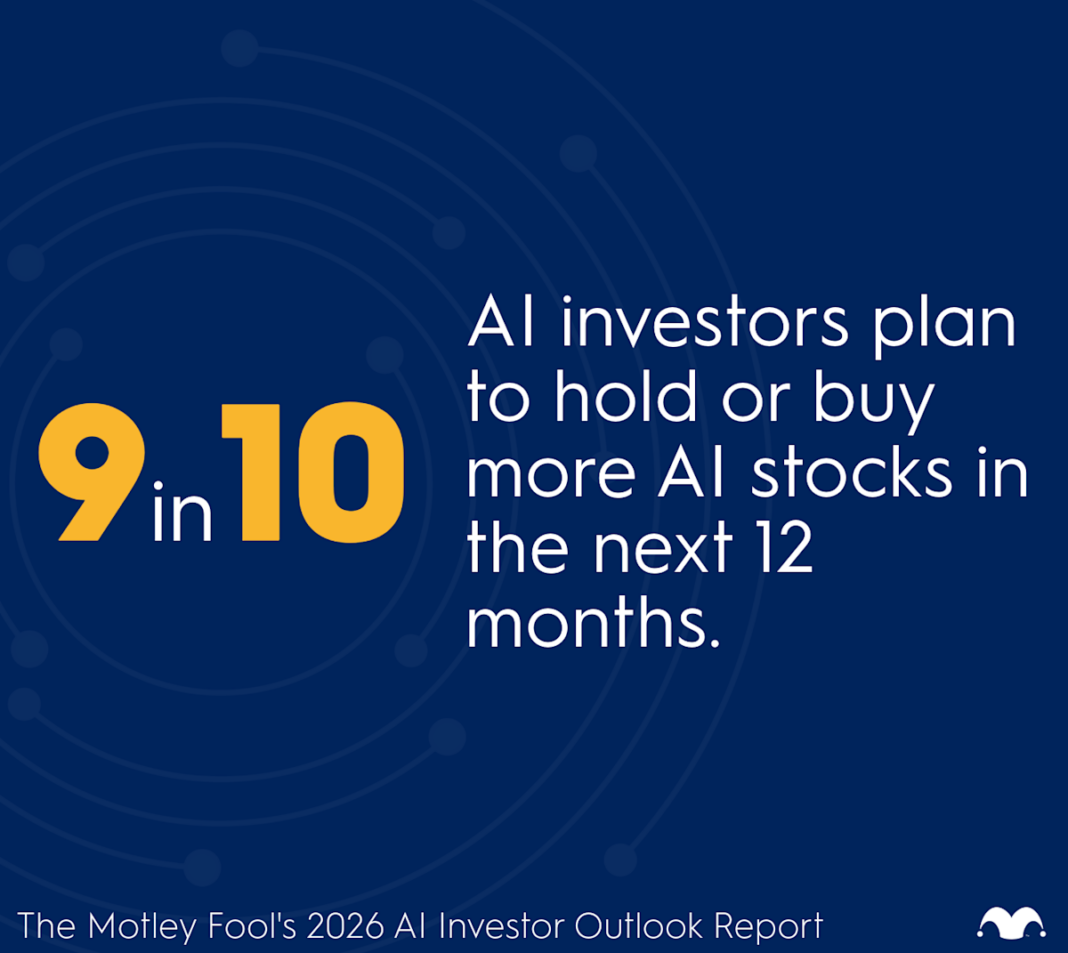
Despite talk of a potential bubble, investors are largely bullish on artificial intelligence (AI) technology. Nearly two-thirds (62%) of those surveyed for The Motley Fool’s 2026 AI Investor Outlook Report said they’re confident companies investing heavily in AI will deliver strong, long-term returns. Those who already own AI stocks and AI ETFs are even more confident, with 93% expecting strong returns from AI companies.
However, investors have several concerns about investing in AI companies. There are two issues, in particular, that they fear the most.

The biggest risk associated with AI investing is the data quality and security of AI companies, with 49% of investors mentioning it as a concern. This is a multifaceted issue that encompasses how companies train their AI models and what they do with their data.
AI models are only as accurate as the data used to train them. A model trained on low-quality data is more likely to produce AI hallucinations — confident-sounding responses that are actually inaccurate. If you’ve used AI tools much, you’ve probably experienced this firsthand. AI hallucinations can have serious consequences, particularly as more companies rely on AI in their day-to-day operations.
AI companies manage massive amounts of data, including their training data and information from user interactions. There are privacy concerns regarding how these companies store and use this data, and it also makes them a target for hackers.
Tech valuations have gotten a lot of attention recently, and 43% of investors expressed concern about the risk of AI companies being overvalued.
The numbers would seem to bear this out. The Nasdaq-100, a tech-heavy index, has a price-to-earnings (P/E) ratio of 38 (as of Jan. 9). Looking at a few of the big names, Nvidia (NASDAQ: NVDA) currently trades at 46 times trailing earnings, Microsoft at 34 times trailing earnings, and Palantir Technologies at a staggering 415 times trailing earnings.
Keep in mind that many AI companies are innovative, rapidly growing businesses, which is why they trade at higher valuations. If you just check Nvidia’s P/E ratio, it looks expensive. But it’s also a company that has delivered 12 consecutive quarters of revenue growth, most recently reaching a record high of $57 billion, and that has $500 billion in orders for its Blackwell and Rubin systems through the end of 2026.


