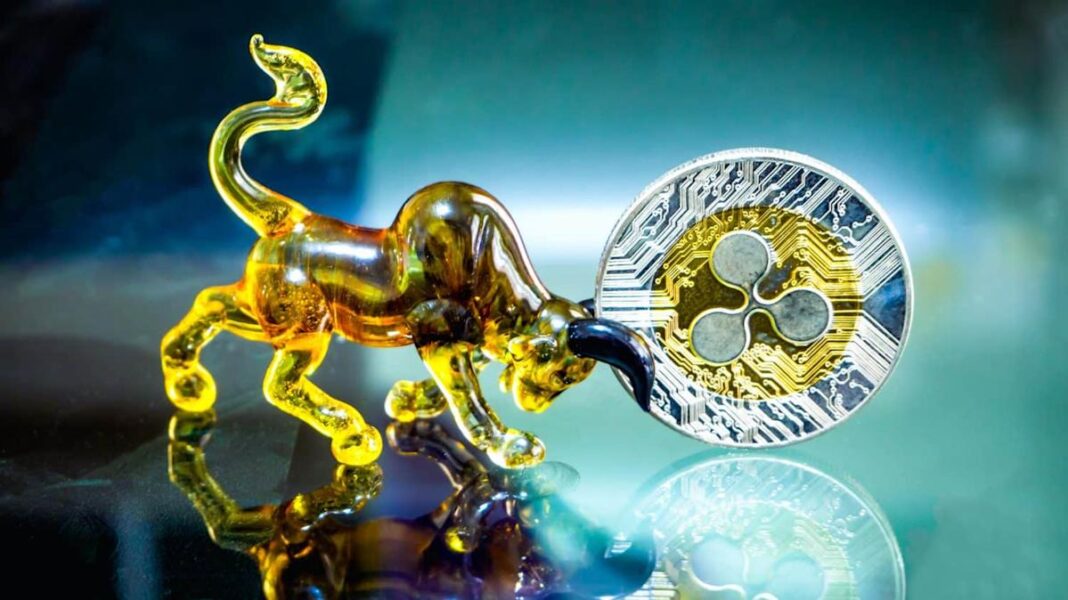
A $23M XRP trade executed across multiple exchanges in 60 seconds signals coordinated institutional positioning rather than speculation.
XRP exchange balances fell to eight-year lows near 1.6B tokens while seven spot ETFs now hold $1.3B in assets.
XRP gained 25% in early January 2026 versus Bitcoin’s 5.5%. Historical patterns show it leads altcoin rotations by several weeks.
A recent study identified one single habit that doubled Americans’ retirement savings and moved retirement from dream, to reality. Read more here.
XRP altcoin season 2026 may have just announced itself. A sudden $23 million XRP (CRYPTO: XRP) trade executed in just 60 seconds has shifted attention across the crypto market. The headline number wasn’t what mattered. It was the timing and structure behind it. Large, coordinated volume tends to surface when positioning changes beneath the surface, not when speculation peaks.
That’s why this event is being read as an early warning rather than a reaction. As capital begins rotating from Bitcoin into higher-beta assets, XRP often reflects that shift first. This pattern places renewed focus on whether altcoin season is starting in 2026, where leadership emerges quietly before the broader market catches on.
Travis Wolfe / Shutterstock.com
The $23 million XRP volume spike wasn’t about the size alone. It was about speed, coordination, and timing. According to analyst Xaif Crypto, the trade hit multiple exchanges simultaneously, indicating systematic execution rather than a one-off bet. That pattern usually comes from algorithms designed to test liquidity and enter positions quickly, even at higher costs. When capital moves this fast, it reflects urgency rather than curiosity.
More telling was when it happened. The burst arrived while XRP was still consolidating below the $2.12 resistance, before price acceleration drew attention. Volume led price, not the other way around—and that sequence rarely belongs to retail traders.
Supporting data reinforced the signal. Exchange balances kept falling toward eight-year lows around 1.6 billion XRP, large wallets continued accumulating, and ETF-linked flows stayed positive even as Bitcoin funds saw outflows. Taken together, the spike looked like the final phase of quiet positioning. It marked conviction forming beneath the surface, not excitement chasing headlines.
Djjeep_Design / Shutterstock.com
XRP often reacts before the rest of the altcoin market because it sits at the first stop beyond Bitcoin and Ethereum on the risk curve. Large investors use it to test whether capital can move into higher-beta assets without disrupting liquidity. That behavior is why XRP is widely treated as a canary crypto signal when market tone shifts.
Its structure supports that role. XRP trades deep order books, carries regulatory clarity following the SEC settlement, and has real transaction flow tied to payments through RippleNet. That combination attracts early rotation when sentiment turns constructive. Smaller tokens don’t offer the same balance of scale and stability.
Recent data fits the pattern. XRP outperformed while broader altcoins lagged, with a 25% gain in the first week of January 2026 compared to Bitcoin’s 5.5%. Exchange balances kept shrinking, whale activity hit a three-month high with 2,802 transactions over $100,000 on January 7, and institutional positioning tilted toward large-cap alternatives. Historically, this setup leads to broader participation by several weeks.
Tamisclao / Shutterstock.com
XRP has a habit of moving before the crowd. Across multiple cycles, its early strength has signaled broader rotation, shaping expectations for altcoin performance in 2026.
In 2017, XRP surged months before altcoins entered full momentum. Volume expanded while price stayed compressed, signaling accumulation rather than hype. As XRP rallied first, Bitcoin dominance slid sharply, and capital rotated outward. By the time retail interest arrived, much of the upside had already been set. That early move framed XRP as a reliable lead indicator rather than a late-cycle trade.
The 2021 cycle followed a similar script. XRP broke out after a long base while most altcoins lagged. Institutional accumulation and brief volume bursts appeared weeks before broader participation. The gap between XRP’s move and peak altcoin performance reinforced its role as a precursor, not a follower.
Current conditions resemble those earlier setups. Supply has tightened with exchange balances down 57% from October levels. Volume has accelerated, and XRP is again outperforming the pack. The structure supports a rotation process that begins with large-cap liquidity before spreading wider.
XRP’s case for leading the 2026 altcoin rally rests on tightening supply and steady institutional demand. Exchange balances sit near eight-year lows at roughly 1.6 billion XRP, while ETF holdings continue to pull tokens out of circulation. Seven spot XRP ETFs now trade in the United States with combined assets exceeding $1.3 billion and approximately 746 million XRP locked in custody.
On the demand side, ETF inflows accelerated in early January, with $48 million entering on January 6 alone. The technical structure shows XRP emerging from a multi-year compression that has historically preceded strong expansions. Together, these factors open a realistic path toward the $4 to $5 range if momentum sustains.
That upside still depends on confirmation. Bitcoin dominance needs to stay compressed, and mid-cap altcoins must begin outperforming to show broad rotation. Risks remain clear. Heavy profit-taking near recent highs, slowing ETF inflows, or a sharp Bitcoin breakout could unwind momentum. XRP holding above $2.10 support keeps the signal intact. Losing it would shift this move from leadership to a false start.
Most Americans drastically underestimate how much they need to retire and overestimate how prepared they are. But data shows that people with one habit have more than double the savings of those who don’t.
And no, it’s got nothing to do with increasing your income, savings, clipping coupons, or even cutting back on your lifestyle. It’s much more straightforward (and powerful) than any of that. Frankly, it’s shocking more people don’t adopt the habit given how easy it is.
The global hedge fund industry delivered a 12.6% annual return last year across all strategy types, its biggest since the Global Financial Crisis.The returns...