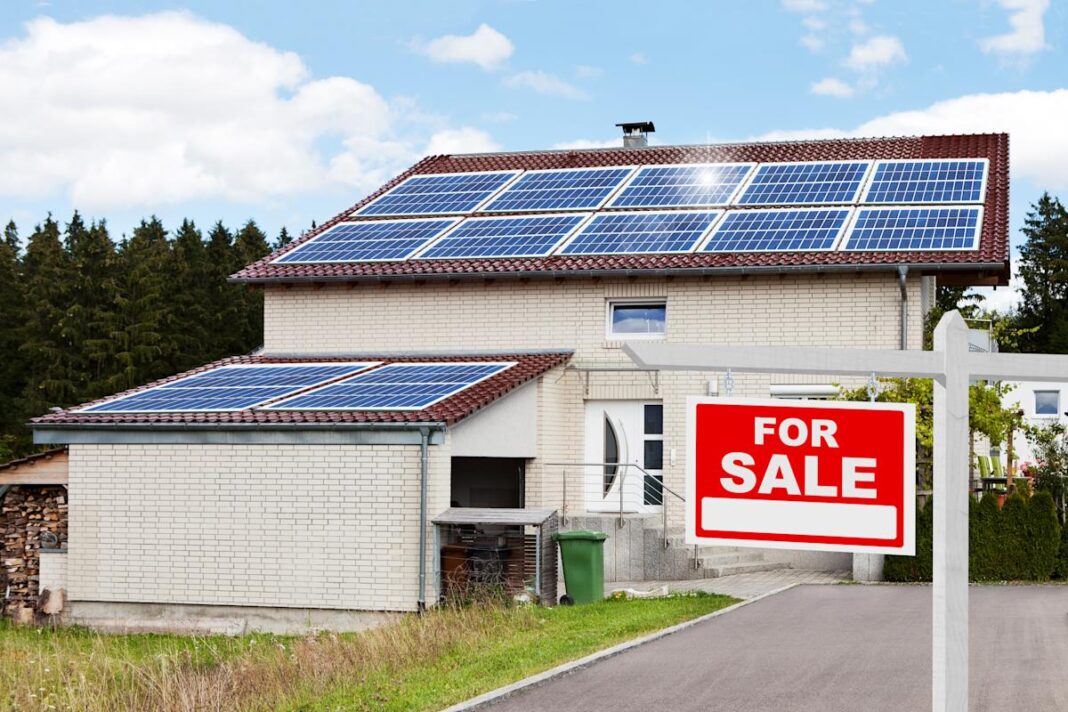
The pitch for solar sounds simple: At a time when electric bills are skyrocketing, installing panels can slash your utility costs and guarantee a lower, fixed rate from a green energy source. When it comes time to sell, panels can raise home values by 5% to 10%.
The only problem? Many homeowners with solar don’t actually own their panels. Instead, they lease them. Leases can run up to 25 years and come with onerous monthly payments, annual increases, and hefty early-purchase prices — they’re a liability, not an asset.
Owners who sign such deals often do so under the impression that if they sell their homes before their lease ends, their buyers will take over the payments. But the reality is more complicated: Buyers may struggle to qualify to assume a long-term liability on top of their mortgage, or simply refuse to take over a hefty contract they had no part in signing up for.
As buyers gain ground in many parts of the country, real estate agents say solar leases have emerged as a frequent sticking point in negotiations that can end in sellers paying off their contracts early, often for tens of thousands of dollars, lest their buyers walk away.
“When you go to sell the house, if you don’t pay off this system, the buyer has to qualify not just for buying the house, but also for this lease,” said John Bulik, a real estate agent in the western suburbs of Denver. “It can knock out some potential buyers, and we see a lot of buyers not wanting to go through that hassle.”
Residential solar has exploded in popularity in the past two decades, spurred by a growing interest in green energy, high electricity prices, tax incentives, and technological advances that made panels cheaper and more efficient. Nationwide, around 8% of homes now have solar (in sunny states like Hawaii, California, and Arizona, that number is far higher), making panel-dotted roofs increasingly common in listing photos.
While prices have come down over the years, solar is still a hefty investment: In 2025, Tesla put the cost of an average system at $21,900 to $26,400.
Leasing removes those up-front costs and relieves homeowners of maintenance headaches associated with owning their panels outright. The tradeoff, in addition to potential home-sale complications, is that they often end up paying more and seeing their energy savings diminish over time due to common contract clauses that ratchet up payments each year.
Despite the downsides, leases have been growing in popularity in recent years. As of mid-2024, around 36% of residential solar projects were leased or under a lease-like arrangement known as a power purchase agreement, up from 22% three years earlier, according to solar research firm Ohm Analytics.
An aerial view of residential homes, many with solar panels, on Sept. 17, 2025, in Fontana, Calif. (Photo by Mario Tama/Getty Images) ·Mario Tama via Getty Images
And it’s likely leases will grow even more popular this year, after a 30% tax credit for buying clean energy expired at the end of 2025, while a different commercial tax credit, for companies that offer leases and PPAs, remains in place. The tax changes have left many solar companies scrambling to adjust their business models.
“I think it is definitely pushing the industry, i.e., the solar installers and financing companies, to come up with more lease and PPA products,” said Vikram Aggarwal, the founder and former CEO of EnergySage, a solar comparison-shopping marketplace.
Aggarwal, though, said he doesn’t think most customers would enter leases if they fully understood the implications.
When Kip Barnard, a San Jose, Calif.-based agent, is working with a seller with solar panels, one of his first steps is to figure out if the system is owned or leased. If it’s leased, he says he’ll “delicately” explain how those contracts can complicate sales. In Silicon Valley, a hot market, buyers usually end up assuming the leases in the end. But he calls the whole process — marketing the system, getting a lease transferred, and handling buyer and seller negotiations — “a challenge.”
“I think they’re being sold a product that sounds good,” Barnard said of sellers with leased systems. In many cases, homeowners may have been misled by salespeople touting the home-equity benefits of solar while obscuring the fact that leases are liabilities. “I’ve never met a buyer that’s thrilled about picking up somebody else’s lease.”
When house-hunting in Gun Barrel City, Texas, a small town outside Dallas, Josie Williams and her husband fell hard for a four-bedroom, two-bathroom home that offered an open-concept layout, a short commute to the pest control company where they both work, and a corner lot with ample yard space where their young daughters could play. The only problem? The owner owed more than $60,000 on the home’s solar panels and was seeking a buyer who would take on the payments.
Williams, 33, knew little about solar, and her agent encouraged her dig into the details of the contract. They discovered that while the home had no electric bill, she and her husband would have to pay $291 a month toward the panels for the next two decades. The price seemed steep, and they worried the additional obligation might slow their equity building.
They attempted to negotiate a lower offer that would reflect the liability of the panels, or a deal where the seller would pay off the system. When they were rebuffed, they walked away.
“My thought process was, if you have loans on something like that, it’s not someone else’s responsibility to come in and pay for those,” Williams said.
So what’s a homeowner to do? At a time when electricity costs are rising rapidly, agents and experts who spoke to Yahoo Finance said they believe solar panels can still be a valuable and cost-saving addition to a home, provided they’re owned. One analysis of 2025 Zillow data by comparison website SolarReviews found that homes with solar commanded a 6.9% premium over those without.
In Colorado, Xcel Energy, the utility for much of the Denver area, has been raising rates aggressively in recent years and is seeking another 10% hike this year. Nationwide, energy bills have been climbing far faster than the rate of overall inflation. Those trends can make owned solar make sense as a long-term investment, said Bulik, who installed solar on his own home about eight years ago.
“It makes buying start to look attractive again, even with the tax incentives gone,” Bulik said.
Claire Boston is a Senior Reporter for Yahoo Finance covering housing, mortgages, and home insurance.