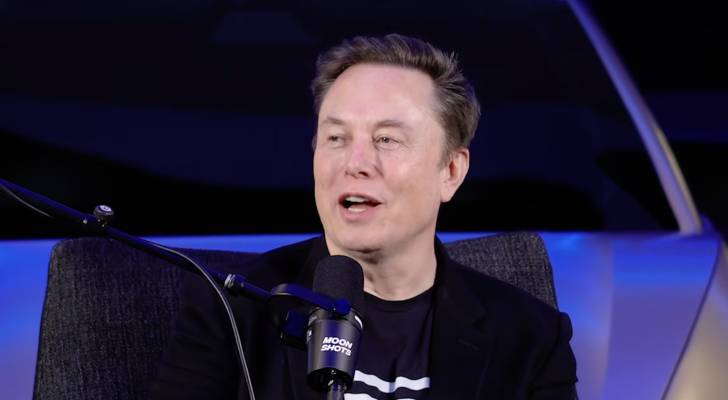
Elon Musk has once again ignited discourse; this time over something most people treat as foundational to financial security: retirement savings.
On a recent episode of the Moonshots with Peter Diamandis podcast, Business Insider reports, the Tesla and SpaceX CEO argued that the traditional idea of saving for retirement could become “irrelevant” in the next decade or two thanks to advances in artificial intelligence (AI), robotics and energy technologies. He claims these will usher in a new era of abundance.
Musk paints a bold, but fanciful, picture: one where machines handle most work, goods and services are plentiful and cheap, health care and education are freely accessible and a so-called “universal high income” ensures everyone’s basic needs are met. In that future, Musk says, worrying about squirreling money away for retirement “won’t matter.” But before you side with the world’s richest entrepreneur and abandon your 401(k), there’s an important reality check to consider.
Musk’s thesis hinges on an extreme vision of technological transformation; one in which AI, robotics and other innovations will boost productivity so dramatically that scarcity — the economic force that underpins money, work and saving — will effectively vanish.
In such a world, he argues, traditional retirement planning may lose its relevance.
That’s an optimistic and highly speculative idea of the future. Musk said he imagines the transition could be “bumpy,” potentially sparking social unrest and even a crisis of meaning as traditional work becomes less necessary (1).
It’s crucial to note that Musk isn’t offering personal finance advice in the conventional sense. He’s describing a theoretical future economy. Yet his influence means many people could interpret his comments as a green light to stop saving altogether — especially younger workers still in the early stages of building financial security.
Read More: The average net worth of Americans is a surprising $620,654. But it almost means nothing. Here’s the number that counts (and how to make it skyrocket)
Unlike Musk, most Americans don’t have billion-dollar safety nets if the future doesn’t unfold as predicted. For many, retirement savings are far from irrelevant. In fact, they’re critically insufficient.
Almost half of U.S. households had no retirement savings at all as of 2022, and only about a quarter had more than $100,000 saved, according to the Federal Reserve’s Survey of Consumer Finances (2).
AARP further reports that 1 in 5 Americans aged 50 and older have no retirement savings, and more than half feel they won’t have enough saved for a secure retirement (3). Many workers feel behind on retirement planning, CNBC reports, acknowledging they’re not saving enough or starting too late (4).
Many financial planners recommend saving enough to replace a substantial share of pre-retirement income — often translating to hundreds of thousands or even more than a million dollars — depending on lifestyle and your unique needs and expenses (4).
These benchmarks are well beyond the savings most Americans currently have. Against this backdrop, advice suggesting that saving for retirement may not matter soon could be very misleading if taken at face value.
Statements like Musk’s pose a psychological risk: people might take them as permission to put off saving or skip participating in employer matching plans — exactly the habits that can jeopardize long-term security.
For workers juggling inflation-driven expenses, student debt, housing and health care costs, and uncertain access to employer retirement plans, retirement can already feel distant and abstract. Messaging that implies retirement planning might eventually be obsolete could make it even easier to delay starting or increasing retirement contributions.
And while technology has historically boosted productivity and created new economic opportunities, there’s no guarantee that these advances will automatically translate into abundance for everyone, let alone on a timeline that matches Musk’s prediction.
Financial professionals generally agree that retirement planning remains essential under today’s economic conditions. No robust, widely supported policy or economic structure currently exists that would guarantee a universal income or the elimination of scarcity any time soon.
Until such mechanisms are in place, individuals are still responsible for building their own safety nets. Instead of treating Musk’s comments as a personal finance strategy, see them as a reminder that the future of work and income could change. That said, it’s best to plan based on what you know now, not on what might happen.
That means:
-
contributing consistently to retirement accounts, especially when employers match contributions
-
building an emergency fund
-
regularly reviewing and adjusting savings goals, and
-
staying informed about broader economic and technological trend
In other words: prepare for the world you live in today, while staying ready to adapt if seismic economic shifts do arrive.
We rely only on vetted sources and credible third-party reporting. For details, see our editorial ethics and guidelines.
Business Insider (1); USA Facts (2); AARP (3); CNBC (4)
This article provides information only and should not be construed as advice. It is provided without warranty of any kind.