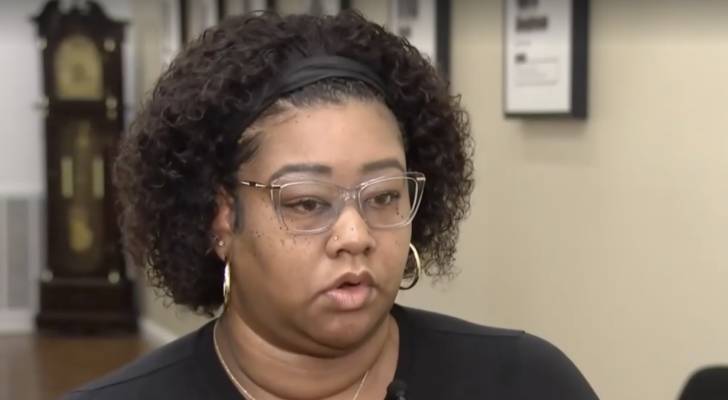
Usually, the most jarring part of a car accident is the collision. But for one Michigan woman, allegedly getting blindsided by her insurance company after the fact left her feeling like she was “being thrown away.”
Cari McCaskill, of Oakland County, told ClickOnDetroit that she was involved in a traffic accident on May 2 of last year, when another car “came around, going about 40 or 50 [miles per hour], trying to get around traffic and T-boned us.”
At the time, McCaskill had two passengers, her 12-year-old daughter and her daughter’s friend. All three were, thankfully, unharmed.
McCaskill said that she filed a claim with her insurance company, GEICO, and “The process went as it normally does.” The claim, however, required the police report, which recorded McCaskill’s two young passengers.
And while she did receive notice that her car was worth more than $25,000, she said the insurance company, which she’d happily been with since 2014, went silent on her claim. It even got to the point, she added, that she couldn’t log into her insurance app to check the status of the claim.
Finally, weeks later, she received a response that she never could have expected.
Read More: The average net worth of Americans is a surprising $620,654. But it almost means nothing. Here’s the number that counts (and how to make it skyrocket)
Rather than a standard update on her claim, the letter McCaskill received from GEICO noted that her policy was “under review for rescission retroactively” to her most recent renewal, citing McCaskill’s “lack of disclosure of all resident relatives” in her household.
In other words, they cancelled her insurance because she hadn’t listed her 12-year-old daughter, who is not legally allowed to drive, in the personal injury protection (PIP) statement for her insurance coverage.
Worse, because the daughter’s friend, who was involved in the collision, went to the doctor for a post-accident check-up, GEICO served McCaskill papers for a complaint against both her and the doctor, claiming they didn’t have to provide medical coverage because of the aforementioned failure to list McCaskill’s daughter on the insurance. The story adds, however, that the doctor in question hadn’t even requested payment from GEICO (1).
The case, meanwhile, raises questions about who car owners must list on auto insurance forms, and if insurance companies can cancel coverage if you fail to include a minor who isn’t even legally allowed to drive.
Direct Auto — a division of Allstate — notes that, “Generally speaking, insurers will ask you to list all household members when applying for a car insurance policy” but that “young children (typically under the age of 14) should be exempt” (2). Other insurance companies suggest the same, including the Michaels Group, which added “Unlicensed children typically do not need to be listed as drivers” (3).
State laws, however, can complicate things. “Some states require all household members, even those who do not drive, to be listed on your car insurance policy,” CarInsurance.com states. “It ensures that any situation where someone else might drive your car, even temporarily, is covered” (4).
Michigan laws, meanwhile, have their own unique quirk. They state that “classifications and territorial base rates used by an insurer in this state with respect to automobile insurance” must be applied based on certain requirements, including “number of dependents of income earners insured under the policy” (5).
The law, then, appears to leave room for discretion as to whether the insurance company has to cover a collision, as there’s no age requirement for dependents listed in the policy. It also creates a potentially expensive situation for the many drivers who might assume that only those dependents of driving age need be included in their policy.
In a different report from ClickOnDetroit, insurance provider AAA confirmed that, “Due to state law, everyone has to be listed, even infants” on auto insurance policies (6).
That said, there’s clearly wiggle room for the insurance companies to provide coverage.
Another story about an accident in Michigan involved a local couple, their two small children, and GEICO insurance. The couple told their local Fox 5 station that their car, with the whole family inside, was hit by a driver on Christmas Eve 2025. And while they fortunately didn’t sustain any severe injuries, they say GEICO told them that their failure to list their one-year-old and three-month-old children on their insurance policy could “impact” their coverage. Still, in the end, the couple says GEICO agreed to cover the damage to the car — estimated to be up to $15,000 — allowing them to avoid the same fate as McCaskill (7).
As for McCaskill, her lawyer, Chris Camper, told ClickOnDetroit that the situation made her feel “as though she’s done something wrong and that she may be stuck with a $25,000 or $26,000 lease.”
GEICO told the outlet that it complies with all state insurance regulations regarding claims and coverage, and could not comment on a case with pending litigation. The specific lawyers representing GEICO did not respond to requests for comment (1).
According to the Insurance Information Institute (III), in 2024, the average collision claim payout was $5,489, while the average claim for bodily injury was $28,278 (8).
Costs of an auto collision, of course, can skyrocket depending on the severity of the damages and whether there were any injuries. And because different states have varying laws — including regarding the disclosure of dependents on your insurance forms — it’s best to speak with your insurance agent about the members of your household to ensure you won’t be denied coverage on the basis of incomplete disclosure.
That said, if you do find yourself in a dispute with your insurance provider, there are important steps you can take to help resolve the case.
The III suggests reviewing your policy, as “Most companies offer either arbitration or appraisal services to help settle differences and disputes. Your insurance policy will explain these options.” They add that sending documentation with all the relevant information, along with a letter, to the insurance company could help make your case (9).
Law firm DM Injury Law says that supporting evidence should include everything from police reports and witness statements to repair estimates.
Comprehensive documentation, they add, can significantly increase your chances of winning an appeal (10).
If all else fails, III and others note that turning to your state’s insurance regulator, an arbitrator or even an attorney may be necessary to get what you believe you’re owed.
And though it does add the extra cost of legal fees, Babcock Tucker Labor Advocates advise that “Most likely, once you’ve hired an attorney and they contact your insurance company, the dispute will be settled out of court” (11).
We rely only on vetted sources and credible third-party reporting. For details, see our editorial ethics and guidelines.
ClickOnDetroit (1); Direct Auto (2); Source name (3); Carinsurance.com (4); Michigan legislature (5); ClickOnDetroit (6); Fox 5 (7); Insurance Information Institute (8); Insurance Information Institute (9); DM Injury Law (10); Babcock Tucker Labor Advocates (11)
This article provides information only and should not be construed as advice. It is provided without warranty of any kind.