Intel (INTC) stock has gained about 26.27% year to date, at the time of writing, Saturday morning, Jan. 17, according to Yahoo Finance. Meanwhile, SPY is up 1.43% in the same period. What caused Intel stock to outpace the S&P 500 by almost 25%?
Two significant analyst notes boosted the stock. The first one was on January 5, when Melius Research upgraded Intel to buy from hold with a $50 price target. The second was on January 13, when KeyBanc upgraded Intel to overweight (buy) from sector weight with a $60 price target.
KeyBanc analyst John Vinh wrote that Intel’s foundry reached yield rates more than 60% on its 18A manufacturing process (node), which are good enough to ramp Panther Lake, according to Wall St Engine’s post on X (formerly Twitter). Vinh’s research indicates that Intel Foundry Services has landed Apple as a customer on 18A for low-end M-series processors, expected to go into production in 2027.
Intel’s Q4 earnings will be released on January 22, and several other analysts have also updated their opinion on Intel stock.
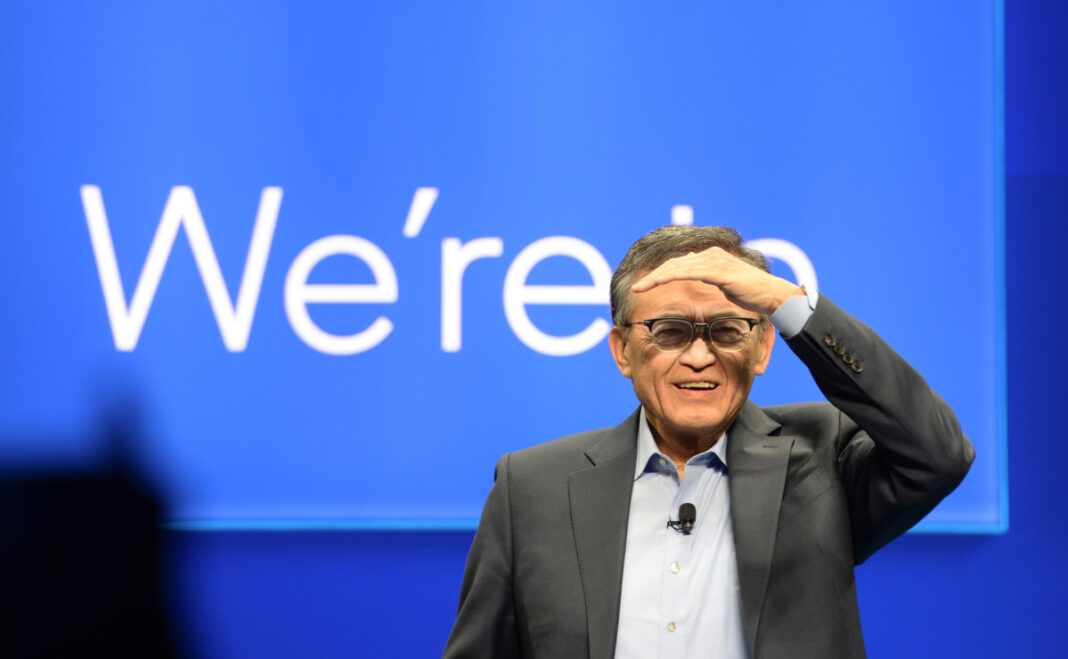
Investors should get ready for “relatively disappointing” yearly report from Intel. Photo by picture alliance on Getty Images ·Photo by picture alliance on Getty Images
Citi upgraded Intel’s rating from sell to neutral, and raised the price target from $29 to $50, according to TheFly. Citi analysts believe Intel will benefit from “tightness” in TSMC’s advanced packaging supply. The firm wants to see Intel reverse its share losses before recommending investors buy the stock.
Jefferies reiterated a hold rating and raised the Intel stock price target from $40 to $45. The firm expects Intel’s full-year commentary to be “relatively disappointing.”
UBS analyst Timothy Arcuri reiterated a neutral rating and raised Intel’s stock price target from $40 to $49. Barclays analyst Tom O’Malley reiterated an equal weight rating and raised Intel’s stock price target from $35 to $45.
Bank of America analyst Vivek Arya and his team also updated their opinion on Intel stock ahead of earnings.
Arya’s team hosted an investor meeting at CES with Intel investor relations representative John Pitzer. The team now expects in-line or better Q4 sales and gross margins of $13.4 billion and 36.5% respectively. Analysts said that healthy server sales should offset the initial impact of rising memory prices on PCs.
In a research note shared with me, Arya reiterated an underperform rating for INTC stock and the target price of $40, based on a 3.5 multiple of his enterprise value-to-sales ratio estimate for 2027, in line with the historical range of 1.7 to 4.
Lower than yield/ramp at Intel Foundry, particularly for its new 18A and upcoming 14A nodes
Lack of material external foundry customer in wafer processing
Weaker-than-expected trends in a mature PC market
Accelerated share loss to major CPU competitors
Key external foundry packaging/wafer deals that could significantly boost sales/utilization
Greater-than-expected yields/ramps at 18A and upcoming 14A nodes, resulting in a greater GM/utilization profile
Stronger-than-expected PC market from Windows 10 refresh or AI uplift
Geopolitical tensions boosting sentiment for domestic manufacturing asset
My opinion is that Jefferies’ estimate — that Intel’s commentary for the full year will be relatively disappointing — is spot on, and a real miracle would need to happen for it to be different. Yet Intel stock has already surpassed $45 and $40 price targets from Jefferies and BofA, which means it is already overvalued.
Intel is not out of the woods yet. Intel’s biggest problem is its fabs, and the fact that it’s bleeding money, I wrote last year in “Intel has a $13 billion headache.” Although Intel finally has yields over 60% on 18A, it doesn’t solve the problem overnight.
More Tech Stocks:
The fabs are extremely costly to run, and Intel needs more customers, even if it has secured Apple. The manufacturing for Apple will start only next year, which means that fabs effectively have no customers this year (except for Intel itself).
This is not surprising, as the yields will reach good levels by the end of 2026, so it makes perfect sense that Apple would wait until then.
Another problem is that just because Panther Lake has launched, it doesn’t mean it is guaranteed to sell well. Several things are working against it, beginning with the AI bubble itself.
AI is causing high memory prices and high SSD prices. Even power supply units and fans are now getting more expensive, Notebookcheck indicated. The marketing side of the AI bubble isn’t working in PC’s favor, either, as Dell has admitted that AI marketing wasn’t great for PC sales.
Kevin Terwilliger, Dell’s head of product, said: “We’ve learned over the course of this year, especially from a consumer perspective, [that] they’re not buying based on AI.”
“In fact,” he continued, “I think AI probably confuses them more than it helps them understand a specific outcome,” PC GAMER reported.
Rumors suggest Apple will launch a cheap MacBook model this spring, according to Bloomberg.
Qualcomm is launching its Snapdragon X2 Plus and Snapdragon X2 Elite in the first half of 2026, and these CPUs are very promising. Yes, Qualcomm hasn’t gained much market share yet, thanks to lackluster Windows ARM experience, but this year might be different, and everything will be about pricing.
And lastly, since Intel needed about a year to get yields over 60%, that will likely reflect poorly on Panther Lake’s profit margins, even without the problem of offering PCs at a reasonable price due to the AI bubble.