

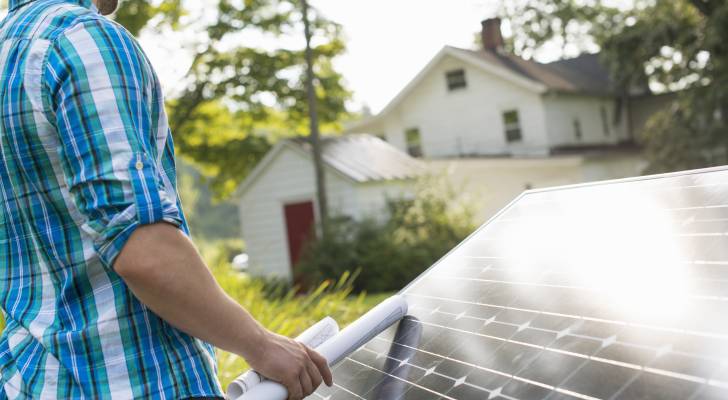

Rooftop solar panels can often be an attractive selling point for homebuyers. They promise relief from the costly, traditional electric grid while striking a blow for sustainable energy.
Though those sun-soaking panels might be generating clean energy and lower utility bills, here’s a reminder for homebuyers: when a listing promises “free solar,” it’s worth digging deeper before taking that claim at face value.
Consider the case of a young couple who bought their home about a year and a half ago, when the solar panels were pitched as a perk. The Zillow listing led with all caps:
“FREE SOLAR PANELS!!!!”
Their agent repeated the claim. Nothing in the closing paperwork suggested otherwise.
They assumed the panels were simply part of the house, no different from the flooring or built-in appliances included in the sale. The purchase contract referenced “existing improvements and fixtures,” and no solar loan or lease was disclosed. They closed, moved in and didn’t think twice.
That all changed months later.
According to SolarReviews, solar power now accounts for more than 160 gigawatts of energy capacity in the U.S., underscoring solar’s growing role in the power grid (1).
More than 4.7 million homes have solar panels, with California, unsurprisingly, leading the nation in installations.
The issue for our homeowners surfaced during a routine mortgage refinance. The lender asked for proof that the solar panels were owned outright. The couple couldn’t provide it because they’d never been given any documentation related to the system.
Their contract didn’t specifically list solar panels as personal property, and the disclosures were silent on financing. When they contacted the solar company, they learned the system had been installed in 2020 and financed by the original homeowner through a third-party lender. That owner had since died.
The lender refused to share details without the account holder’s permission, which was impossible to obtain. Even so, the refinance went through.
Read More: The average net worth of Americans is a surprising $620,654. But it almost means nothing. Here’s the number that counts (and how to make it skyrocket)
Weeks later, the couple received mail addressed to the deceased former owner. One envelope, from the solar lender, showed an overdue balance of roughly $12,000 and a remaining principal north of $45,000. That’s when alarm bells went off.


