


-
Ford is taking a near $20 billion special charge to significantly adjust its EV strategy.
-
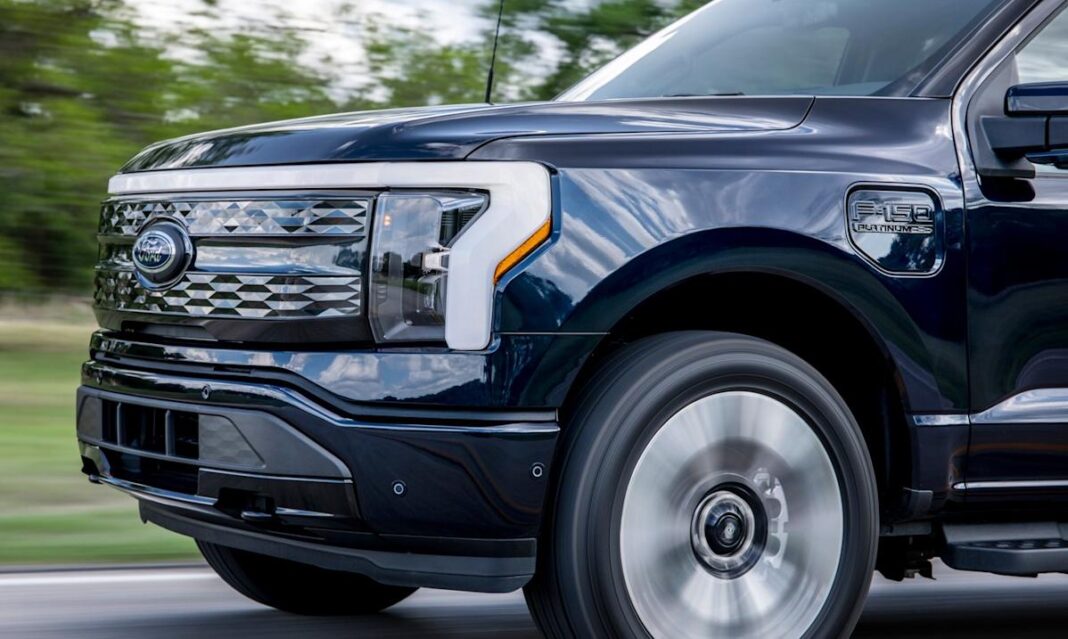
The much-hyped F-150 Lightning electric vehicle will be discontinued in its current form.
-
Ford targets a new midsize $30,000 EV pickup in 2027, and it will be profitable early.
The global automotive industry is evolving rapidly. Countries such as China are accelerating with electric vehicle (EV) adoption, Artificial intelligence (AI) is being incorporated into multiple aspects of vehicle production, and automakers near and far are exploring the potential of autonomous vehicles. With all the technological progress being made around the world, investors might have stopped to ask themselves: “Why is Ford Motor Company (NYSE: F) going backward with EVs?”
Let’s dig into Ford’s recent near $20 billion move, and why it’s not exactly taking a step backward.

The automotive industry was quick to hype the future of EVs. While the future is certainly likely to be filled with fleets of EVs, the market didn’t gain traction nearly as quickly in the U.S. as anticipated. With an EV market not materializing as planned, Ford made the massive decision to pivot away from full-electric vehicles and instead pour more investment into its more profitable hybrids, extended range, and gasoline-powered vehicles.
The flip-flop in strategy will cost Ford about $19.5 billion in special charges, and among other things, will discontinue the F-150 Lightning EV, which was touted as a cornerstone of its EV ambitions, not even four years after the start of production. Ford wants to make it clear to investors, however, that despite the pivot, the automaker isn’t moving backward on EVs.
“We’re not going backward on EVs,” Ford CEO Jim Farley said, according to Automotive News. “We’re actually accelerating the amount of EVs we’re bringing to market. We’re just going to do less than we had planned. … We learned so much being an early mover in EVs and a full-line manufacturer; we learned a lot about where we need to put our capital.”
One place Ford must invest in is developing more affordable EVs, as many EV options are on the premium end of the market and aren’t selling well. To combat this dilemma, Ford went back to the drawing board to redo its assembly line into an “assembly tree” that will simultaneously produce three parts of the vehicle before joining the sub-assemblies. Ford will also be introducing a Universal EV Platform designed to reduce costs, and it will drive the launch of a new $30,000 midsize Ford electric pickup in 2027. The kicker is that Ford believes it will be profitable very early in its life cycle.


