


-
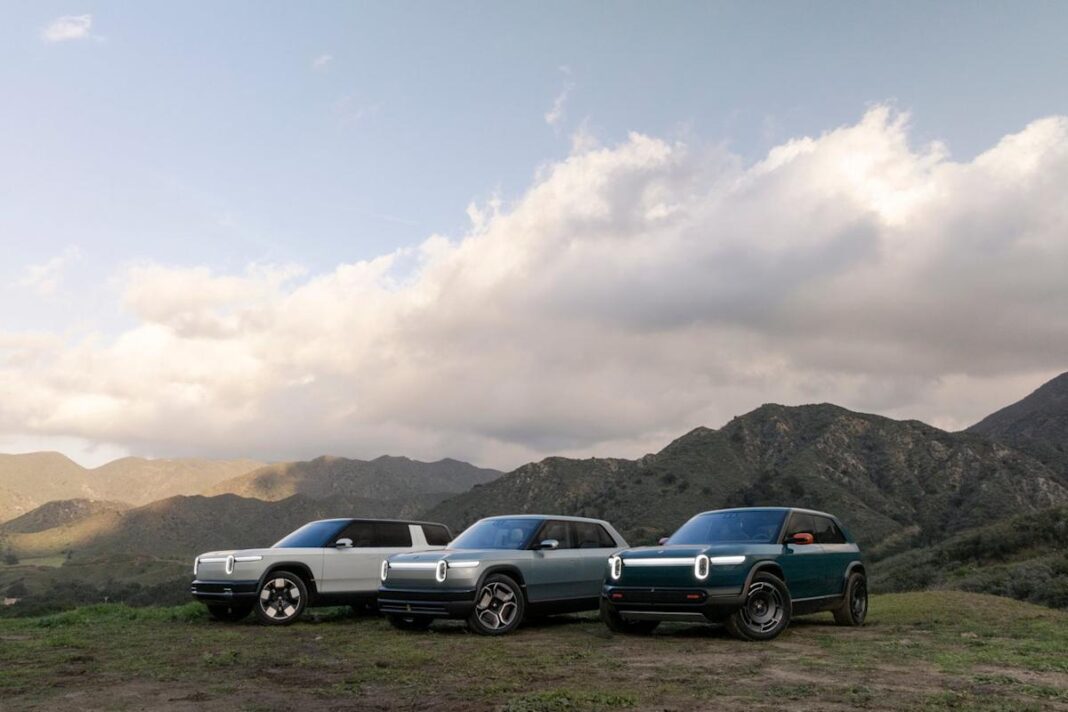
Rivian has been busy pulling costs out of the R2 and updating its Illinois factory.
-
The electric vehicle maker is currently rolling out validation units from its factory.
-
The R2’s impact to gross margin should be a key detail for investors to watch.
Investors who have bought into Rivian Automotive‘s (NASDAQ: RIVN) vision to perhaps become one of the next young electric vehicle (EV) makers to strike it big and wiggle its way into the market knew that 2025 was going to be a slow year for the automaker. There were no vehicle launches, just immense behind-the-scenes work to get production of the R2 ready for mainstream volume.
Despite a slow news year for the stock, and multiple headwinds thanks to changing trade policy, tariffs, and the end of the $7,500 federal EV tax credit, hype for the upcoming R2 helped drive Rivian stock nearly 50% higher in 2025 — and now the moment is finally near with recent news out of Rivian.
As of last week, Rivian has officially begun rolling out validation units from its Normal, Illinois, factory that was updated and expanded to initially produce the R2 during the first half of 2026. Rivian’s Illinois plant was modified to introduce the new assembly lines for the dedicated R2 platform and had tooling installed in record time to meet its deliveries target for the first half of 2026.

The decision, made over a year ago, to pull production ahead and delay its Georgia factory was a move that saved the company over $2.25 billion but last week’s potential “Model 3 moment” should have investors excited about the company in the near term.
Investors have closely followed the development of the R2, a critically important vehicle designed to be higher-volume and lower-cost that will open doors to a much larger addressable market and expand beyond the higher price points of its premium R1S and R1T markets.
Validation production units are generally the automotive industry’s final stage before “saleable” production begins, but these initial vehicles are built on the real production assembly line with production tooling, rather than being assembled by hand as prototypes. These units are used for certifications, crash testing, and EPA range estimates.
Here’s what investors can initially expect, with deliveries likely to start at the end of the first quarter or beginning of the second quarter. The R2 base trim is expected to start around $45,000 but generally automakers put premium trims in production first, which will come with a higher price tag initially.


