


-
Investments into AI and data centers continue to rise.
-
Nvidia remains the dominant AI chip company, with its new Rubin architecture right around the corner.
-
TSMC has been busy building AI chips and is gearing up for further growth ahead.
It’s been a little over three years since artificial intelligence (AI) became the hottest topic on Wall Street. Nothing lasts forever, but it’s hard to envision the AI boom ending this year. At least, not while billions of dollars continue to flow into data centers, chips, and other AI infrastructure.
So, how is the AI space shaping up for 2026? Consensus estimates from Goldman Sachs indicate that AI companies could spend more than $500 billion on capital expenditures this year. That would be an increase of more than $100 billion from 2025.
In other words, the AI train is chugging along faster than ever. Which stocks will benefit the most from all this AI spending? Recent developments point to some familiar faces.
Here is why I predict that Nvidia (NASDAQ: NVDA) and Taiwan Semiconductor Manufacturing (NYSE: TSM) will be this year’s big AI winners.

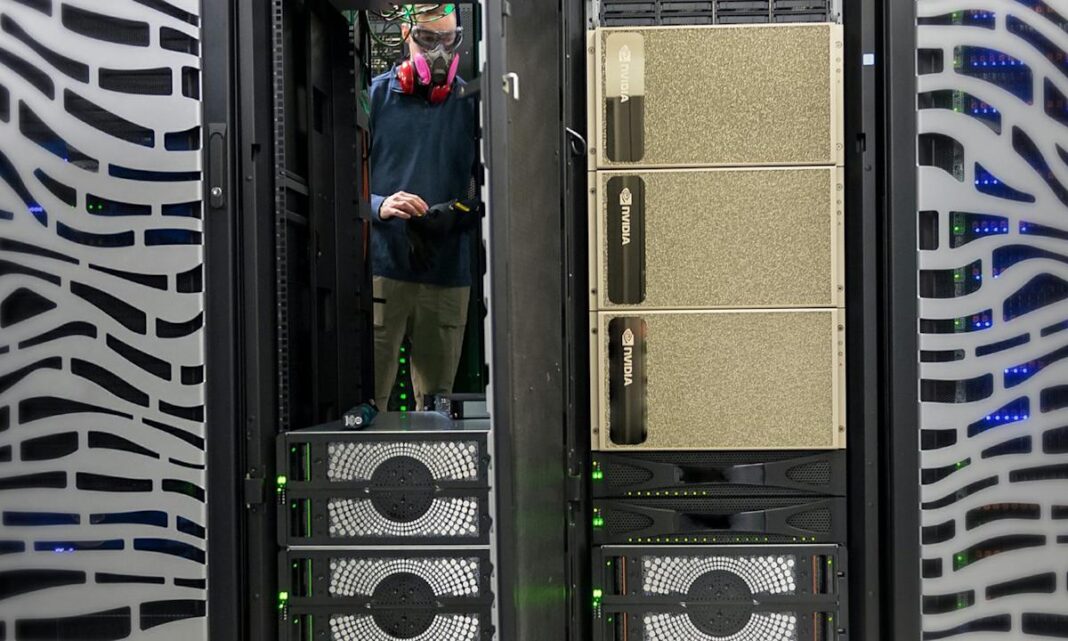
Nvidia has grown by leaps and bounds over the past several years. Its GPU chips are the hardware of choice for AI hyperscalers, utilizing Nvidia’s CUDA programming to build massive data centers where thousands of GPU chips work together as clusters to train and operate AI models.
The company’s Hopper GPU architecture helped it capture the AI data center market early on. Since then, Nvidia’s customers have mostly stuck with its GPUs, which have a reported market share of 85% to 90%. It’s why Nvidia’s revenue surged by 1,000% over the past five years, and the stock has performed similarly.
So, why is Nvidia still a big winner this year? AI companies have already laid extensive groundwork, building primarily on Nvidia’s hardware. It’s hard to see that changing dramatically while the investment boom still has this much momentum. Nvidia’s next-generation architecture, Rubin, recently entered full production, and the company has a $500 billion backlog extending through 2026.
That should set the stage for continued growth at Nvidia. The stock’s current price-to-earnings ratio of 45 still offers excellent value, especially given analyst estimates for 36% annualized earnings growth over the long term. Unless the AI boom falls off overnight, Nvidia is likely to continue its winning ways this year.
Investors can follow the AI chip breadcrumbs to this next winner. Nvidia and most other chip companies don’t actually manufacture anything. Instead, they outsource production to foundries. Taiwan Semiconductor Manufacturing, also known as TSMC, is the world’s leading foundry, with an estimated market share of 72%. Its next-closest competitor controls just 7% of the market.


