[ccpw id="5"]

Home.forex news reportEurope’s Wind Bet Meets a Cold, Hard Energy Lesson

Europe’s Wind Bet Meets a Cold, Hard Energy Lesson

-


Europe has been trying to reduce its reliance on imported energy for four years now. It has had partial success, notably through demand destruction resulting from excessive prices. This month, part of Europe doubled down on that plan just as the United States grid presented an object lesson in the importance of reliable energy from all the sources that Europe wants to get rid of, and soon.

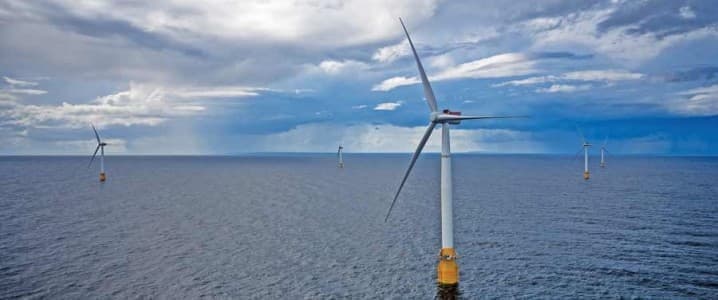
Earlier this week, nine European countries announced they would build 100 GW of offshore wind power capacity as they seek to source more of their electricity locally rather than from imported energy commodities, namely natural gas. The group, featuring the UK, Ireland, Germany, Norway, the Netherlands, France, Iceland, Belgium, and Luxembourg, will jointly build large-scale wind projects, per plans, as reported by Reuters. The group will also use the power generated by the turbines jointly.

Meanwhile, across the Atlantic, the United States is going through a spell of extra-harsh winter weather that has seen part of the country boost generation from perhaps the least expected source: oil. New England generated a third of its electricity from oil as of this Monday, with some reports saying the share of the fuel in the region’s electricity mix reached 40% at one point. Wind and solar, meanwhile, contributed some 6% of the total.

Related: India Is Still Waiting for Cheaper LNG

In Texas, the state grid operator began preparing for little to no wind generation before the storm hit over the weekend. ERCOT said last week it expected very little generation from Texas’ massive capacity, citing an estimated risk that frigid weather could take offline as much as 60% of that capacity, which stands at 40.6 GW. Solar is essentially non-existent in snowy weather. As a result, generators have boosted gas, nuclear, and even coal, because demand is soaring as one might expect in such weather conditions.

What the situation in the United States has shown the rest of the world is that baseload electricity capacity matters, and it matters a lot during emergency times. Baseload electricity is the minimum amount of electricity that is constantly available on the grid, not only when the weather allows. Gas, coal, nuclear, and oil—in New England and Saudi Arabia—are baseload generation sources. Wind and solar are not, even with batteries, and even with a dozen interconnectors, which is what the plan is for that massive 100 GW wind power installation in the North Sea.

The motivation behind such plans, however, is understandable. Most of Europe does not produce its own baseload generation fuels. Germany has rather abundant lignite reserves, but coal is not exactly a favored fuel in the European Union’s biggest economy, so developing these reserves is out of the question—even as Germany cranked up its remaining coal power plants in response to the winter weather that refuted predictions of snow-free, cold-free European winters in a rather decisive way this month.

Because Europe does not have enough of its own resources or the desire to exploit the ones it has, most European countries are heavily dependent on imports—from the United States. Last year, U.S. liquefied gas accounted for 57% of all LNG imports into the European Union and Britain. As part of total gas imports, U.S. gas accounted for a solid quarter, Reuters’ Ron Bousso reported this week.

Yet, starting next year, the U.S. gas will account for even more of the European Union’s gas imports because Brussels just sealed the ban on any and all Russian gas beginning January 2027—despite protests from Hungary and Slovakia, which depend on Russian gas to secure affordable electricity for their industries and households. The ban was also finalized despite record-high LNG purchases from Russia by Western European countries that are on board with the ban—so high, in fact, that the European Union was the biggest buyer of Russian liquefied gas last year.

With one big supplier of gas pushed away, European countries will have to lean more heavily on the United States during the term of a president who has made it abundantly clear he wants the world to buy more U.S. energy. Normally, European leaders would not have a problem with that. What they have a problem with is the fear that Trump may decide to turn the energy dominance agenda against them by essentially weaponizing U.S. energy exports.

Sceptics note that the LNG dependence of Europe goes both ways, with U.S. producers of the commodity also heavily dependent on European buyers. Yet the two sides are not in equal positions. Europe has few comparable alternatives to U.S. gas abundance, unless we count Russia, which the EU has made clear it will not. U.S. LNG producers, on the other hand, have alternatives in Asia.

Even so, building more wind—a lot more wind than there is already around European coasts—is hardly the best answer to energy security, as evidenced by what has been happening in the U.S. over the past weeks. A possibly much better answer would be long-term gas and oil supply commitments with a wider variety of suppliers.

By Irina Slav for Oilprice.com

More Top Reads From Oilprice.com

Oilprice Intelligence brings you the signals before they become front-page news. This is the same expert analysis read by veteran traders and political advisors. Get it free, twice a week, and you’ll always know why the market is moving before everyone else.

You get the geopolitical intelligence, the hidden inventory data, and the market whispers that move billions – and we’ll send you $389 in premium energy intelligence, on us, just for subscribing. Join 400,000+ readers today. Get access immediately by clicking here.


Source link

LEAVE A REPLY

Please enter your comment!
Please enter your name here

LATEST POSTS

Venezuela Signals a Historic Energy Reset as Oil Laws Open to Foreign Capital

Venezuela is edging toward what could become the most consequential energy shift in a generation. Interim President Delcy Rodriguez reportedly...

Accident claims weigh on Landstar’s Q4

Freight broker Landstar System said strength in flatbed demand largely offset a still soft dry van truckload market during the fourth...

AFA Appoints Evest.com as Official Online Trading Partner of the World Champion Argentina National Teams

Blueberry Broker Review 2026: Regulation, Platforms, Fees & Trading Conditions | Finance Magnates ...

Follow us

0FansLike
0FollowersFollow
0SubscribersSubscribe

Most Popular

spot_img