

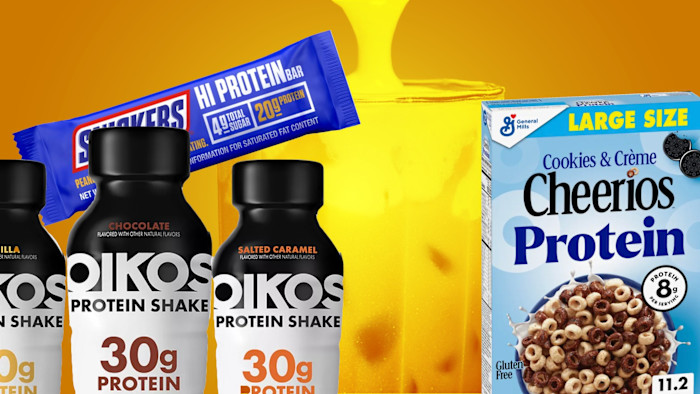

Food companies are stuffing supermarket shelves and restaurant menu boards with high-protein products, as weight-loss drugs and healthy living trends take the nutrient beyond the gym and into the mainstream.
Protein-enriched bagels, Snickers bars, Pop-Tarts and even bottled water are sold in groceries or online. Dairy cases hold shakes and yoghurts fortified with extra protein.
Coffee shops such as Starbucks and Dunkin’ are offering protein boosts in their drinks. Chipotle Mexican Grill — which already sells burritos laden with protein — has launched a “high-protein menu” including cups of meat that deliver 15 to 81 grammes of it.
Protein is an essential part of a balanced diet, helping to grow, strengthen and repair muscle. Until recently, US dietary guidelines recommended about 46 grammes a day for women and 56 for men.
But eating more protein is in vogue thanks to popular diets, the power of social media influencers and the advent of GLP-1 weight-loss drugs, which can lead to muscle loss as people eat smaller portions.
New dietary guidelines unveiled by the Trump administration suggested as much as doubling protein intake, claiming the government’s previous recommendation “demonised protein in favour of carbohydrates”.
Food companies, sensing a shift in demand, are betting on protein as they battle stagnant sales. Units sold of grocery foods carrying protein claims rose by 4.6 per cent in the US last year, according to NielsenIQ.
“You’re seeing it creep into many, many different products, and it’s growing three to four times faster than the underlying market,” said Randy Burt, Americas leader in consumer products at consultancy AlixPartners.
At Keychain, an online platform that connects food brands and retailers with third-party manufacturers, searches tied to protein-related manufacturers were up 64 per cent in the past three months of 2025 compared with a year before, rising more than three times faster than overall searches, said chief executive Oisin Hanrahan.

Cereal, snacks and pantry staples were among the categories drawing the most interest. “What’s changed is that protein isn’t just showing up in obvious places anymore. Brands are adding it to everyday foods without making them feel like they’re only for fitness-focused shoppers,” Hanrahan said.
Global protein demand could rise by 37 per cent over the next five years as more consumers start taking weight-loss drugs and healthier eating trends extend into developing countries, according to analysis by Barclays.
Research from Ingredion, an agricultural processor that supplies packaged food and drinks companies, found more than two-thirds of consumers were willing to pay between 5 and 30 per cent more for products with high-protein claims.
Starbucks launched protein cold foam and protein lattes last year, then rolled out what it calls a “secret menu” protein drink promoted by the celebrity Khloé Kardashian. Protein-infused beverages tend to sell for a 15-25 per cent premium, according to Danilo Gargiulo of Bernstein Research.
Brian Niccol, Starbucks’ chief executive, foresees more protein in the chain’s food menu. “We have the Jalapeño Chicken Pocket. That will probably become a protein pocket, right?” he told an investor conference in New York this week.
PepsiCo, the beverage and snacks company, this year intends to introduce Doritos Protein, a variant of its popular tortilla chip, as well as a bottled water to be called Propel Clear Protein that contains protein, electrolytes and fibre, the company said.
General Mills sold 3 per cent fewer pounds of breakfast cereal in its latest quarter. “The reason for the category being down is we’re really seeing consumers move to more high-protein alternatives,” Dana McNabb, the food company’s group president of North America retail, told analysts in December.
The good news was that General Mills’ new Cheerios Protein cereal was off to an auspicious start. The product was set to ring up $100mn in sales by the end of the fiscal year and was helping to drive a rebound in the Cheerios business, McNabb said.
Protein comes from animal and vegetable sources. The Trump administration’s dietary recommendations, spearheaded by health secretary Robert F Kennedy Jr, urged Americans to prioritise protein at every meal from both sources, though nutrition experts criticised its emphasis on red meat.
Experts also point out that most Americans already eat more protein than they need, exacerbating the risk of becoming overweight.

“Protein continues to enjoy a near mythic health halo — one that persists despite widespread nutritional overconsumption — and consumers show little sign of letting go,” said Karine Dussimon, global insight manager for health and wellness at Euromonitor International.
The boom has shaken up the dairy industry. The wholesale price of protein-rich whey has soared by more than 60 per cent in the past year as food companies draw down surpluses, according to Expana, a commodity market information service.
“Whey protein was just a byproduct of our cheese production, and everybody was trying to find something to do with it,” said Brittany Feyh, Expana dairy analyst. “Here we are now, it’s the main item. Everybody wants more of it and can’t get enough of it.”
Coca-Cola is building a $650mn plant in New York state to add processing capacity for Fairlife, a subsidiary that produces filtered milk with extra protein.
“There’s a long way to go for protein, clearly, lots of people coming in,” James Quincey, Coca-Cola’s chief executive, said in December. “And we have further investment plans laid out on how to keep extending the manufacturing footprint so we can meet the long-term demand for protein and for these drinks.”
Fairlife, along with Danone’s Oikos dairy line and US-based yoghurt producer Chobani, ranked among the top five fastest-growing big brands of 2025, according to Numerator, a market research group. Two protein bars were the fastest and second-fastest-growing brands of any size.
One form of protein that has not captivated consumers is meat alternatives made from plants. Sales at Beyond Meat, the New York-listed maker of plant-based burgers, are expected to have fallen below $300mn in 2025 from a peak of $464.7mn in 2021, according to estimates compiled by Visible Alpha.
Last month Beyond Meat unveiled a protein drink in what it described as the brand’s “expansion outside centre of plate”.


