When I first moved to Reno, Nev., more than 20 years ago, one of the first things I searched for was the closest Starbucks.
Starbucks had been my office away from home for years — what Starbucks CEO Brian Niccol often refers to as the “third place,” home and the office being the first two. Starbucks was actually the second place for me, since my office was at home.
Needless to say, I was very disappointed when I learned that the only Starbucks in town at that time was inside the Barnes & Noble.
Now, don’t get me wrong, I love the bookstore, but it doesn’t open until 9 a.m., and I generally want to be at my computer well before then.
Since that long-ago day, nearly two dozen Starbucks have opened around town, and now there’s even one within walking distance of my house. Starbucks is again my office away from home.
At my neighborhood location, the baristas have always been friendly and the service quick, but I’ve noticed lately that everyone has been extra warm, greeting customers by name when we walk in and offering refills on coffee. They’ve even started writing cheerful messages on to-go cups again.
But Starbucks’ story is about more than my morning coffee — it’s also about the corporate turnaround that’s playing out under Niccol’s leadership, starting with what he dubbed “Back to Starbucks.” This is the plan he shared publicly shortly after he took over as CEO in September 2024.
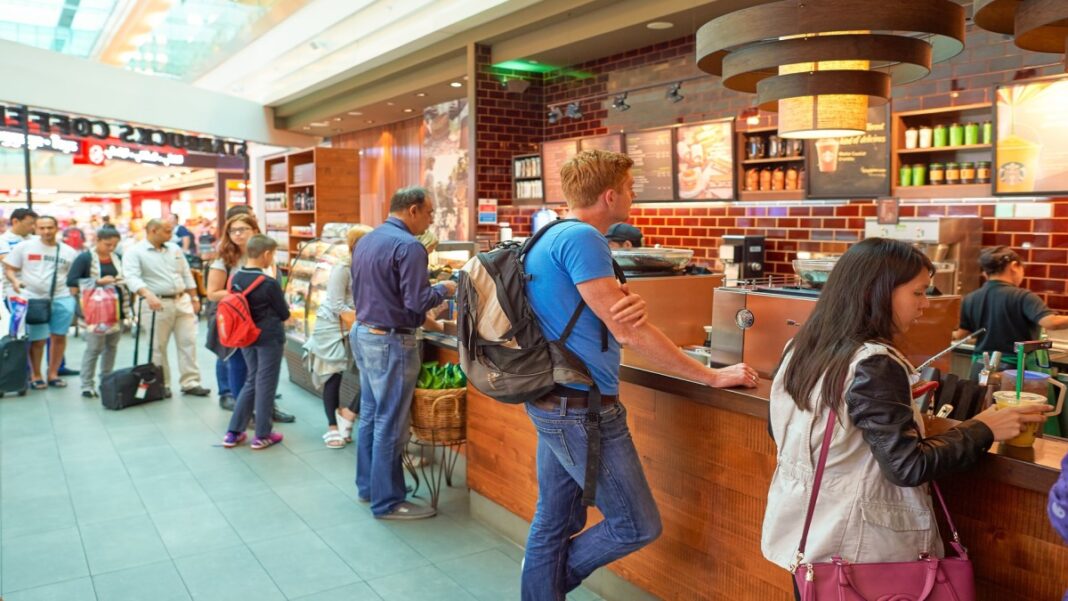
Starbucks id doubling down on its popular loyalty program, even though it could be a drag on profits. Shutterstock ·Shutterstock
Niccol’s Back to Starbucks plan initially focused on four areas:
Empowering baristas to take care of customers.
Getting the morning right, every morning.
Reestablishing Starbucks as the community coffeehouse.
Telling the company’s story.
After he shared the above in an open letter to “partners, customers and stakeholders,” Niccol went on a listening tour, meeting with store partners and customers across the country to gather feedback on what was working and what wasn’t going so smoothly.
Now, a little more than a year after Niccol took over, the company delivered U.S. comparable transaction growth for the first time in eight quarters, according to the company’s Q1 fiscal year 2026 results, released January 28.
North America and U.S. comparable stores were up 4%, driven by the 3% increase in comparable transactions and 1% rise in average ticket.
Global comparable store sales increased 5%.
Q1 Consolidated Net Revenues were up 6% to $9.9 billion.
China’s comparable store sales rose 7%, driven by higher transaction volume and average ticket size.
The company opened 128 net new stores in Q1, ending the period with a total of 41,118 stores (52% company-operated and 48% licensed).
While all those numbers are encouraging, Starbucks nonetheless faces headwinds.
Elevated coffee costs and tariffs continue to be a drag on profits for Starbucks, particularly in North America, where inflation has been above the Federal Reserve‘s 2% target. According to the Bureau of Labor Statistics, the year-over-year consumer price index (CPI) is around 2.7%.
In contrast to the overall CPI, coffee prices have climbed much faster.
Recent CPI breakdowns show coffee costs up about 19.8% year over year, with roasted coffee up around 18.7% and instant coffee up about 28.0%.
On the earnings call, management also acknowledged that investments in labor, remodeling, and the “Green Apron Service” rollout are weighing on near‑term margins, meaning sales momentum hasn’t yet converted into sustainable profits.
“We still have an opportunity on the tails, though. There are still too many occasions throughout the day where we aren’t hitting our metric,” Niccol said on the call.
Despite positive same‑store sales and signs of traffic recovery, some analysts say the turnaround may be taking longer than expected. “It’s been around 15 months since the CEO took the helm… and turning the ship around may be taking longer than originally hoped,” Annex Wealth Management Chief Economic Strategist Brian Jacobsen told Reuters.
Starbucks’ shares fell about 1.5% following the January 28 report; at the end of the day on January 30 shares were down 2%. The earnings guidance range was “too wide,” Deutsche Bank Analyst Lauren Silberman said during the event’s question portion, per Reuters.
“Despite reporting its first year‑over‑year U.S. comparable sales growth in two years, Starbucks’ stock fell and remains below past levels, suggesting Wall Street is still waiting for sustained execution rather than just topline growth,” a Barron’s analyst added.
Part of Starbucks’ longtime strategy has been saturation, and the company commands 31% of market share, according to IBISWorld data.
Now that there are 19 Starbucks within 10 miles of where I live, the chances are good that I’ll pass one no matter where I’m going, and the chain’s loyalty program does a good job of making me stay…loyal.
The current program has 35.5 million active members, making it one of the largest loyalty programs in the restaurant industry.
Niccol emphasized that Starbucks is focusing on engagement through experience rather than broad discounts, aiming to get members more active through the structure rather than couponing.
The new tiers offer increasing perks and benefits as members progress, with the top “Reserve” tier including exclusive rewards such as all‑expense‑paid trips to destinations such as Tokyo, Milan, or Costa Rica.
Lieberman noted that if half of loyalty members increased their activity by just one more transaction per year, it could generate an estimated $150 million in annual revenue for Starbucks.
Analysts including Annex Wealth Management’s Jacobson note Starbucks is navigating a challenging cost structure — with rent, labor, and coffee prices squeezing margins and limiting pricing power — even as it rolls out a more generous tiered loyalty program.
While the Rewards system is designed to drive engagement and incremental revenue, those perks come with economic trade‑offs amid high input costs and competition on every corner.
Bitcoin’s recent sell-off has exposed a growing tension in crypto markets, pitting seasoned “buy-the-dip” investors against mounting evidence of structural vulnerabilities....