


In the institutional landscape, credibility isn’t built by the loudest narrative. It’s built by the broker who remains dependable when market conditions stop being tidy. As liquidity fragments and client expectations rise, operational reliability has moved from a technical concern to a commercial one. As regulation tightens and client expectations shift toward institutional-grade performance at retail scale, operational resilience has transitioned from a competitive advantage to a commercial requirement.
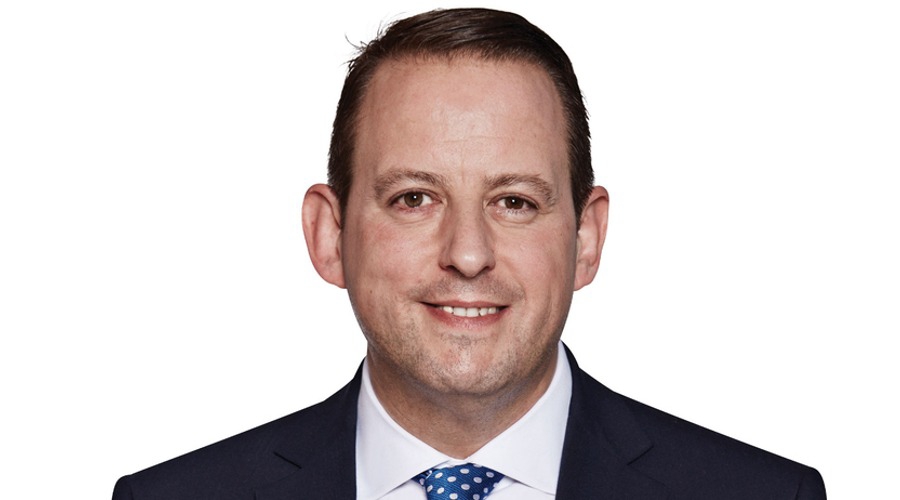
In this discussion, Peter Plester, head of B2B sales at Exness, examines what professional partners actually evaluate today, and why sustainable growth is increasingly tied to infrastructure, governance, and performance that can be measured rather than assumed.
Q1. How would you describe the current state of the brokerage industry from a B2B perspective? What pressures are shaping how brokers operate today?
The industry is undergoing structural maturation. We are moving into an always-on market environment; faster, more connected, and more fragmented. This complexity, more than sheer volume, is now the primary operational risk. Brokers are no longer judged solely on headline pricing; they are judged on whether their systems behave consistently during periods of extreme stress.
There’s also a broader industry shift underway. The online trading platform market, including front-end platforms and supporting infrastructure services, is projected to grow from around 11.65 billion USD in 2025 to 16.98 billion USD by 2030, with a CAGR of roughly 7.8%. With that growth comes a new baseline of expectation. From a B2B perspective, three pressures stand out:
-
Technical pressure: Systems must behave consistently, not only during calm conditions.
-
Governance pressure: Resilience and third-party oversight are increasingly formal expectations.
-
Credibility pressure: Partners and clients want evidence of stability, not reassurance.
In this environment, the winners aren’t necessarily the brokers that grow fastest, but the ones that manage complexity best.
Q2. You work closely with brokers at very different stages of growth. What separates those that scale sustainably from those that struggle as complexity increases?
It mostly comes down to how sustainable scaling becomes a function of control.
Brokers that succeed assume growth will inevitably stress their systems, so they build for that pressure early. They measure performance through the metrics that actually impact a partner’s bottom line: execution stability, latency, and reliability under pressure. Those that struggle often allow volume to outpace their operational maturity, or outsource too much of their core resilience to third-party vendors. At a certain scale, you cannot outsource your reputation.
Q3. Why do you think many brokerages underestimate operational and infrastructure risks until it’s too late?
I believe they do this because operational risk is quiet until it isn’t. It’s easy to deprioritize in favor of visible metrics like user acquisition, as it often sits between technology, product, and commercial teams. These risks don’t affect day-to-day performance, making them easy to deprioritize in favour of more visible priorities like growth, acquisition, or product development.
The challenge is that preventing operational failure is rarely rewarded in the same way growth is, even though the costs of failure are far higher. This preventative work, spanning capacity planning, redundancy, incident readiness, and disciplined release processes, is measured through operational indicators such as uptime, latency, rejection rates, incident frequency, and recovery times. When those metrics look healthy in normal conditions, it can be tempting to assume the job is done.
The issue is that markets eventually apply real pressure, and pressure compresses time. Weaknesses that seemed manageable quickly become expensive. And once the failure is visible, the cost of fixing it is almost always higher than the cost of preventing it.
Q4. Trust is often discussed as a brand value, but in B2B, it’s built operationally. How does execution quality, withdrawals, and system stability translate into trust between brokers and their partners?
In B2B relationships, trust is earned through consistent outcomes, not promises. It becomes visible when execution behaves as expected, even during the market’s most unstable periods.
Partners judge trust by predictability. Execution must behave as expected, withdrawals must be processed reliably, systems must remain stable, and the overall experience must be consistent. When issues arise, what matters is how fast they are detected, how clearly ownership is defined, and how transparent communication is.
Over time, consistent operational performance reduces friction, escalations, and uncertainty. That’s the point where a service provider becomes a long-term partner.
Q5. Looking ahead, what capabilities will define a future-proof brokerage over the next several years, especially as volatility and regulatory pressure increase?
Future-proof brokers will be those that remain reliable as complexity and scrutiny increase.
That means:
-
Operational transparency: Partners want measurable performance, not reassurance.
-
Resilience and governance: Regulation is pushing these priorities higher, a move in the right direction.
-
Third-party oversight: This becomes strategic, not administrative, as critical services increasingly sit outside a broker’s direct control.
This naturally pushes the industry toward consolidation around fewer, more operationally mature players. In this environment, long-term success will depend less on visibility or marketing reach and more on the ability to run complex systems consistently and with control.
Conclusion
As the brokerage industry becomes more complex and expectations continue to rise, partners are becoming less interested in promises and more focused on proof. These themes are part of the wider conversation at iFX EXPO, where Plester is joining industry leaders on stage to discuss what sustainable growth looks like in an always‑on market environment, and how brokers can build credibility through infrastructure and transparent performance metrics.
For partners evaluating brokers in 2026 and beyond, the message is clear: growth may attract attention, but reliability earns trust.
This article was written by FM Contributors at www.financemagnates.com.
Source link


