

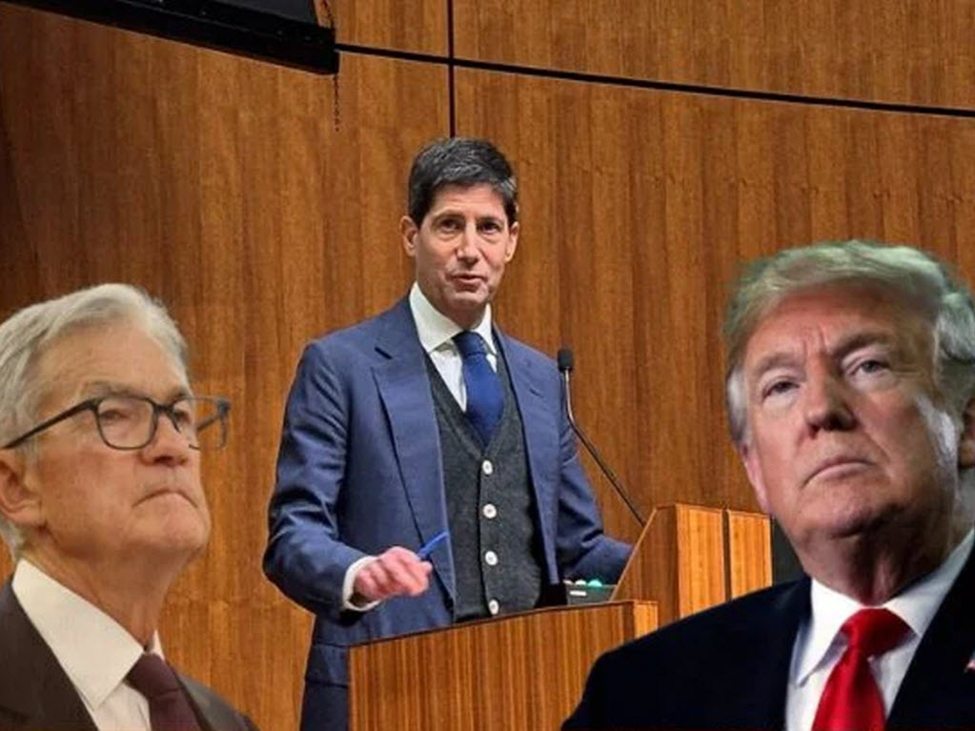

A Powell pardon would not break the Senate logjam, with Tillis holding firm until the Fed probe concludes.
Summary:
-
Senator Tillis says a Powell pardon would not lift his Fed nominee blockade
-
He insists the Justice Department investigation must conclude first
-
Tillis’ stance continues to stall Kevin Warsh’s confirmation process
-
Republicans lack the votes to bypass him on the Banking Committee
-
The dispute underscores rising political tension around Fed independence
Source: Politico
A potential presidential pardon for Federal Reserve Chair Jerome Powell would not resolve the political standoff blocking progress on senior central bank nominations, according to Republican Senator Thom Tillis. Speaking on Tuesday, Tillis said he would continue to oppose any Federal Reserve nominees until the Justice Department completes its investigation into Powell’s past testimony before the Senate Banking Committee.
Tillis, who sits on the Banking Committee, has emerged as the decisive obstacle preventing the confirmation of Kevin Warsh, President Donald Trump’s nominee to succeed Powell as Fed chair. With Republicans holding only a slim majority on the panel, Tillis’ opposition alone is sufficient to block Warsh from advancing unless Democrats provide support.
The North Carolina senator rejected the idea that a presidential pardon could offer a clean resolution, arguing instead that such a move could reinforce suspicions surrounding the investigation. In his view, a pardon would risk implying wrongdoing rather than closing the issue, undermining the principle of central bank independence. Tillis said only a full conclusion of the Justice Department’s probe would be acceptable, regardless of the outcome.
While maintaining his hardline stance, Tillis struck a measured tone on Warsh himself, suggesting the nominee could be a credible candidate to lead the Fed at a later stage. However, he made clear that timing remains conditional on the investigation’s resolution, whether during the current Congress or the next.
The standoff adds another layer of uncertainty to the political backdrop facing the Federal Reserve, at a time when questions over institutional independence have become increasingly sensitive. Tillis framed his position as a defence of the Fed’s autonomy, arguing that allowing nominations to proceed while an unresolved investigation remains would set an undesirable precedent.
President Trump, meanwhile, has played down speculation that he might intervene to halt the investigation in order to clear the way for Warsh’s confirmation. He indicated that prosecutors intend to pursue the matter to its conclusion, a position Tillis said aligned with his own willingness to see the process through.
For now, the impasse leaves the Fed’s leadership transition timeline uncertain, with political considerations continuing to weigh on the confirmation process.
US Senator Tillis


