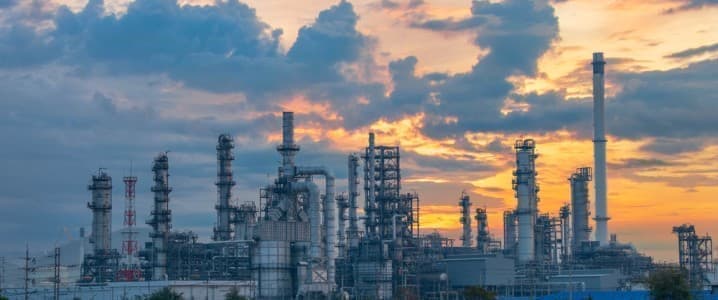
Investments in the European chemicals industry are dropping off a cliff, capacity shutdowns topped 5 million tons last year, and investors are leaving for greener pastures as the EU chokes the industry with regulations. Energy costs remain too high for anyone’s comfort. Europe is facing yet another massive import dependence.
Investments in the chemicals industry in Europe last year took an 80% plunge, the Financial Times reported last month, citing data from the European Chemical Industry Council (Cefic). The industry group warned that capacity closures across the EU had surged sixfold since 2022 and had reached a total of 37 million tons as of 2025, which represents 9% of total capacity. The closures resulted in 20,000 job cuts and were accompanied by a slump in new investments that brought the industry closer to a breaking point.
“It’s no longer a question of being five minutes before or after twelve,” the head of Cefic, Marco Mensink, said. “The sector is under severe stress and breaking. The rate of closures has doubled in a year, and even worse, annual investments are half and close to zero. On both sides, the speed is accelerating, not slowing. We need decisive action this year, with impact at factory floor level.”
The chemicals industry is one of the biggest in Europe and an essential supplier of goods and materials to a host of other essential industries for the continent in general, and the EU specifically. The industry booked sales of over 600 billion euros for 2024, according to the latest figures released by Cefic. That sounds healthy, but in terms of market share, Europe’s chemicals companies have seen their weight on the global market shrink from over 27% back in 2004 to just 12.6% as of 2024.
Of course, the accelerated shrinkage of the European chemicals industry did not just coincide with the EU sanctions on Russia and the loss of cheap pipeline gas from the East. Cheap energy inputs—and gas specifically—are essential for the competitiveness of an industry, which uses petroleum feedstocks for most of its output, notably natural gas, and that’s in addition to its substantial energy needs.
Sky-high energy costs are pummeling every single European industry, but the more energy-intensive among them are suffering proportionally severe pain. Then there are all the climate-related regulations that the European Union leadership has been piling on businesses based in the bloc as it repeatedly signals its priority number one is not competitiveness but emission reduction at all costs.
That said, the cost of that emission reduction is starting to be recognised as possibly too high, with top EU officials declaring they will be prioritising competitiveness along with emissions. It was on competitiveness grounds that the Commission devised the carbon border adjustment mechanism, or CBAM, for short, to tax cheaper imports of goods produced in places with laxer emission regulations and abundant, cheap power from gas and coal. The biggest such place, of course, is China, and China is eating up European chemical makers’ global market share, fast.
The Wall Street Journal noted the Chinese competition in a recent article about Europe’s chemical woes, pointing out that in some cases, Chinese companies were building more capacity than there is demand for, such as in monoethylene glycol, a component of polyester. This capacity, even if not utilised at 100%, adds pressure on high-cost European producers, who now also have to contend with low-cost U.S. competition following the trade deal that President Trump and the European Commission’s head, Ursula von der Leyen, signed last year.
The WSJ paints a picture as grim as the one painted by the Financial Times. Saudi SABIC has divested its assets in Europe. Dow plans to close several plants in Germany, saying it had to because oh high energy costs, high CO2 emission costs, and weak demand. Exxon is reportedly looking to do the same as SABIC did, and exit the European chemicals sector altogether. Two chemical producers, the WSJ noted in its report, recently filed for insolvency for several of their subsidiaries.
The European chemicals industry is struggling. This is a big enough problem even if the industry was the self-contained kind. But there is no such industry, and chemicals are essential for other sectors, notably car manufacturing and the EU’s new favourite industry: defense.
“If you want a defence sector… an automotive sector, it’s totally dependent on chemicals supplying the materials. This is simply a chokehold the rest of the world has on Europe,” Cefic’s Marco Mensink said, as quoted by the FT. He proceeded to call chemicals “the mother of all industries” and warned that “it’s breaking down as we speak.”
The problems look insurmountable unless there is a complete reversal of priorities for the decision-makers in political circles. Nothing short of removing emission reduction from the number-one spot would give the chemicals sector in Europe the chance it needs increasingly desperately.
By Irina Slav for Oilprice.com
More Top Reads From Oilprice.com
Oilprice Intelligence brings you the signals before they become front-page news. This is the same expert analysis read by veteran traders and political advisors. Get it free, twice a week, and you’ll always know why the market is moving before everyone else.
You get the geopolitical intelligence, the hidden inventory data, and the market whispers that move billions – and we’ll send you $389 in premium energy intelligence, on us, just for subscribing. Join 400,000+ readers today. Get access immediately by clicking here.