


The AI boom has turned Nvidia (NVDA) into the world’s most valuable company, at one point pushing its market capitalization past the $5 trillion mark. It also boosted Google (GOOG, GOOGL) and Microsoft’s (MSFT) earnings and turned ChatGPT into a household name.
But the AI frenzy isn’t limited to companies that make AI chips or even the ones that build AI software. Memory and storage companies are also benefiting from the AI explosion.
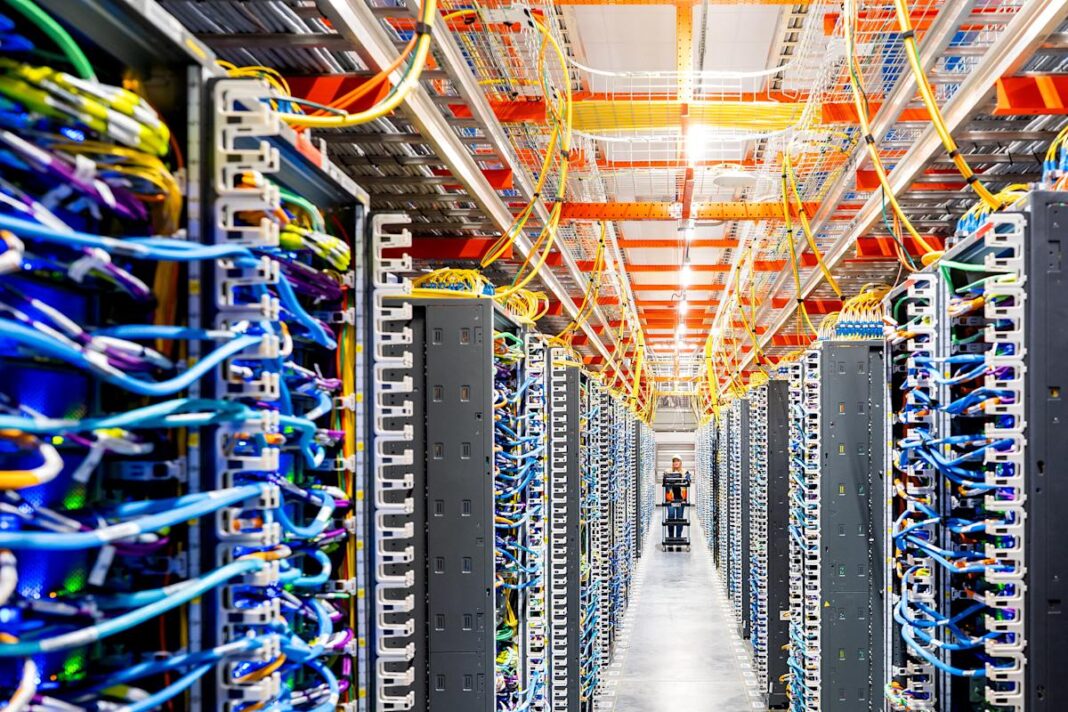
AI data centers house thousands of computer servers that run the AI apps people use every day. And while GPUs from Nvidia and Advanced Micro Devices (AMD) generally do the heavy lifting, those servers also need memory and storage, just like your laptop or smartphone.
And just as the AI data center build-out sent GPU sales skyrocketing, it has also turned memory and storage chips into red-hot commodities, leaving producers unable to keep up with demand and creating a global shortage.
And that has sent companies’ stock prices soaring. Memory maker Sandisk (SDNK), for instance, began trading in late February 2025 after being spun off from Western Digital (WDC). The company’s stock price has since climbed an incredible 1,833%.
And while the euphoria won’t last forever, it’s unlikely to slow down anytime soon.
The memory and storage shortage crunch was years in the making, told Yahoo Finance.
During COVID, consumers and enterprises bought up computers and, as a result, memory and storage, in massive numbers. But demand fell back down to Earth, leaving companies with big year-over-year declines before the AI bonanza took hold.
Western Digital reported revenue growth of 11% in 2022, followed by a 34% decline in 2023 and a modest 6% increase in 2024. Sales then took off in 2025, shooting up 51%.
Micron (MU), meanwhile, saw revenue jump 29% in 2021 and 11% in 2022, only to collapse by 49% in 2023. But sales rebounded 62% in 2024 and another 49% in 2025.
Micron is leaning into the AI boom so much that it decided to wind down its consumer memory brand, Crucial, to better focus on the enterprise market.
“If you’re a publicly traded company, higher margins, more consistent demand is coming from hyperscalers, everything related to AI,” Forrester analyst Alvin Nguyen said.
So why didn’t the global memory and storage shortage hit until late 2025? Because companies likely had supply built up from the post-COVID slowdown to manage. Now, though, things are different.
“At some point last year, as the demand for compute continued to accelerate, we just hit this point where the supply of memory chips was not enough to meet the demand … created by Nvidia and then increasingly by Broadcom and AMD,” D.A. Davidson analyst Gil Luria told Yahoo Finance.


