

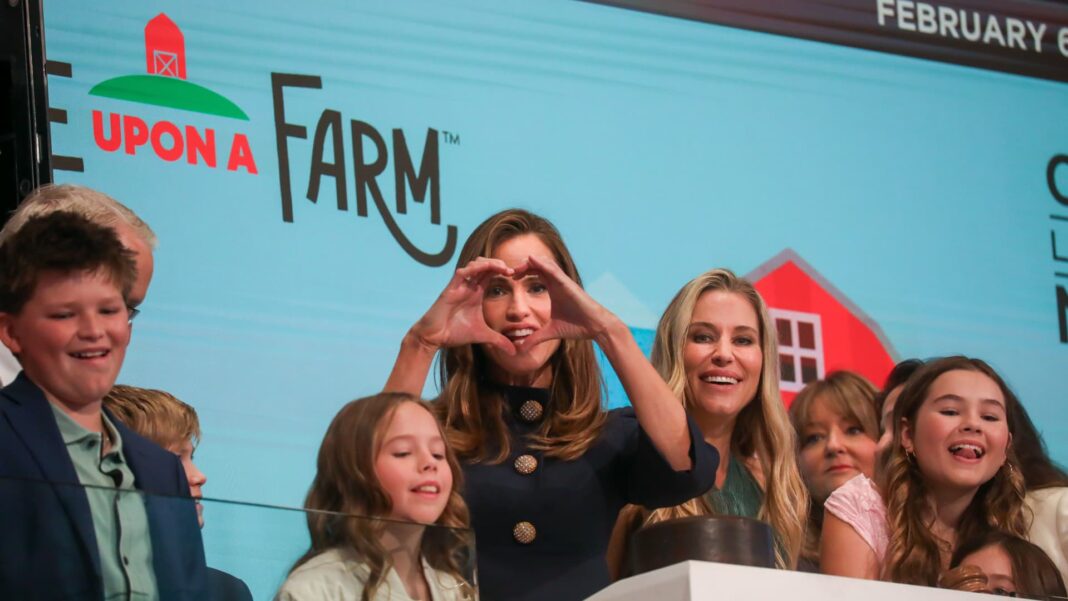

Jennifer Garner, co-founder of Once Upon a Farm, center, and Cassandra Curtis, co-founder of of Once Upon a Farm, center right, during the company’s initial public offering (IPO) on the floor of the New York Stock Exchange (NYSE) in New York, US, on Friday, Feb. 6, 2026.
Michael Nagle | Bloomberg | Getty Images
Once Upon a Farm made its public market debut on Friday, trading on the New York Stock Exchange under the ticker “OFRM.”
The stock opened at $21 per share, up 16% from its initial public offering price.
The organic children’s nutrition company priced its IPO at $18 per share on Thursday, in the middle of the expected range of $17 to $19. Once Upon a Farm and backers sold about 11 million shares, raising $197.9 million and valuing the company at $724 million.
Founded in 2015 by Cassandra Curtis and Ari Raz, the Berkeley-based company sells a range of organic cold-processed, refrigerated baby foods and kid snacks. In 2017, actress Jennifer Garner and former Annie’s Homegrown CEO John Foraker joined the company as co-founders. Garner sits on the company’s board and holds the formal title “Farmer Jen,” while Foraker, whom she calls the “Grand Poobah of organic,” is CEO.
“We want to feed babies to big kids, as we’re helping make parents lives easier,” Garner told CNBC.
Once Upon a Farm’s market debut comes as shoppers and policymakers alike have pushed back on ultra-processed foods, particularly when consumed by children. For example, the “Make America Healthy Again” movement, spearheaded by Health and Human Services Secretary Robert Kennedy Jr., has found evangelists in so-called “MAHA moms,” who agree with his opinions on everything from junk food to childhood vaccinations.
The shift in behavior has hurt Big Food, while fueling growth for insurgent brands like Once Upon a Farm. In 2024, the company recorded net sales of $156.8 million, up 66% from the prior year, although its losses widened from $17.6 million to $23.8 million, according to a regulatory filing.
“With these tailwinds and consumer trends being in the right spot, we’re really trying to take advantage of that and deliver more for consumers,” Foraker said.
Retailers have taken note of the shift and are allotting prime shelf space to organic foods, a far cry from Foraker’s early days at Annie’s, when its products were relegated to the undesirable “organic” corner in grocery stores, he said.
Once Upon a Farm, which is officially designated as a public benefit corporation, aims to “drive systemic change in childhood nutrition,” according to its mission statement. Foraker said its commitment to that goal is why it chose to go public rather than seek a sale, a much more common ambition for upstart consumer goods businesses.
While Foraker said he had a good experience with General Mills after it bought Annie’s in 2014, he noted that across the food and beverage industry, many companies do not stick to the promises that they make to brands they are buying and honor their mission. (Look no further than the yearslong dust-up between Ben & Jerry’s and its former owner Unilever and current parent Magnum Ice Cream Company, which spun out from the Dove owner last year.)
Once Upon a Farm was planning to go public last year, before the longest-ever government shutdown disrupted those plans. Once Upon a Farm plans to spend the IPO proceeds to pay down its debt, purchase new equipment and fund general corporate purposes, according to a regulatory filing.
Broadly, more IPOs are expected this year, thanks to interest rate cuts and a large backlog of companies that have been scared off by market volatility and recession fears. This week alone saw seven companies go public through IPOs that raised at least $150 million, including Bob’s Discount Furniture, according to Renaissance Capital data.


