

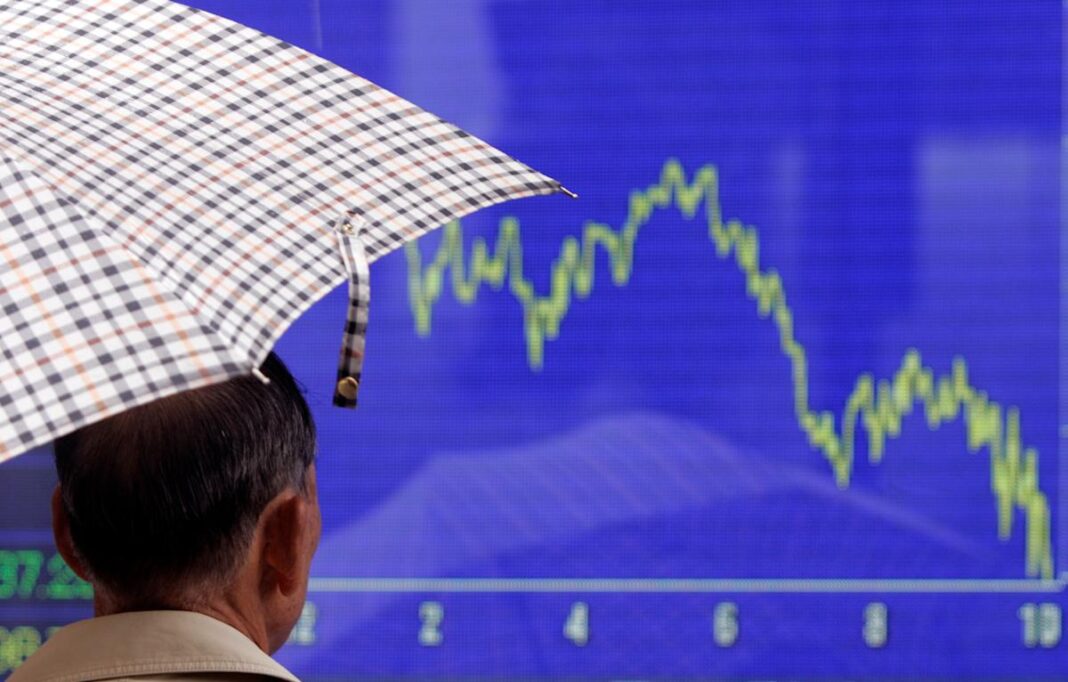

For the past year, the markets were fueled by a “high” that felt unstoppable: the rise of AI.
But as we move into 2026, this “secular tailwind” has hit heavy turbulence, leading many investors to reflexively move their money into “old school” stocks (cyclicals) and other “anti-AI” themes, including emerging markets stocks. Yet simply swapping one big theme for another — convergence — may well turn out to be an inferior response.
There is a simple reason for this. We have entered a period of profound “secular uncertainty” as traditional economic and business logic is being increasingly influenced by questions that don’t have easy answers: Will the flood of Chinese exports to Europe trigger a second round of a global trade war? Is the US low-income consumer finally hitting a breaking point due to high costs and growing job insecurity? How much more debt can the bond market handle to fund AI infrastructure and government deficits?
Two multiyear phenomena are amplifying such uncertainty.
We are living in a world of “geo-economics,” in which domestic politics, geopolitics, and national security tend to sideline traditional economic and business considerations. Add to that the manner AI and robotics are likely to change what we do in many areas and places.
In this environment, it becomes much harder to just pick a “mega-trend” from 30,000 feet and hope for the best.
Success now requires a much more granular approach — looking at specific opportunities rather than entire sectors and countries. Fortunately, two alternatives seem particularly interesting at this stage.
Instead of chasing broad themes and indexes, look for places where markets are either incomplete or “broken.” Examples include private credit in emerging markets, which, today, looks like the US market 15 years ago. Local banks aren’t lending, yet there are viable companies with strong collateral desperate for capital, which is a lot less forthcoming than in advanced markets. This is a “supply and demand” win, not a speculative bet.
Second, when markets become highly volatile — as we’ve seen with tech, bitcoin (BTC-USD), and silver (SI=F) recently — investors often sell their “good” assets just to raise cash.
This is also a “market for lemons” phenomenon in play: During a fire sale in highly noisy markets, everything can look like a lemon. If you have the agility, you can pick up high-quality assets (including top-tier AI names) at a massive discount while the “tourists” (short-term speculators) are fleeing.


