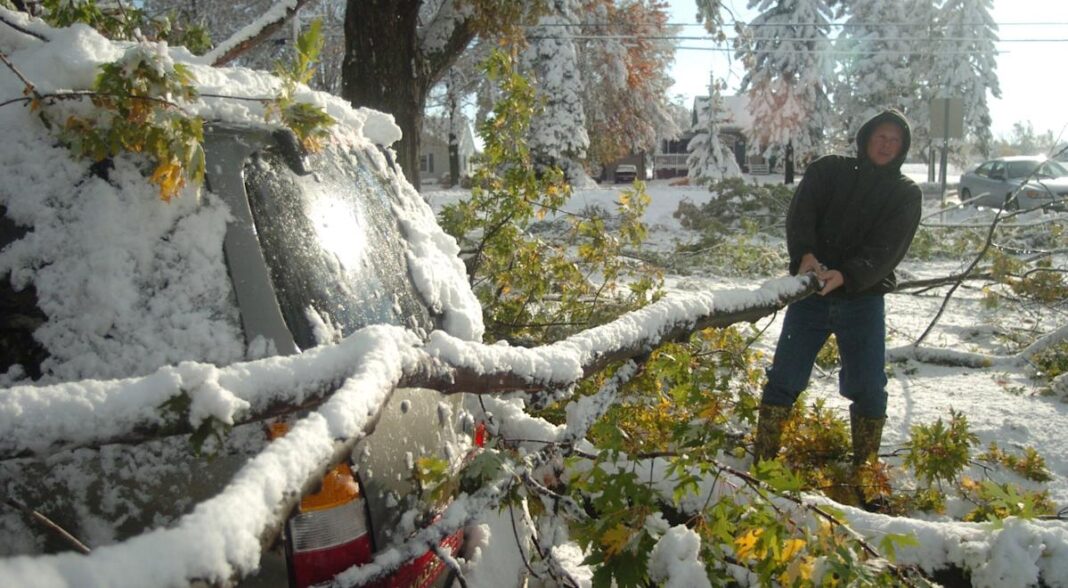
Imagine stepping outside to find your car crushed by a fallen tree or being struck while driving. That’s the reality for many in the Northeast, where heavy snowstorms and ice are causing branches and, in some cases, entire tree limbs to snap onto roads (1).
Most people assume these types of incidents will be covered by their insurance, but that isn’t always the case. Depending on their coverage, victims may be on the hook to foot the full bill for the damages, sometimes costing thousands of dollars out of their own pocket.
As snowstorms continue to strain trees and infrastructure, it’s worth taking a closer look at your insurance policy to make sure it’s equipped to handle the realities of winter weather. Here’s what you need to know.
There are many misconceptions about insurance, including the belief that standard auto coverage, or even homeowners’ insurance, will pick up the tab if a tree crashes into your vehicle.
Unless you opted for additional, more expensive protection, your auto policy likely only includes liability coverage. That’s the minimum required in most states and only pays for injuries or property damage you cause to others, plus your legal defense if you’re sued (2).
Liability insurance doesn’t cover damage to your own vehicle, even when that damage comes from an unavoidable event like a winter storm. That means drivers who only carry liability coverage are typically responsible for the full cost of repairs if a heavy branch dents their hood, shatters a windshield or totals the car.
If you have home insurance, you typically won’t be protected, either, even if the tree fell from a neighbor’s yard or nearby property.
Home insurance covers the home, belongings inside it and specified surrounding areas against damage from a covered event. Some people assume that if their car was parked on their property — such as in the driveway — any damage would be covered by their home insurance policy. In reality, that’s rarely the case (3).
The only possible exception might be if the tree came from somebody else’s property and it can be proven it fell because the owner was negligent, such as failing to address a clearly dead or dangerous tree (4). That difficult task becomes even tougher during winter storms. Heavy snow and ice are generally considered unavoidable natural events, making fault and liability tricky to establish.
The key rule to remember is that homeowners’ insurance, as the name suggests, covers your home. Cars are insured under separate auto policies.
Read More: The average net worth of Americans is a surprising $620,654. But it almost means nothing. Here’s the number that counts (and how to make it skyrocket)
For protection against falling trees and other storm-related damage, drivers need comprehensive auto insurance. This is an optional add-on to a standard auto policy and is often bundled with collision coverage (5).
Comprehensive insurance covers damage to your vehicle caused by incidents other than a collision that are out of your control, such as theft, vandalism, fire, hail, floods, hitting an animal and falling objects and generally applies whether a vehicle is parked or moving. In other words, if your car is struck by a tree during a storm, comprehensive insurance should cover it.
While comprehensive coverage is not required by law in any state, it is usually required by lenders if you lease or finance your vehicle. According to the Insurance Information Institute, roughly eight in ten Americans carry comprehensive coverage in addition to liability insurance (6).
The costs of this add-on vary based on factors such as location, vehicle type and driving history. The Insurance Information Institute says the average price of comprehensive coverage is just over $134 per year, while deductibles typically range from $100 to $2,000 (7, 8).
With winter storms continuing to stress trees and power lines, drivers can take a few practical steps now to avoid costly surprises later.
A good starting point is following state transportation guidance during winter weather. That includes not parking under trees and, when possible, limiting driving during heavy snow or ice.
Drivers should also review their auto insurance policies to make sure they have the right type of coverage. Check whether comprehensive coverage is included. If it is, take time to understand what the policy covers, review your deductible and consider whether it makes sense for your vehicle’s value and your budget.
If you don’t have comprehensive coverage, find out how much it would cost to add it to your auto insurance policy and weigh up whether the expense is worth it. For drivers who park outdoors or live in storm-prone areas, adding comprehensive coverage may provide meaningful protection for a relatively modest increase in premiums.
If you have the right coverage and a tree or heavy branch does damage your vehicle or home, first, document everything. That includes taking photos of the damage and the surrounding area before moving the car. Then, once that’s done, file a claim, preferably as quickly as possible.
The faster you act, the better. Delays can complicate the claims process, especially after widespread storms when insurers are handling a high volume of claims.
Join 200,000+ readers and get Moneywise’s best stories and exclusive interviews first — clear insights curated and delivered weekly. Subscribe now.
We rely only on vetted sources and credible third-party reporting. For details, see our editorial ethics and guidelines.
WCBV 5 (1); All State (2); Matic (3); Insurance.com (4); Progressive (5, 8); Insurance Information Institute (6, 7)
This article provides information only and should not be construed as advice. It is provided without warranty of any kind.