

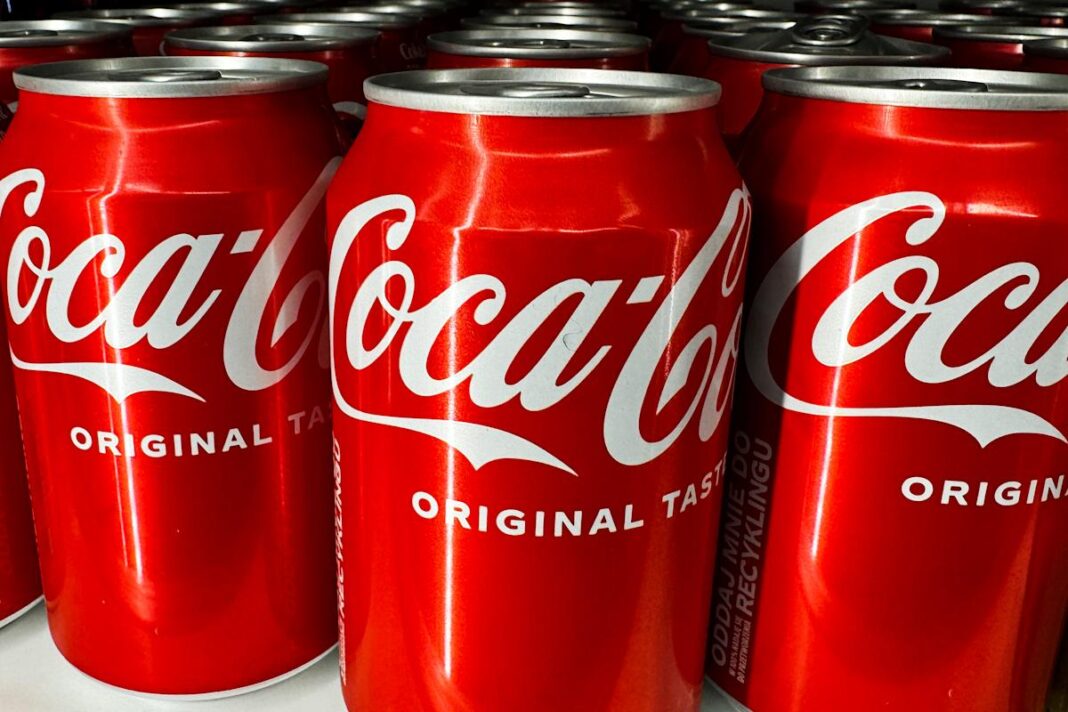

Coca-Cola (KO) stock fell as much as 4% early Tuesday after the company offered what CEO James Quincey called a “prudent” outlook for 2026 as it aims to reverse pressure on international sales.
“We’ve taken what we think is a realistic, but prudent, approach relative to a number of international markets [where] we need to see improve through the course of 2026,” Quincey told Yahoo Finance.
In the fourth quarter, organic revenue grew 5% across the company’s geographies, outpacing the 4.8% growth expected by Wall Street. For 2026, the company expects organic sales to grow 4%-5%, below the 5% growth expected by analysts, according to Bloomberg data. Coca-Cola’s adjusted earnings are expected to grow in a range of 7%-8% this year after growing 9% in 2025.
Some regions where the company is experiencing pressure include China, India, and Mexico, where a soft drink tax was recently implemented. Sales in its Asia Pacific region were flat in the fourth quarter.
Read more about Coca-Cola’s stock moves and today’s market action.
In North America, the company said volumes grew 1% while prices were up 4% in the fourth quarter as consumers continued to turn to less-sugary options.
“You see strength [in] Coke Zero, even Diet Coke is growing,” Quincey said. Across all geographies, volumes for Coca-Cola Zero Sugar were up 13% in the fourth quarter and 14% for the full year. Diet Coke and Coca-Cola Light volume was up 2% for the quarter and flat for the year.
“The protein — Fairlife, Core Power — is growing,” Quincey said. “The hydration … BodyArmor is growing volume and gaining share. Similarly with some of the water,” he added, regarding the US market.
As zero or low-sugar sodas continue to gain share, the company tested a Simply Pop prebiotic soda to compete with PepsiCo’s $2 billion Poppi acquisition, but it’s slow going, Quincey said.
“It’s still very early days … We leveraged some of our learnings from Coca-Cola Plus from Japan … we’re still trying to learn what really makes that subcategory tick,” he said.
As for how bifurcated consumer habits in the US are impacting the business, Quincey said “total spending is holding up,” but consumers are picking and choosing how many and where they’re buying.”
“Lower-income consumers are doing value-based shopping,” Quincey said. “Whether that’s the dollar channel or any other channel, and so we’ve had a clear affordability strategy over the last few years, and we think that’s working for us.”


