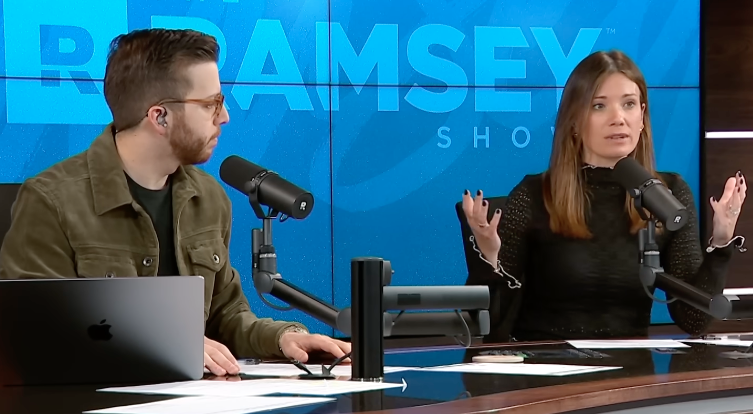
A Michigan woman recently called into The Ramsey Show because she found out a shocking secret — her husband had been spending money on a woman he had been communicating with in prison.
Caroline from Detroit said that her husband had been using his “fun money” on a “prison pen pal,” and that the secret relationship had been going on for three years (1).
Cohosts George Kamel and Rachel Cruze were confused as to whether this was real or a scam.
Caroline explained that her husband told her he came across a website, and that’s how he started communicating with the woman, and he was sending her money for use in the commissary, “or who knows what else.”
Kamel asked Caroline how she found out, and she said that she had noticed “suspicious” phone numbers on their phone bill, and that her husband “was broke all the time” and always waiting for the next allocation of his “fun money.”
Now, Caroline wants to know how she can move on from her husband’s financial and emotional infidelity, and rebuild trust.
Financial infidelity is when someone in a relationship intentionally lies about money. This can look like buying things without telling your partner, or having accounts, credit cards or investments that you keep secret.
In an article that Cruze penned for Ramsey Solutions, she distinguishes between financial irresponsibility and financial infidelity (2).
Financial irresponsibility, she explains, might look like a partner eating out for lunch frequently because they always forget to pack a lunch. But financial infidelity would be a partner who has promised that they will stick to a budget when it comes to food spending, and then repeatedly eats lunch out, and hides it from their partner.
While Caroline’s husband was spending money that they had decided as a couple was “fun money,” to use on whatever they wished, he was using it to secretly carry on an emotional affair. And the fact that he was always “broke” means he may have been spending more than “fun money” on this person. The fact that he hid all this from Caroline is what seals this as financial infidelity.
A case like Caroline’s highlights how important financial transparency, compatibility and trust are to relationships.
If you find that you and your partner argue about spending, and it pushes you to simply hide your purchases or financial decisions, you’re committing financial infidelity — and it could break up your relationship. It’s a sign that it’s time to take steps as a couple to build communication around finances, so that you can learn to find compromise — instead of lying and hiding things.
Financial infidelity is a serious breach of trust and it can do a lot of damage to a relationship — and a couple’s finances.
Caroline told Cruze and Kamel that she had been at a point where she was ready to get divorced, but the fact that her husband agreed to seek help together through their church had kept her from ending the relationship.
Cruze writes that being honest about mistakes you have made, learning to develop better communication and working on a shared budget as a couple are all ways to help rebuild after financial infidelity (2). She also recommends seeking out counseling.
Read More: The average net worth of Americans is a surprising $620,654. But it almost means nothing. Here’s the number that counts (and how to make it skyrocket)
“There’s a lot of repair that has to happen, regardless if the marriage survives,” Cruze told Caroline. “To be two healthy people is what you guys need.”
The situation that Caroline described, of a long infidelity with financial implications, is a serious case of financial infidelity.
Both cohosts agree that Caroline should take significant measures now to protect herself financially. Cruze recommended that she separate her finances from her husband’s, in order to protect herself.
Kamel said Caroline should also pull credit reports to make sure there is no other financial infidelity going on.
“We want to pull the credit report to make sure there’s no outstanding debts that maybe you don’t know about and to get a clear picture of what’s out there,” Kamel said, “and then freeze his credit so he can’t open any new accounts.”
The cohosts also recommend, in order to help build trust back and to keep her finances safe, Caroline should ask for notifications to be set up on her husband’s accounts.
“I would have transaction alerts set up so you get a text message every time a cent comes out of that bank account […] even if it’s just his account right now,” Kamel said.
The second priority, after protecting herself financially, is rebuilding trust. In order to do this, the cohosts said Caroline’s husband needs to come clean about everything that happened with his infidelity.
“If you guys are going to move forward, everything needs to come into the light,” Kamel said.
“Yeah. It’s a full-disclosure situation, that you guys need to sit down with a counselor to even move forward. There’s no way you can move forward with half the truth with your marriage,” Cruze added.
Cruze also said that both Caroline and her husband should seek out individual counseling as well, to work on their own issues.
While separating your finances might feel scary or extreme to some people, if you are dealing with a serious case of financial infidelity, it’s wise to take serious steps to protect yourself.
Join 200,000+ readers and get Moneywise’s best stories and exclusive interviews first — clear insights curated and delivered weekly. Subscribe now.
We rely only on vetted sources and credible third-party reporting. For details, see our editorial ethics and guidelines.
The Ramsey Show Highlights/YouTube (1); Ramsey Solutions (2)
This article provides information only and should not be construed as advice. It is provided without warranty of any kind.