Moneywise and Yahoo Finance LLC may earn commission or revenue through links in the content below.
They say the only certainties in life are death and taxes — but Tesla CEO Elon Musk thinks Americans are getting far more than their fair share of the latter.
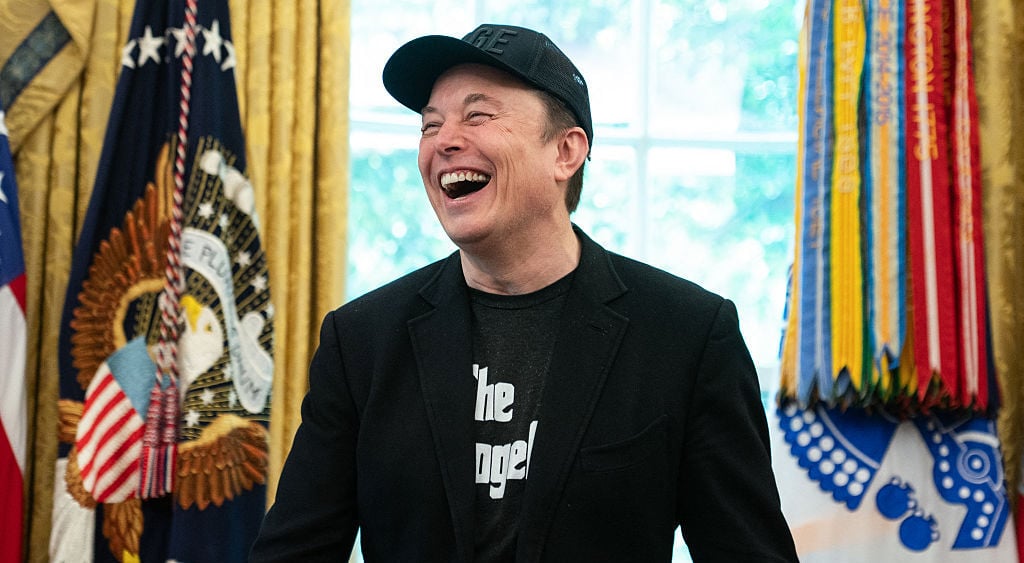
“You get taxed on what you earn, you get taxed on what you buy and you get taxed on what you own. Taxes, taxes, taxes,” Musk said at a town hall in Pittsburgh (1).
In broad terms, he’s not wrong. Most Americans pay income tax on their wages and salaries, most states impose sales tax on goods and services, and homeowners shoulder property taxes on real estate. Layers of taxation touch just about every part of daily life.
Musk didn’t mince words about how harsh he believes the tax landscape has become: “We get the living daylights taxed out of us.”
And he’s equally blunt about how that money is spent.
“What does it get spent on? A bunch of the stuff it gets spent on you don’t even agree with,” he explained. “That’s why we need to reduce the size of the government … and let the people keep a lot more of their hard-earned money.”
To be sure, taxes help fund crucial public services, such as education, health care, emergency services and infrastructure. But the system Musk described can still leave many Americans wondering what realistic options they have for building wealth when every dollar earned, spent and owned seems to face another levy.
That frustration isn’t limited to tech CEOs. Scott Galloway, a renowned professor of marketing at NYU Stern School of Business, has openly argued that if you want to build wealth, you should lower your tax bill as much as possible.
“Tax avoidance is a key skill to building wealth,” Galloway said on Steven Bartlett’s podcast, The Diary of a CEO (2).
Galloway offered a striking comparison: “If you’re a prisoner of war, you have an obligation to escape. If you’re trying to build wealth, you have an obligation to pay as little tax as possible.”
“Do it legally,” he adds.
But that’s easier said than done.
If you’re starting to feel like a prisoner of taxes and are looking for a way to escape, here are some strategies to minimize their hold on you.
When asked about the specific tax strategies employed by the wealthy, Galloway didn’t hesitate.
“First and foremost, it’s you buy stocks, you never sell them, you borrow against them,” Galloway said.
He then explained how this strategy works.
“You own $100 in Amazon stock. You need money to buy something. Instead of selling the stock and, let’s say it’s gone up 50% … You would have to realize a capital gain and pay long-term capital gains on that $50 gain.
“No, just borrow against it and let the stock continue to grow. And you pay a little bit of interest, hopefully from your current income. But basically, it’s invest, borrow against it and die. Put it into a trust and then pass it on to your kids.”
Indeed, this approach lets wealthy investors unlock liquidity without creating a taxable event, allowing their assets to keep compounding over time.
The interest paid on the borrowed amount is often modest relative to the tax liability they’d face if they sold — which is why the strategy has become a widely used method for preserving wealth.
Holding onto stocks is one great way to preserve wealth, but so is investing in gold. And with Gold’s stellar performance in 2025 and 2026, many investors are hoping to cash in on this sparkling asset in a big way.
However, newbies to the market may not realize there are also plenty of tax benefits to owning the yellow metal.
Holding physical gold for a year or more can qualify you for long-term capital gains, and investing in gold ETFs or mining stocks generally offers a more favorable tax treatment when compared to physical assets (3).
Many investors also look to invest in gold through an IRA in order to gain the tax benefits of these accounts. One way to invest in gold that also provides these significant tax advantages is to open a gold IRA with the help of Priority Gold.
Gold IRAs allow investors to hold physical gold or gold-related assets within a retirement account, which combines the tax advantages of an IRA with the protective benefits of investing in gold, making it an attractive option for those looking to potentially hedge their retirement funds against economic uncertainties.
To learn more, you can get a free information guide that includes details on how to get up to $10,000 in free silver on qualifying purchases.
Galloway’s “buy, borrow, die” approach isn’t confined to stocks or gold IRAs. Real estate investors have been applying a similar playbook for decades — often from the moment they purchase a property, as most acquisitions start with a mortgage.
It’s a strategy Robert Kiyosaki, author of Rich Dad, Poor Dad, knows well.
“We’re always buying real estate because we use debt — and we pay no tax legally,” Kiyosaki said in a recent podcast appearance, where he disclosed that he’s carrying $1.2 billion in debt (4).
His point comes down to tax treatment.
When investors acquire real estate with borrowed funds, the interest payments on those loans are often tax-deductible — even when the properties themselves generate positive cash flow. That allows investors to legally reduce their tax burden while putting leverage to work.
Kiyosaki takes the strategy to an extreme scale.
“I own hotels today and 15,000 rental properties — and make a lot of money and pay no tax. I love it,” he revealed.
Real estate can be a powerful wealth builder, offering rental income, potential long-term appreciation and tax advantages — from depreciation to 1031 exchanges — that help investors keep more of what they earn.
But leveraging large amounts of debt comes with real risks. Borrowing magnifies outcomes in both directions: A downturn in the market, rising interest rates or unexpected expenses can quickly turn comfortable leverage into a strain, especially for investors without deep experience or diversified cash flow.
The good news? You don’t need to be as wealthy as Kiyosaki — or take on massive debt — to start investing in real estate.
Real estate has long been one of America’s most reliable wealth builders — but until recently, it’s been hard to invest in it without buying property outright or competing with institutional players.
Now you can tap into this market by investing in shares of vacation homes or rental properties through Arrived.
Backed by world-class investors, including Jeff Bezos, Arrived allows you to invest in shares of vacation and rental properties, earning a passive income stream without the extra work that comes with being a landlord of your own rental property.
Longer-term rentals are another good real estate investment, but the tradeoffs for time, effort and upfront costs may prevent you from taking the plunge.
However, new real estate investment platforms like mogul offer fractional ownership in blue-chip rental properties, without the need for putting down a hefty down payment or or fielding late-night calls from unruly tenants.
Simply put, you can invest in institutional-quality offerings for a fraction of the usual cost — in both money and time.
Founded by former Goldman Sachs real estate investors, mogul handpicks the top 1% of single-family rental homes nationwide for you.
Each property undergoes a vetting process, requiring a minimum 12% return even in downside scenarios, but the platform features an average annual IRR of 18.8% across the board. Their cash-on-cash yields, meanwhile, average between 10 to 12% annually.
Plus, every investment is secured by real assets, not dependent on the platform’s viability. Each property is held in a standalone Propco LLC, so investors own the property — not the platform. Blockchain-based fractionalization adds a layer of safety, ensuring a permanent, verifiable record of each stake.
The best part is that getting started is a quick and easy process. You can sign up for an account and then browse available properties within minutes. Once you verify your information with their team, you can invest like a mogul in just a few clicks.
At the end of the day, though, everyone’s financial situation is different — from income levels and investment goals to debt obligations and risk tolerance — which means the best move for someone else might not be the best one for you.
Advisor.com is an online platform that matches you with vetted financial advisors in your local area who are suited to your unique needs. With the aid of a financial advisor, you can tailor a strategy to your unique financial situation, whether you’re looking to grow wealth, manage taxes or plan for long-term financial security.
Once you’re matched with an advisor, you can even book a free consultation with no obligation to hire.
Another option is Range, a platform built for high-earning households that want deeper, data-driven guidance.
Range pairs you with a dedicated team of financial advisors and tax experts who look beyond the basics — evaluating your past filings, running future tax projections and modeling how your financial decisions could affect your overall tax burden.
Their approach includes tools like tax-loss harvesting, tax analysis and year-ahead planning, all integrated into a holistic plan that also covers investment strategy, budgeting and long-term wealth goals. With Range, you get customized advice, regular check-ins and access to advanced planning tools, so you’re not navigating complex assets on your own.