Towns and cities used to have stores and markets unique to that area or region. You might have had a general store, a hardware store not owned by a chain, or even a family-owned supermarket.
Stores like Newark Save-a-Lot, owned by the Breen family, were common, especially in communities underserved by regional and national chains.
Independent grocery chains, however, have been in decline for decades.
“From 1990 to 2015, the number of U.S. independents dropped 39%, to 2,648, with an average of 30 store closings a year, according to a 2021 government report,” Supermarket News shared in January.
Technology, rising costs, and labor issues have pushed local operators to the brink as they operate in an industry that already has razor-thin margins.
Now, the Breen family, which has operated a chain of grocery stores/supermarkets in New York, dating back to 1908, has made the decision to close the doors of their final location.
What’s happening with the Breen family is not an isolated event. Independent grocery stores and chains still make up a sizeable percentage of the business, but they’re fighting for survival.
A 2024 survey from the National Grocers’ Association (NGA) showed some of the problems facing the industry.
“Traditional grocery continues to lose share to mass/supercenter and club stores while the market continues to be splintered among discount grocery, dollar, drug, and specialty channels,” the study showed.
More Retail:
As more sales move to large chains and digital retailers, independent brands have been making changes, NGA Content Strategist Jim Dudlicek wrote.
“Many independent operators made changes to their sales and operational strategies — focusing on margin and shrink management, creating points of differentiation, and upgrading their stores and online capabilities. All the while, independents fostered and built upon their strong community ties and invested in employee and customer loyalty,” he shared.
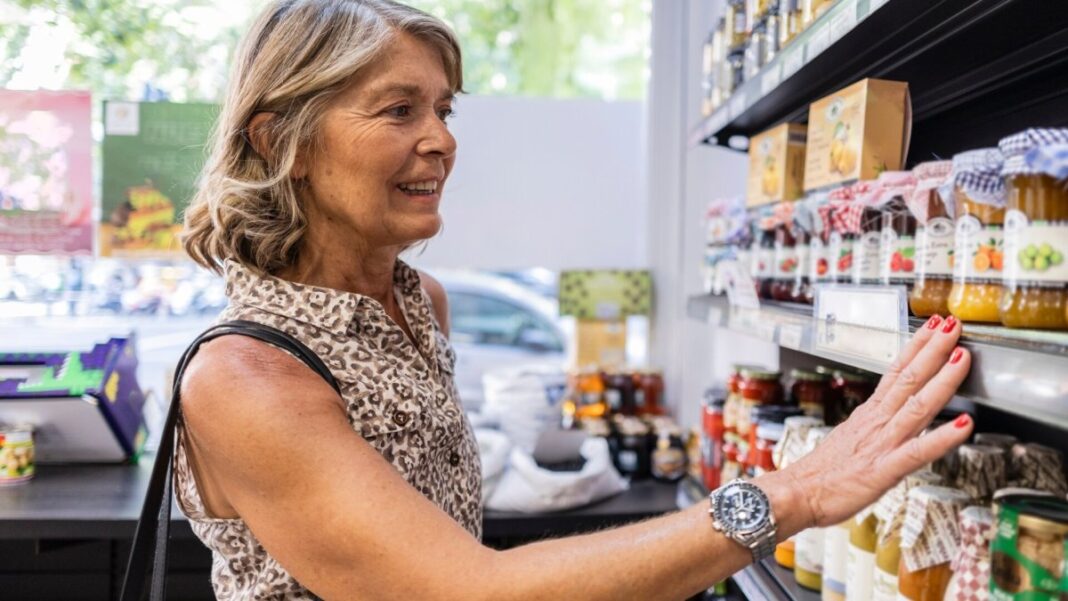
Local, independent grocery stores and chains have lost the geographic advantage they once had due to delivery. Shutterstock ·Shutterstock
Loyalty has not been enough to keep many local operators in business. The Breen family shared a message on their Facebook page announcing their near-immediate shutdown.
“It is with heavy hearts and wet eyes that we write this post. Unfortunately, our time in Newark and the grocery world has come to an end. We have given everything we have to this business, but it’s time to let it go and start a new chapter,” the family shared.
They thanked staff and customers, but did not say what would happen to the location or share a closing date. The shutdown date was clarified in a post at 9 a.m. on Feb. 21.
“There’s very little left, but everything is 60% off today. Only open for a few hours today. Once it’s gone, it’s over,” the family wrote.
This is the end of a regional dynasty.
“The Breen family has been a staple of Wayne County grocery stores since 1908. They once boasted several locations across the area,” the Wayne Digest reported.
“The family’s Palmyra ‘Breens’ closed in 2022, with their Williamson location closing just two years later. Palmyra was replaced with a Byrne Dairy, and the Williamson Plaza is slated to become a Quickly’s convenience store,” the newspaper added.
Much like the way Home Depot and Lowe’s decimated Main Street hardware stores, independent chains have been hurt by added competition from Target, Walmart, Costco, and Amazon, while also having to fend off regional rivals, including Kroger, Publix, and Albertson’s.
It’s a trend that appears to be accelerating, and I’ve covered two other local grocery stores closing for good, in one case, while the other closed half its locations.
Walmart, Costco, and Target can cut their already-thin grocery margins using them as loss leaders in their stores. In addition, Aldi has been growing by hundreds of stores in the U.S. each year, giving the off-price grocery chain a buying edge over smaller players.
Scott Moses, partner and head of the grocery, pharmacy, and restaurants advisory group at New York-based Solomon Partners spoke about rising competition at the GroceryShop trade show in 2023, Supermarket News reported.
“For many years, I’ve been sounding the alarm about the rise of national/discount grocers—Walmart, Target, Costco, Amazon, Dollar General, Family Dollar and Dollar Tree—and the existential threat that they pose to supermarket grocers, just as we’ve all seen over the last 20 years how department stores have been marginalized,” Moses said.
He shared some numbers that illustrated the dangers.
“Ten of the top 15 U.S. grocery retailers in 2003 were supermarkets, with Walmart at No. 1 with a 16% share, followed by Kroger at 11%, Albertsons at 7%, Safeway at 6% and Ahold USA at 5% in the top five,” he shared.
That has changed dramatically.
“Fast forward to 2023, and the list flips to 10 of the top 15 grocers being non-traditional grocery retailers, led by Walmart with a 29% share and Kroger (10%), Costco Wholesale (8%), Albertsons (6%) and Amazon (5%) rounding out the top five, though Target and Ahold Delhaize USA also hold about a 5% share,” he said.