

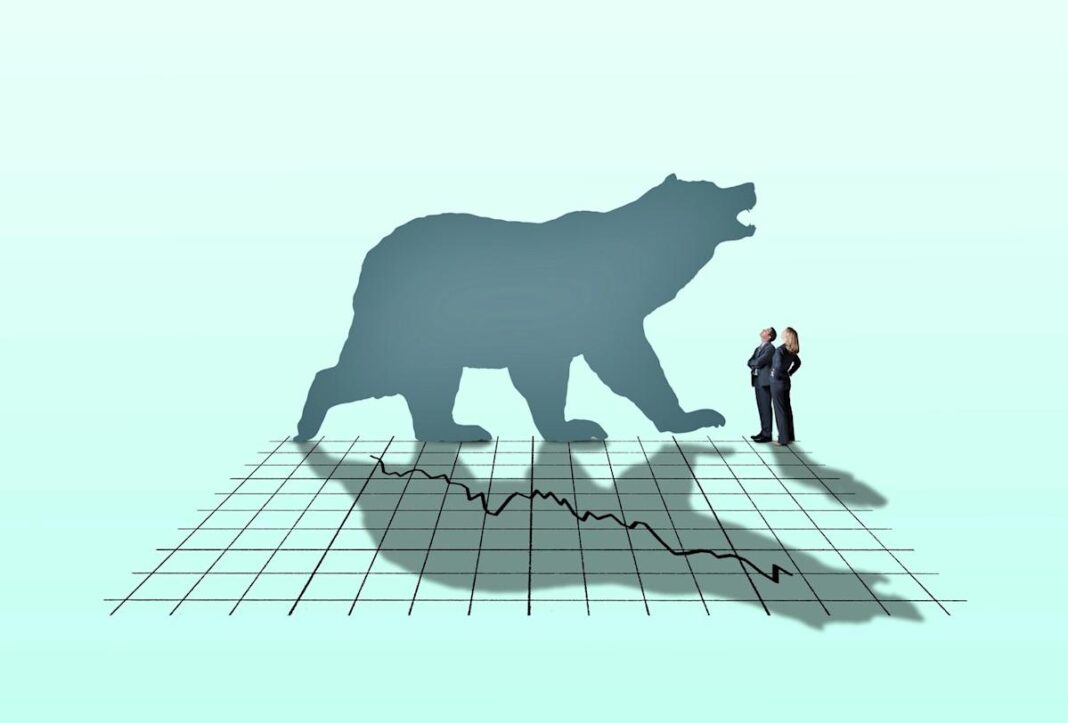

If you’re concerned about economic volatility, you’re in good company. In fact, 72% of Americans rate current economic conditions as “fair” or “poor,” according to a February 2026 survey from the Pew Research Center, while nearly 40% expect the economy to worsen over the next year.
While the future of the economy may be largely out of your hands, the right strategy can make it easier to weather the storm — and there are three moves I’m making right now to protect my finances.
Will AI create the world’s first trillionaire? Our team just released a report on the one little-known company, called an “Indispensable Monopoly” providing the critical technology Nvidia and Intel both need. Continue »

If the stock market plunges, selling your stocks can be a risky move. Selling your investments for less than you paid for them risks locking in steep losses, especially if you need to sell a large amount.
However, emergencies still occur during recessions, so it’s wise to have at least some savings set aside specifically for unexpected expenses.
A solid emergency fund with at least three to six months’ worth of savings can make it easier to avoid pulling your money out of the market at a less-than-ideal time. Ideally, this money should be in a savings account separate from your investments, so you can withdraw it at a moment’s notice without incurring fees or penalties.
Not all stocks will survive a bear market or recession. Shaky companies with unhealthy finances, an executive team with a history of questionable decisions, or a nonviable business model, for example, may struggle to pull through periods of economic instability.
Sometimes, companies that were previously strong investments lose their shine. Right now is a fantastic moment to comb through every stock in your portfolio to double-check that it deserves to be there. If you find any that are no longer fundamentally sound investments, now can be a smart time to sell while stock prices are still higher.
While it’s likely a market pullback is coming eventually (stocks can’t keep surging forever, after all), nobody knows when that might happen. Rather than trying to time the market and risk losses if you guess incorrectly, it’s often safer to dollar-cost average.
Dollar-cost averaging involves investing set amounts at regular intervals throughout the year. Sometimes you’ll buy at record-high prices, but other times, you can snag normally high-priced stocks for a deep discount. Over time, those highs and lows can average out.


