

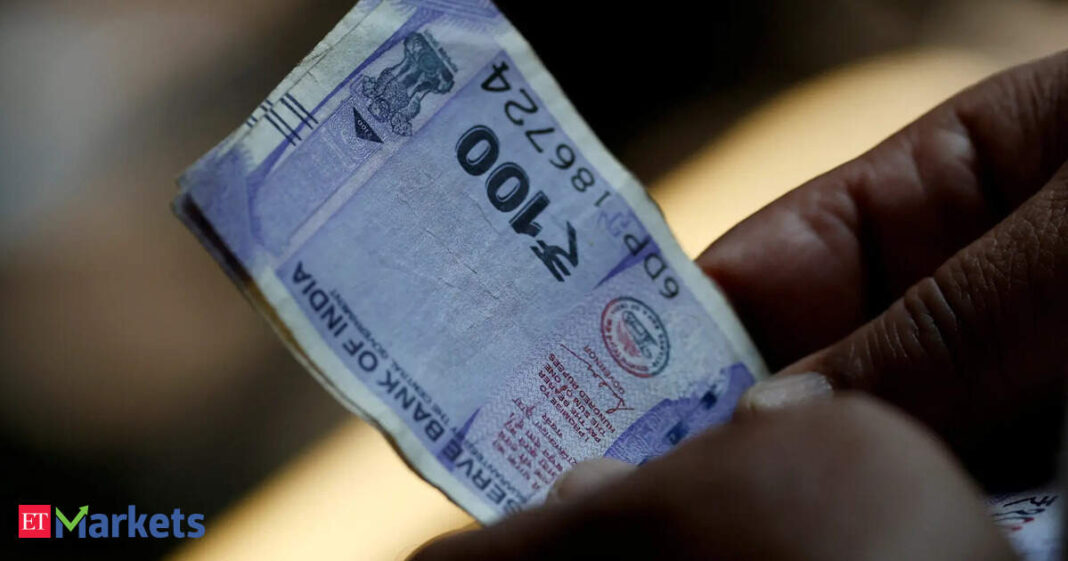

The rupee closed below the 91 mark to a dollar for the first time in a month – at 91.48 – as financial assets across Asia were battered by an alarming escalation in the US-Iran conflict. The US dollar strengthened and precious metals expectedly surged on safe-haven appeal after Tehran blockaded a narrow Persian Gulf strait that evacuates oil pumped by wells dotting either side of the highly militarized water margin.
The rupee, which has lost 6.4% against the US dollar so far in FY26, had closed at 90.98/$1 Friday (February 27), while sovereign bond yields remained relatively unmoved.
The rupee could weaken further if the conflict persists, although traders expect more significant central bank interventions beyond 91.75 to a dollar.
“The currency is expected to decline further, and I expect the rupee to trade between 91.25/$1 and 91.75 /$1 on Wednesday after a holiday on Tuesday,” said Anil Bhansali, head of treasury, Finrex Treasury Advisors.

India’s financial markets are shut Tuesday due to Holi.
The currency hit its record low of 91.98/$1 on January 31, and experts believe Reserve Bank of India (RBI) interventions would be aimed at protecting that mark.A continental drift
Asian currencies, too, declined in the range of 0.3% to 1.3% against the US monetary unit, while the dollar index climbed to 98.4 from 97.6 the previous day.
On Monday, the RBI dipped into its stockpile and sold dollars in the offshore, non-deliverable forwards (NDF) market and in the onshore spot market during the early hours of trade, traders said. However, Mint Road’s intervention was rather muted, they added.
“Everyone expected the 91/$1 level to be broken today (Monday), a level that was protected for over a week. So, there was some position covering that happened,” said Dilip Parmar, currency research analyst, HDFC Securities. “Overall, traders were cautious, avoiding large positions that would be taken once the volatility settles.”
Brent crude oil traded past $80 per barrel, at one point rising nearly 10% and pressuring the currency. A rise in crude oil prices is detrimental for inflation in India as imports make up nearly four-fifths of the country’s motor-fuel consumption. There were reports that a facility of Saudi Aramco, the world’s biggest energy company by market valuation, was hit in Iranian retaliatory attacks.
“Traders want their positions covered and have avoided taking any unnecessary risk today as no one knows how the situation would unfold,” said a trader at a state-run bank.
Indian stocks lost more than a percentage point Monday, while foreign portfolio investors (FPI) net sold shares worth Rs 3,295.6 crore.
Meanwhile, yields on the 10-year benchmark bond remained largely unchanged, closing at 6.67% versus its previous close of 6.66%.
The yield opened at 6.68% on Monday and cautiously eased through the day.
Auction of state bonds at market-expected yields also supported sovereign bond yields, traders said.


