Many investors may know Alphabet(NASDAQ: GOOG)(NASDAQ: GOOGL) as the parent company of Google, YouTube, and its artificial intelligence (AI) model, Gemini. But the company also has an investment arm that invests in high-growth companies across AI, healthcare, infrastructure, and even space.
The technology giant has a portfolio of 29 stocks, according to its most recent 13F filing, and the space company AST SpaceMobile(NASDAQ: ASTS) tops the list as its largest public stock investment, with 8.9 million shares worth $903 million as of this writing. Here’s what investors need to know about the satellite company and Alphabet’s investment in it.
Will AI create the world’s first trillionaire? Our team just released a report on the one little-known company, called an “Indispensable Monopoly” providing the critical technology Nvidia and Intel both need. Continue »
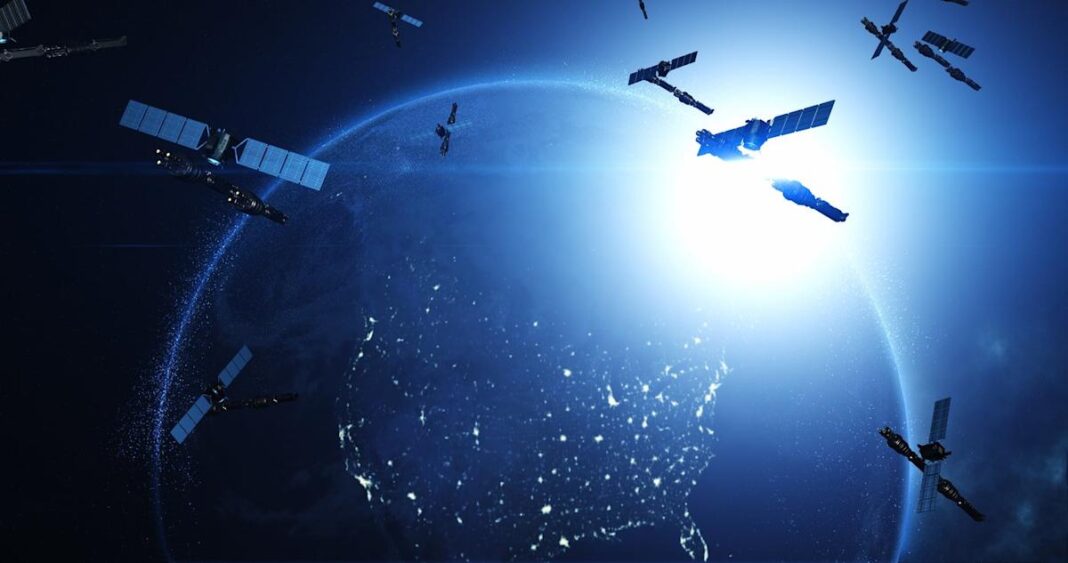
AST SpaceMobile is an early-stage satellite company that has moved past research and development and into commercial operations. The company is developing a global cellular-broadband network in low Earth orbit to provide high-speed connectivity to standard mobile devices.
Alphabet first invested in AST SpaceMobile through convertible notes in early 2024. Alphabet, along with AT&T and Vodafone, was an early investor in these convertible notes, which were convertible into common stock at $5.75 per share.
As part of the agreement, AST SpaceMobile could force conversion if the stock price traded at 130% above the conversion price for 30 days, which it did in early 2025. As a result, the company told shareholders, including Alphabet, that it would convert these notes into nearly 26 million shares. Alphabet’s portion of this represented the 8.9 million shares that it continues to hold today.
Image source: Getty Images.
In recent years, the company has secured major commercial and government contracts with 50 mobile operators that serve 3 billion subscribers worldwide. It has also secured contracts with the U.S. government, including a $43 million contract to support the Space Development Agency (SDA) and a $20 million contract with the Defense Innovation Unit through a prime contractor to support communications over land, sea, and air.
AST SpaceMobile has done a good job securing major deals with communications providers and the U.S. government. Next up for the satellite operator will be deploying its satellite constellation to enable continuous coverage across key markets in the U.S., Europe, and Japan. To accomplish this, the company aims to have between 45 and 60 satellites in orbit by the end of this year.
So far, the company has deployed six of its BlueBird satellites into space. Five of those are its smaller satellites with a 693 square-foot communications array. At the end of last year, the company launched its sixth satellite, a next-generation 2,400 square-foot model that is currently the largest communications satellite array deployed in low Earth orbit. A seventh satellite was encapsulated with Blue Origin’s New Glenn launch vehicle, which was scheduled to launch this month.
Longer term, AST SpaceMobile aims to build a constellation of satellites providing continuous coverage across key markets, with the goal of deploying 90 to 100 satellites in low Earth orbit. Getting there will require significant capital, as each BlueBird satellite costs between $21 million and $23 million.
The good news for investors is that AST SpaceMobile has built up its war chest. At the end of last year, the company had nearly $2.8 billion in cash and equivalents. It raised another $1 billion in February through convertible senior notes and has $80 million in liquidity remaining under its existing at-the-money equity facility.
Looking ahead, analysts covering the stock expect AST SpaceMobile to generate $178 million in revenue this year, $805 million in 2027, and $2 billion by 2028. Those analysts also expect the company to turn a full-year profit by 2028.
AST SpaceMobile has strengthened its balance sheet, and management told investors during its most recent earnings call that it is now fully funded to manufacture and launch a constellation of 100 satellites, which would be enough to provide continuous cell service across the globe. The fact that the company is now fully funded is a good sign for investors.
That said, the stock isn’t cheap by any means, and it currently trades at 155 times this year’s projected sales and around 81 times the company’s projected 2028 earnings. For that reason, AST SpaceMobile stock is best left to aggressive investors betting on its growth ahead who can stomach the volatility that comes with it.
Before you buy stock in AST SpaceMobile, consider this:
The Motley Fool Stock Advisor analyst team just identified what they believe are the 10 best stocks for investors to buy now… and AST SpaceMobile wasn’t one of them. The 10 stocks that made the cut could produce monster returns in the coming years.
Consider when Netflix made this list on December 17, 2004… if you invested $1,000 at the time of our recommendation, you’d have $534,008!* Or when Nvidia made this list on April 15, 2005… if you invested $1,000 at the time of our recommendation, you’d have $1,090,073!*
Now, it’s worth noting Stock Advisor’s total average return is 949% — a market-crushing outperformance compared to 192% for the S&P 500. Don’t miss the latest top 10 list, available with Stock Advisor, and join an investing community built by individual investors for individual investors.
Courtney Carlsen has positions in Alphabet. The Motley Fool has positions in and recommends AST SpaceMobile and Alphabet. The Motley Fool recommends Vodafone Group Public. The Motley Fool has a disclosure policy.