Small carriers and owner operators are not just fighting market conditions. They’re fighting the messaging. Every week, from the moment a DOT number gets applied for to the day a carrier tries to scale beyond their first truck, there is a constant stream of outreach, advertising, promises, and pitches flooding in from every direction. Fuel cards, load boards, dispatch services, factoring companies, compliance tools, insurance products – the list is as long as the road itself. And most of that messaging was not built with the small carrier’s success in mind.
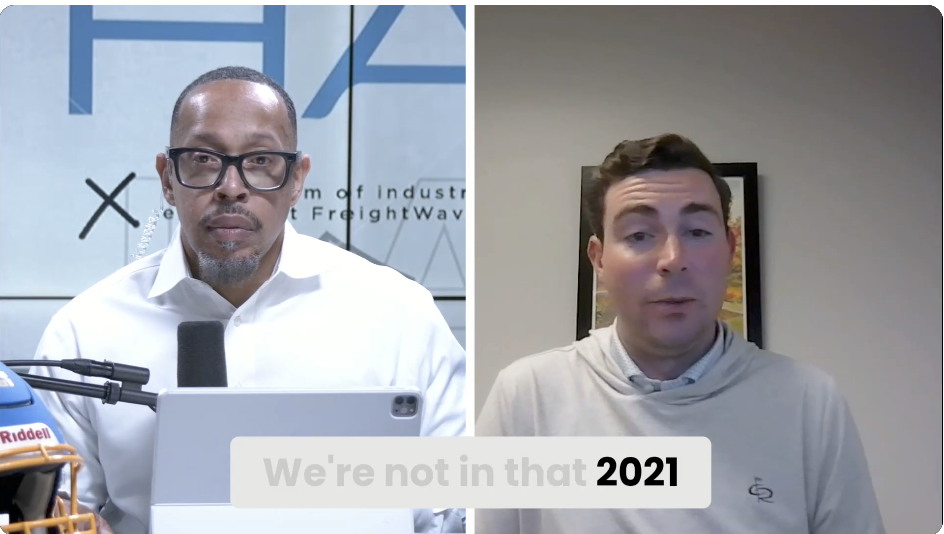
John Landrum has spent nearly a decade inside that messaging machine. He joined OTR Capital in 2017 as an inside sales rep, spending his first two years in direct daily conversations with carriers before building the company’s entire marketing function from the ground up and eventually growing into his current role as Vice President of Marketing. He has watched the industry shift through COVID boom, freight recession, regulatory disruption, and everything in between – and he has seen what the messaging got right, what it got wrong, and what it has been doing to small carriers who didn’t know enough yet to protect themselves from it.
This is a conversation about influence, illusion, and what it actually takes to make clear-headed business decisions in an industry that profits when you don’t.
The most dangerous window for a new carrier is not the first difficult month of operation. It is the first 48 hours after a DOT number gets applied for.
Landrum is direct about it: the day that number goes into the system, the outreach begins. Companies across the industry – factoring companies, fuel card providers, compliance services, load boards – are all monitoring new authority applications as a lead source. There is nothing inherently wrong with that. It is standard practice and Landrum acknowledges that OTR does it too. But the cumulative effect of every company in the industry contacting a new carrier simultaneously creates a psychological environment that feels urgent even when it isn’t.
“You start getting bombarded with all these communications, it can make you feel like you need to make a decision right then,” Landrum said. “Nobody’s really meaning to give that feeling. But if you get a whole bunch of text messages from somebody, you assume that it’s urgent and that you need to take action and do something, or they wouldn’t be communicating with you as much as they are.”
The problem is that most of the decisions carriers feel pressured to make in those first few days are not actually time-sensitive. Factoring relationships, fuel card programs, and load board subscriptions are long-term commitments designed to work alongside a business over time. A carrier who selects a factoring company under pressure at day one – before they have run a single load, before they understand how their cash flow actually works, before they know what they need from a financial partner – may be locking themselves into terms that don’t serve them well for months or years.
“A lot of these things are not short-term decisions,” Landrum said. “They’re long-term decisions that are designed to work with your business and grow with your business. And if you don’t have all the details and you make a decision super early, you might inadvertently lock yourself in.”
His advice is straightforward: slow down. The urgency you feel in that window is manufactured by volume of outreach, not by any real operational deadline. Take time to evaluate options side by side. Understand what you’re committing to and for how long. The right partners will still be there in two weeks.
One of the most consistent patterns Landrum identified across his years in sales and marketing is the gap between what carriers are sold and what they actually receive – not because companies are lying outright, but because the messaging is calibrated to resonate with a feeling rather than describe a reality.
New owner operators are entrepreneurs. They are stepping into something genuinely exciting – ownership, autonomy, the chance to build something on their own terms. The messaging that performs best in this space taps directly into that emotional state. You are your own boss. Keep all your margin. Build real wealth. The emotional case for entering trucking is easy to make because the underlying aspiration is real and legitimate.
But there is a specific form of misleading messaging that Landrum finds particularly damaging, and it centers on freight availability. “Making it appear as though all you need to do is get a truck and you’re gonna get loaded – it’s not gonna cut it,” he said. “That’s the biggest thing that I see carriers misled by specifically in the early days. Oh, you get this truck, you set up your authority this way, you stand up an LLC, and you’re gonna make it. It’s not gonna work that way. It’s not that simple.”
This brand of messaging exploded during COVID when new authority applications were, in Landrum’s words, “astronomical.” The freight market was genuinely exceptional during that period. Loads were abundant. Rates were historically high. Any carrier who got started in 2020 or 2021 found freight without much difficulty, and that created a feedback loop where the companies profiting from new authority sign-ups had every incentive to keep telling the same story even after the market shifted. Their business model was built on authority activations, not carrier longevity. A carrier who churned out of the market in six months still generated the same revenue for certain service providers as a carrier who thrived for five years.
“Those businesses who were working with carriers to get their authority started were only benefiting from authorities getting started,” Landrum said. “And so it was in their best interest to continue saying that the market was really good and getting carriers through the point by which they would make their money – and then not have invested interest in that carrier’s long-term success.”
That is the critical accountability test for any company trying to earn business from a small carrier. Does their business model require your success, or just your activation?
Landrum is candid about where factoring companies sit on that question. “A factoring company cannot make money unless their clients make money. It’s not possible. We strictly generate revenue off of your business activity. If we’re doing anything to hinder your business from operating, we’re shooting ourselves in the foot. We’re cutting ourselves out of any opportunity.” That structural alignment doesn’t make every factoring company trustworthy, but it is a meaningful filter when evaluating which partners are genuinely invested in your operation’s survival.
The marketing technology available to companies reaching trucking audiences has grown dramatically. New software startups enter the space with sophisticated digital marketing capabilities, sharp creative, and platforms that look impressive. The visuals are clean. The messaging is polished. The features list is long.
And much of it misses the mark entirely with the audience it is trying to reach.
“Particularly these days, there’s a whole lot of new tech out there,” Landrum said. “A lot of software comes out of new startups that come in full force. They’ve got the full world of marketing experience behind them, and they put out some really nice flashy-looking stuff. But it’s just technology, and I think people are looking for people still in this space. We’re still very person to person, not just person to screen.”
The one to five truck carrier is not making decisions about financial services and operational tools the way a corporate procurement manager does. They are building a business on trust and relationship, the same way they build freight relationships. A slick interface is not a substitute for knowing that when something goes wrong – a broker dispute, a payment problem, a compliance question – there is a real person on the other end who understands their business and will respond.
Large companies also tend to lead with features before establishing foundations. They show every capability and integration and add-on before explaining what the core service actually does, how it works daily, and what a carrier can reliably expect as a baseline. “What’s the normal baseline that I can expect?” Landrum framed it. “And then what are all the cherries on top? And that’s really what does sway a decision a lot of times – but is the core offering solid? Is it logically described? Does it make sense to them? People jump to the end too much and show all the flashy stuff without educating the consumer on what you’re offering, what it does for them, and how it makes their business better.”
Of everything Landrum has observed over nearly a decade of working with carriers at every stage of the business, one pattern stands above the rest as the single most reliable predictor of failure.
Not running the wrong loads. Not choosing the wrong factoring company. Not failing to negotiate rates.
Not having a business plan.
“Specifically back in my sales days – people would sign up with us, they’d get their authority activated, they’d have the stickers on the truck, everything ready to go, and they’d call and say, ‘Alright, I’m ready for my first load.’ And I’m like – you’re calling the wrong person for that.”
The story captures the gap between what people think they are buying when they set up a trucking business and what they actually need to know before they can operate one. Getting a DOT number and purchasing authority is not the same as building a company. Understanding how to find freight, how to set rates that cover operating costs, how cash flow works across the lifecycle of a load, how to build broker relationships over time – these are the actual operational foundations that determine whether a business survives its first year.
The excitement of entrepreneurship is real and it is not something to dismiss. Landrum is careful about that. “They’re entrepreneurs. They’re starting a business. That’s an exciting thing.” But excitement without structure is what produces the carrier who calls their factoring company looking for loads. It is what produces the carrier who hits month four with no cash reserve because nobody explained how the gap between fuel cost and payment receipt works. The plan doesn’t have to be formal or elaborate. But the thinking has to happen before the truck rolls, not while it’s parked waiting for a solution.
One of the most important reframes Landrum offered is one that a lot of carriers resist hearing, especially early on. When you hold your own authority, you are not a truck driver who happens to have a business. You are a business owner who happens to drive a truck. That is not a subtle distinction. It changes how you present yourself, how you communicate, how you negotiate, and ultimately how much access to quality freight you earn over time.
“You’re working with net payables. You’re working with companies. The speed at which you communicate with them, with the brokers, the professionalism in those communications, the way that you present your business – all of those things help make the people who are going to give you freight trust you more and look to you more. That’s how you get your foot in the door for ongoing freight relationships.”
This is where something as seemingly minor as an email address matters. A professional domain email – your name at your company name dot com – signals to a broker that you are serious about being easy to work with, that you are organized, and that dealing with you is going to feel like dealing with a business rather than chasing down an individual. It is a small thing that carries disproportionate weight in a first impression. Brokers who give recurring freight to carriers are doing so because they trust the relationship. You build that trust in dozens of small ways long before the rates ever come up.
When everything is competing for your attention and every platform is full of people claiming expertise, the question becomes how to identify the signal worth paying attention to. Landrum’s framework is simpler than most people expect.
Look for consistency across platforms. If you’re seeing the same companies and the same voices show up whether you’re on Facebook, searching Google, reading FreightWaves, or scrolling Reddit, that consistency is not an accident. It means those companies have been present and credible across multiple channels over time. Size and reach in this industry are typically earned, not manufactured overnight. A company that has built a reputation across the entire trucking community likely got there because carriers had real experiences worth sharing.
Lean into the community. This is where trucking is genuinely unusual as an industry. Small carriers who should theoretically view each other as competitors tend to treat each other as a community instead. There are Facebook groups, Discord servers, and forums where carriers openly share experiences, warn each other about problematic brokers or service providers, and ask questions without judgment. The knowledge inside those communities is boots-on-the-ground real in a way that no company’s marketing will ever be.
“Don’t be afraid to lean into the communities,” Landrum said. “In any other industry, all of these small businesses would be viewing themselves as competitors. But for one reason or the other, the trucking space does not view it that way. They view themselves as a community sharing knowledge, helping out their counterparts.”
That community is one of the few places where you can get an honest answer about what it is actually like to work with a specific company, because the people answering have real money and real miles on the line.
If you are new to running your own authority, or if you are in your first year and starting to realize the gap between what you were told to expect and what you are actually experiencing, here is the unfiltered version of what Landrum spent nearly an hour saying in different ways.
It is still possible to build a successful trucking business. The market is harder than it was in 2021, but carriers who enter with the right structure, the right partners, and a clear understanding of their numbers can and do make it work. That part of the messaging is not a lie.
What is not true is that success is simple, that freight finds you automatically, or that signing up for the right services handles the hard parts for you. You have to go find the freight. You have to build the relationships. You have to know your cost per mile before you accept the first load. You have to understand what you are signing when you enter a factoring agreement, including how long the contract runs, what it looks like to exit, and how that company represents itself to the brokers you are going to depend on.
The companies associated with your business are a reflection of your business. The factoring company that processes your invoices is dealing with your brokers after every load. If they are slow, difficult, or unprofessional, that reputation attaches to you. Choose partners the way you would choose who represents your company – because they are.
Slow down when the pressure to decide feels urgent. Ask questions you’re afraid sound naive. Read what you’re signing. Find people who have been operating for three years and ask them what they wish they had known on day one.
The noise is loud. It is designed to be. The carriers who build something real are the ones who learned to hear past it.
*John Landrum is Vice President of Marketing at OTR Solutions, where he oversees brand strategy, carrier partnerships, and product development. He joined the company in 2017 as an inside sales representative and has spent nearly a decade studying how carriers make decisions and how companies communicate with them.
The post They’re Selling You a Feeling – What the Trucking Industry’s Marketing Machine Doesn’t Want You to Know appeared first on FreightWaves.