

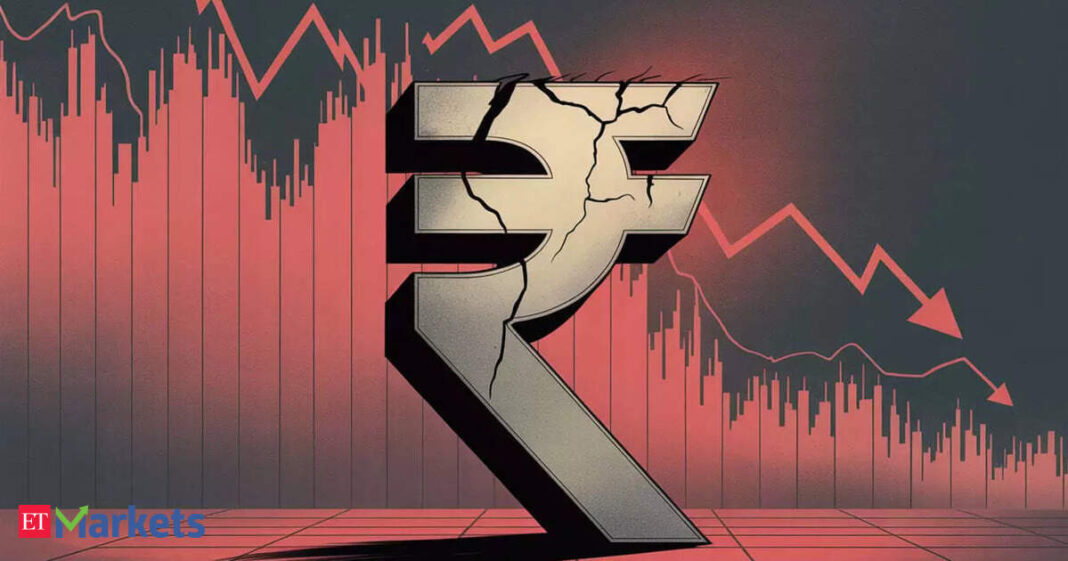

A prolonged Middle East conflict could significantly worsen the rupee’s outlook, analysts said, warning that persistently high energy prices may push the currency beyond 95 per dollar.
The rupee dropped to 92.4325 per dollar, eclipsing its previous all-time low of 92.3575 hit on Thursday. It was down about 0.2% on the day and has lost 1.5% since the Iran war broke out.
It would likely have fallen further if not for central bank intervention across the spot, non-deliverable forwards and futures markets. The central bank was active again on Friday, bankers said.
Investors are bracing for a prolonged conflict, with Middle East war approaching the two-week mark and Iran’s new Supreme Leader Mojtaba Khamenei vowing to keep the Strait of Hormuz shipping lane shut.

In addition to the disruption to energy supplies, the war has triggered foreign investor selling of Indian equities worth nearly $5 billion so far this month, compounding the rupee’s woes.
India’s benchmark equity index Nifty 50 has declined 7% since the U.S. and Israel launched strikes on Iran on February 28, and was down more than 1% on Friday.
WEAKENING TRAJECTORY
Economists and analysts at HDFC Bank, Elara Securities, QuantEco Research and MUFG expect the rupee to remain under pressure in the near term.
If oil prices hold around $100 per barrel, their current level, MUFG expects the currency to weaken to about 95.50 by the end of the year. Elara Securities largely concurred, forecasting a range of 94-95.
“In a left tail risk scenario,” MUFG said in a note, referring to extreme negative events, “if oil sustains at $120/bbl coupled with meaningful energy shortages, we think USD/INR at 97.50 and even higher will look achievable.”
HDFC Bank expects the rupee to trade in a 92-95 range in the coming months if the conflict persists. Economists at QuantEco Research are more pessimistic, forecasting the currency weakening to 98.5 by the end of March 2027 under a $100-per-barrel oil scenario.
Oil prices at $80 per barrel could cap the rupee’s weakness around 93.50 through the end of 2026, MUFG said.


