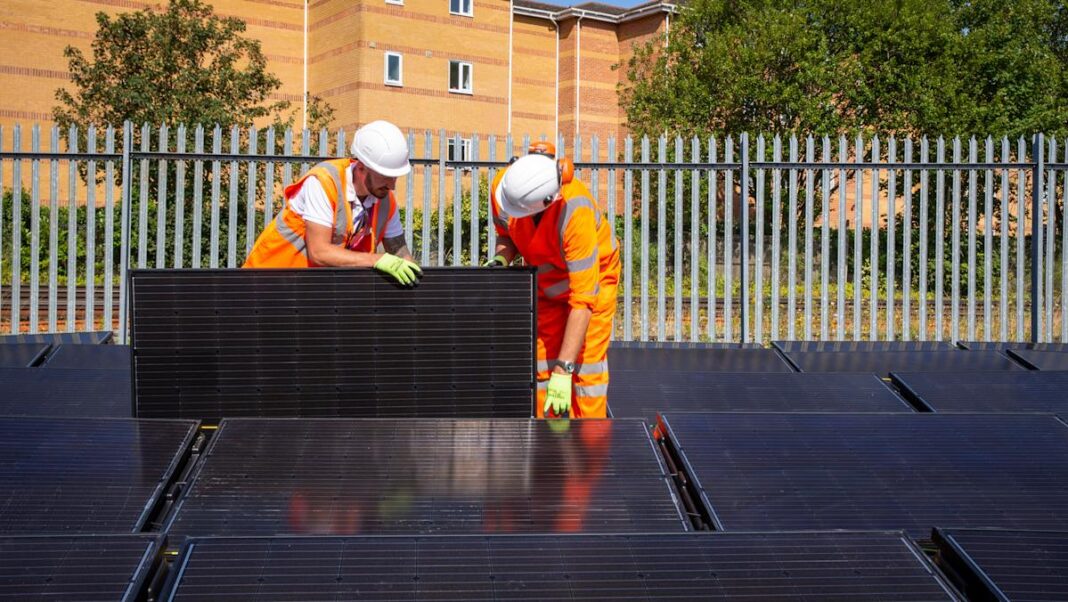
Solar panels have become a popular option for American homeowners looking to shrink their carbon footprint and cut monthly utility bills.
Many buyers finance their solar panels with loans — often counting on a federal tax credit to offset part of the upfront cost — and expect to see years of lower energy bills. But that equation can fall apart quickly if the installer turns out to be unlicensed, inexperienced or outright fraudulent.
New York City is combating that problem in its recent lawsuit against Radiant Solar, a local installation company the city claims has ripped off hundreds of homeowners who tried to join the renewables revolution (1).
Prompted by a CBS News New York investigation, the city’s Department of Consumer and Worker Protection (DCWP) found that clients who purchased solar panels from Radiant Solar did not see the savings promised by the installer.
“We’ve identified several hundred victims of the scheme,” DCWP Commissioner Samual Levine told CBS. “We think there might be more out there.”
The suit seeks the return of the homeowners’ money, but some may be locked into installation loans and are now unsure if those will get cancelled. Attorneys for Radiant Solar told CBS that although the company is no longer in business, it had been committed to quality service and clear, transparent pricing about potential savings.
Former customers, however, tell a different story. Several say the promised savings never materialized and transparency was hard to find. One client even claimed the panels were installed facing the wrong direction — away from optimal sun exposure.
“Southern exposure is where we get the most sunlight, and I point out that he’s setting up the panels in the wrong direction,” homeowner Arthur Klein told CBS. “It really got me upset.”
Other homeowners reported roof damage, leaking and unauthorized drilling by the installers. One homeowner said Radiant Solar would not cover damages when his ceiling collapsed after installation.
The more troubling issue, according to customers, was the promise of dramatic energy savings — even $0 electric bills. Instead, some homeowners say they were left paying high monthly utility costs while also carrying loans for the solar installation.
One homeowner, Lorna Wynter, told CBS she was stunned to learn she’d signed up for financing and has since faced electricity bills as high as $900, despite having solar panels on her roof.
“There was no discussion about me paying for any solar panels. I wasn’t aware that I was getting a loan until I got the welcome letter,” said Wynter. “I’m hoping for some relief. I’m hoping [for] some answers.”
Read More: 8 essential money moves to make once you’ve saved $10,000
Read More: You can now invest in this $1B private real estate fund starting at just $10
Renewable energy and solar power are increasingly in demand, and many homeowners are researching their options and exploring installation quotes. Unfortunately, solar scams are on the rise, too.
An investigation by The American Prospect found that elderly homeowners are increasingly preyed upon by door-to-door solar scammers, convincing friendly yet unaware older Americans to sign installation loans (2). Often, these loans take effect before the installation is complete and working functionally.
“The consumer doesn’t have control over when the contractor gets paid or whether the contractor has completed the project before they get paid,” Audrey Thornton of California policy group Housing and Economic Rights Advocates told The American Prospect. “So often, in many cases, the lender will release the loan proceeds to the contractor before the project is finished.”
Thornton said these arrangements frequently saddle homeowners with poorly functioning panels, zero savings benefits and an expensive loan.
Legitimate solar loan programs exist and provide significant savings over time, but there are many that homeowners should avoid (3). Some may promise “free” solar panels or even tout a fake government program that “pays you” to install panels, especially targeting homeowners on a fixed income.
Installation sales pitches that rush for signatures or contracts can take advantage of unaware and older homeowners, as well as offers for “zero-down” deals that actually trap the client into a lengthy loan schedule. Consumers should also be cautious of door-to-door salespeople that offer “free” onsite inspections.
Solar panels may be a great option for your home and your energy bill, but not every installation company is legit or has sustainability in mind. If you’re interested in solar panels, be sure to look out for common warning signs:
Governmental program offers: There is currently no federal door-to-door solar program, only a tax incentive that expired at the start of 2026 (4).
Free solar or zero-dollar energy bill claims: Promises of “free electricity” can come with strings attached. Homeowners may find themselves locked into long-term purchase agreements or solar leases, still responsible for grid connection fees, or charged extra for energy use beyond certain limits. What sounds simple on the surface can turn into a complicated and costly commitment.
Pressure to act now: Like many financial scams, a salesperson will often pressure a consumer to agree to a contract very hastily. Before signing a contract with any installer, check their reviews, manufacturer certifications and verify their licensing.
Join 250,000+ readers and get Moneywise’s best stories and exclusive interviews first — clear insights curated and delivered weekly. Subscribe now.
We rely only on vetted sources and credible third-party reporting. For details, see our editorial ethics and guidelines.
CBS News (1); The American Prospect (2); The Holland Law Firm (3); IRS (4).
This article provides information only and should not be construed as advice. It is provided without warranty of any kind.