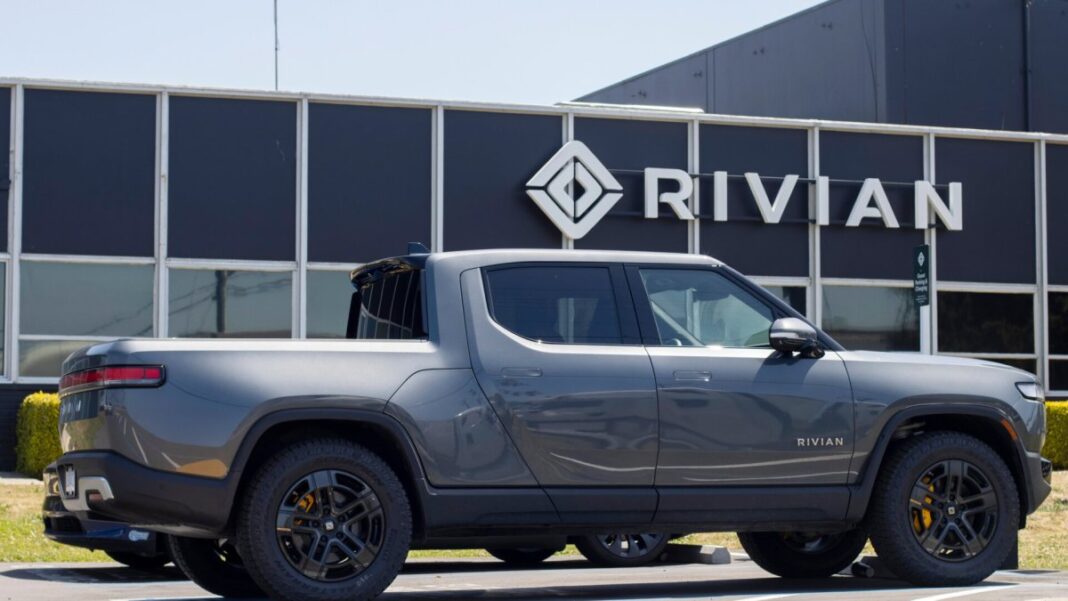
Rivian Automotive (RIVN) investors are receiving a fresh jolt from Wall Street. One of the biggest names in the financial world is giving his blessing to the firm.
The analyst call urges stockholders to look past the recent issues that have caused the company’s stock to fall and instead focus on what could be its most important upcoming product launch.
TD Cowen upgraded RIVN stock to buy, per CNBC, and raised its price target to $20 from $17, citing the company’s lower-cost R2 platform as a potential catalyst. The analyst call comes at a time when the Rivian story is starting to transform. “Can it preserve demand?” becomes “Can it finally scale?”
That is a far more intriguing question for investors, and it explains why a single upgrade is getting so much attention.
The timing of the upgrade matters a lot. Rivian is already expecting the first customer deliveries of the R2 in the second quarter of 2026.
The company is also effusive regarding the launch, describing it as a critical step in expanding beyond its premium R1 lineup. Rivian’s most recent letter to shareholders put their minds at ease by explaining that the start of production is still on track and that more information about the product and lineup will be released on March 12.
As a result, the stock has a clearer near-term story than it has had in months. Rivian no longer simply asks investors to believe in the brand.
Instead, it’s asking investors to believe that the vehicle can open up a larger market for them.
The core of the bullish thesis is straightforward. Rivian wants to reach the average consumer by focusing on the lesser premium segment.
Rivian’s R1T pickup and R1S SUV established the company as a credible EV brand. But the brand became increasingly associated with high-end consumers because the high price point limited its volume.
More Automotive:
Rivian, on the other hand, said when it introduced its mid-sized platform that the R2 will start at about $45,000, with deliveries starting in the first half of 2026.
More recently, Rivian informed shareholders that they anticipate the first customer deliveries in the second quarter of 2026. Translation? The launch schedule is still intact.
The price point is why analysts keep circling back. R2 is not another product. It is Rivian’s best chance to prove it can move from a premium niche into a more scalable part of the EV market.
The company’s own 2026 guidance supports this narrative. Rivian said it expects to deliver 62,000 to 67,000 vehicles this year after delivering 42,247 vehicles in full-year 2025.
The numbers imply a roughly 53% jump in 2026 deliveries, with the smaller and more affordable R2 seen as a key driver of that increase.
That is a much better growth story than Rivian had a few months ago. There is no longer a debate about whether Rivian makes good cars. The question is whether the company can use R2 to create real operating leverage, more demand, and a stronger long-term investment case.
Rivian expects the first customer deliveries of the R2 in Q2 2026. White/Getty Images for Rivian ·White/Getty Images for Rivian
Rivian delivered 42,247 vehicles in 2025, making its 2026 growth target a meaningful step up.
Management’s 2026 delivery guidance is 62,000 to 67,000 vehicles.
Analysts see R2 as central to Rivian’s success as EV demand remains uneven.
Rivian also continues to build out the infrastructure needed to make this launch a success. In its shareholder letter, the company said it now has 36 spaces, 97 service centers, nearly 700 mobile service vehicles, and more than 930 chargers across over 140 sites on its Rivian Adventure Network.
That’s important because R2 isn’t just a factory event. It is a test for going to market. Rivian needs to be able to sell, service, and support a lot more customers than it does now.
The other reason why this story is trending is because it comes at a rough time for the EV market.
Rivian said deliveries in the fourth quarter of 2025 went down from the previous quarter, mainly because there were fewer R1S and R1T vehicles sold after some federal EV tax credits ran out last September.
The IRS also says the New Clean Vehicle Credit under Section 30D is only available for cars bought on or before Sept. 30, 2025. This limitation means EV makers had to make their cars more affordable last year.
That backdrop is why investors and consumers are generally avoiding higher-priced EV models. If the tax incentives are removed, pricing power will become more significant. When affordability becomes a bigger issue, lower-cost launches matter more. Rivian feels both pressures; it’s not foreign territory.
And yet Rivian also can boast of several talking points that can keep the bulls happy for now. The company posted $120 million in fourth-quarter consolidated gross profit and $144 million for full-year 2025, a sharp improvement from the prior year. Rivian’s fourth-quarter results handily beat Wall Street estimates, giving the stock a great post earnings kick in February.
That does not mean the risks are gone. Rivian still expects adjusted EBITDA of negative $2.10 billion to negative $1.80 billion in 2026 and capital expenditures of $1.95 billion to $2.05 billion, which shows how lethal the next phase will be.
But it does give the company a more believable bridge between today’s premium lineup and tomorrow’s hoped-for scale.
TD Cowen upgraded Rivian to buy from hold.
Rivian says R2 customer deliveries are expected in Q2 2026.
The R2 was introduced with a starting price of about $45,000.
Rivian delivered 42,247 vehicles in 2025.
The company’s 2026 delivery outlook is 62,000 to 67,000.
The federal new clean-vehicle credit applied only to vehicles acquired on or before Sept. 30, 2025.
Rivian reported positive full-year gross profit for 2025, but still expects sizable losses and heavy spending in 2026.
Wall Street’s warmer tone is worth considering. However, it matters that the calendar time is getting shorter.
Rivian does not need investors to imagine a fuzzy future. It requires them to observe a real launch approach. The company says the production remains on track. It’s broadening commercial and service infrastructure ahead of the R2 launch and additional product launches are coming.
Those are the kinds of milestones that change how analysts will view a stock. Still, the next move upward will likely depend less on one analyst’s price target and more on whether Rivian can execute on several key milestones.
Some of these include being ready to make things, having enough customers, keeping margins in check, and making a convincing case for switching from the expensive R1 family to a more affordable mid-market platform.
Rivian’s March 12 update on additional R2 product and lineup details.
Management keeps repeating that first customer deliveries are on track for Q2 2026.
Signs that Rivian’s retail, service, and charging footprint is scaling fast enough for a broader launch.
Whether 2026 deliveries begin tracking toward the company’s 62,000 to 67,000 target.
The strength of demand for lower-priced EVs in a post-tax-credit market remains to be determined.
If Rivian gets the R2 right, it will look less like a promising high-end electric vehicle maker and more like a business that has a real chance of becoming more important on a larger scale.
That’s why the upgrade worked. It’s not really a story about one company changing one rating. It’s a story about how Wall Street is starting to think that Rivian’s next chapter might finally be close to reaching the publishers.